Firm
Quinby & Co.
Charles J. Quinby’s Charleston gallery, successor in February 1857 to Tyler & Co. at No. 233 King Street and by 1861 at No. 261 King Street. This is where Charleston went to be photographed in the spring of secession, and its backmark is the reason a great many surviving Charleston portraits can still be attributed.
An advertisement in the autumn of 1857 described the firm as manufacturers and importers of photographic goods, with a factory at Waterbury, Connecticut and galleries in Charleston, Augusta and on Broadway — a supply business as much as a portrait gallery.
By 1861 the Quinby Photograph and Fine Art Gallery had moved to No. 261 King Street. In late March, Mary Boykin Chesnut recorded a friend at her door: come with us to Quinby’s, everybody will be there, to be photographed is the rage just now. Edmund Ruffin sat there in the days after 12 April, and his diary notes that Quinby could not keep up with the demand for his likeness.
The firm also published other men’s work. A stereograph of Institute Hall in the Library of Congress carries the Quinby & Co. imprint at 261 King Street on the mount, but the Library attributes the photograph itself to Osborn & Durbec, on Harvey Teal’s authority.
George N. Barnard partnered with the firm at 261 King Street between 1868 and 1871, after the war.
Partners and operators
- Charles J. Quinbyproprietor · 1857 – 1865
- George N. Barnardpartner, after the war · 1868 – 1871
Addresses
- Quinby & Co.No. 233 King Street
- Quinby Photograph and Fine Art Gallery261 King Street
Photographs in this collection
Works
- South Carolina Institute Hall, Charleston, S.C.Charleston, S.C. : Quinby & Co., 261 King Street [ca. 1860] · Osborn & Durbec’s Southern Stereoscopic & Photographic DepotAttributedLibrary of Congress · LOT 14110-11, no. 59 [P&P]
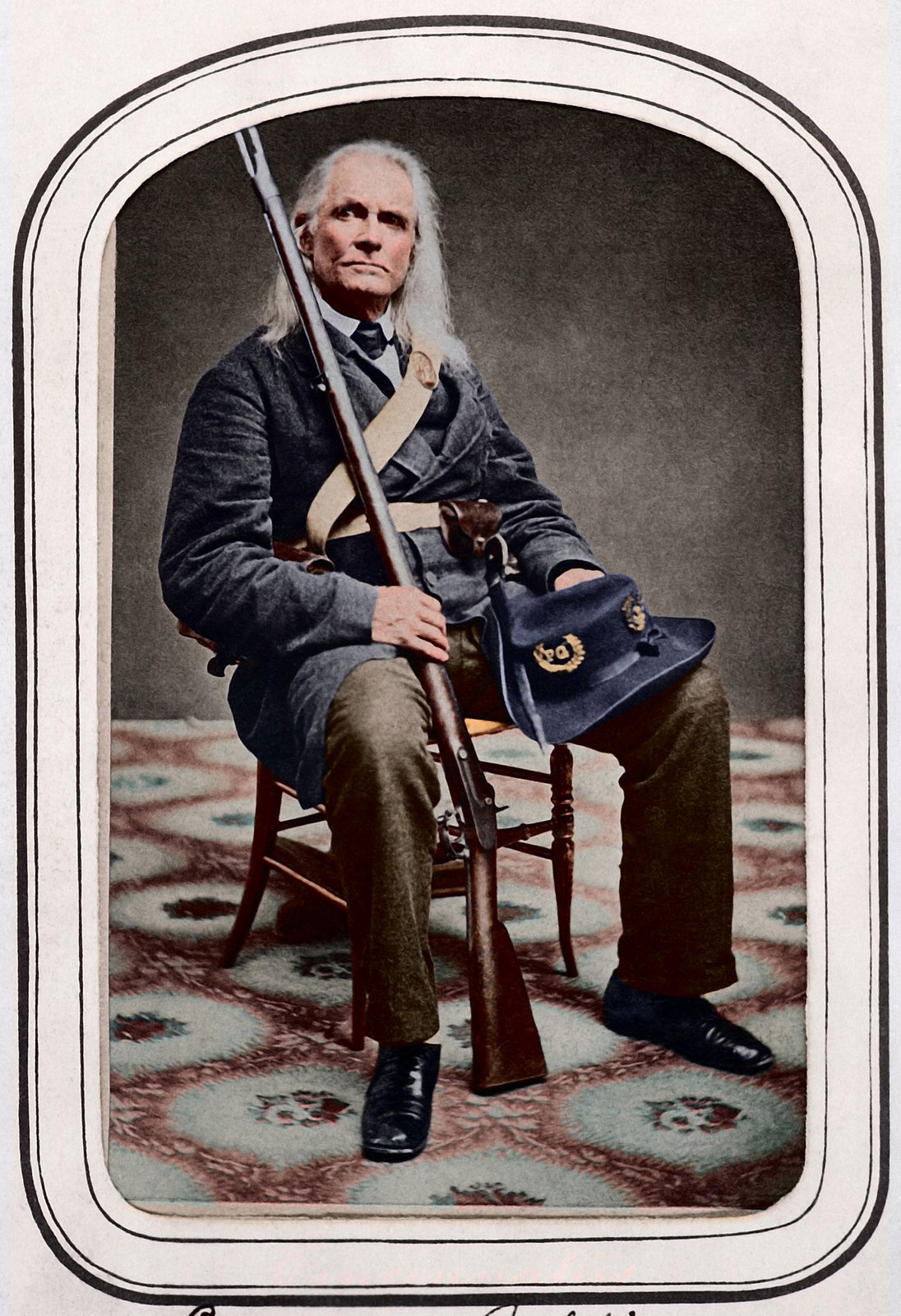
- An unidentified Confederate soldier, by Quinby & Co.[Charleston, S.C.] : [Quinby & Co., artists], [between 1861 and 1865] · Quinby & Co.VerifiedLibrary of Congress · AMB/TIN no. 3791 [P&P]
Statement by statement
- VerifiedQuinby came to Charleston in February 1857 as successor to the Tyler & Co. gallery at 233 King Street.Davis & Melton 2020
- VerifiedBy 1861 the gallery was at 261 King Street.Davis & Melton 2020 Library of Congress
- VerifiedQuinby & Co. published a stereograph of Institute Hall that the Library of Congress attributes to Osborn & Durbec as photographer.Library of Congress Teal, Partners with the Sun
- VerifiedGeorge N. Barnard partnered with Quinby & Co. at 261 King Street, 1868–1871.Davis & Melton 2020
Sources
- Stephen Davis and Jack W. Melton Jr., 100 Significant Civil War Photographs: Charleston in the War (Charleston: Historical Publications LLC, 2020).
- Prints and Photographs Division, Library of Congress, Washington, D.C. https://www.loc.gov/pictures/
- Harvey S. Teal, Partners with the Sun: South Carolina Photographers, 1840–1940 (Columbia: University of South Carolina Press, 2001).