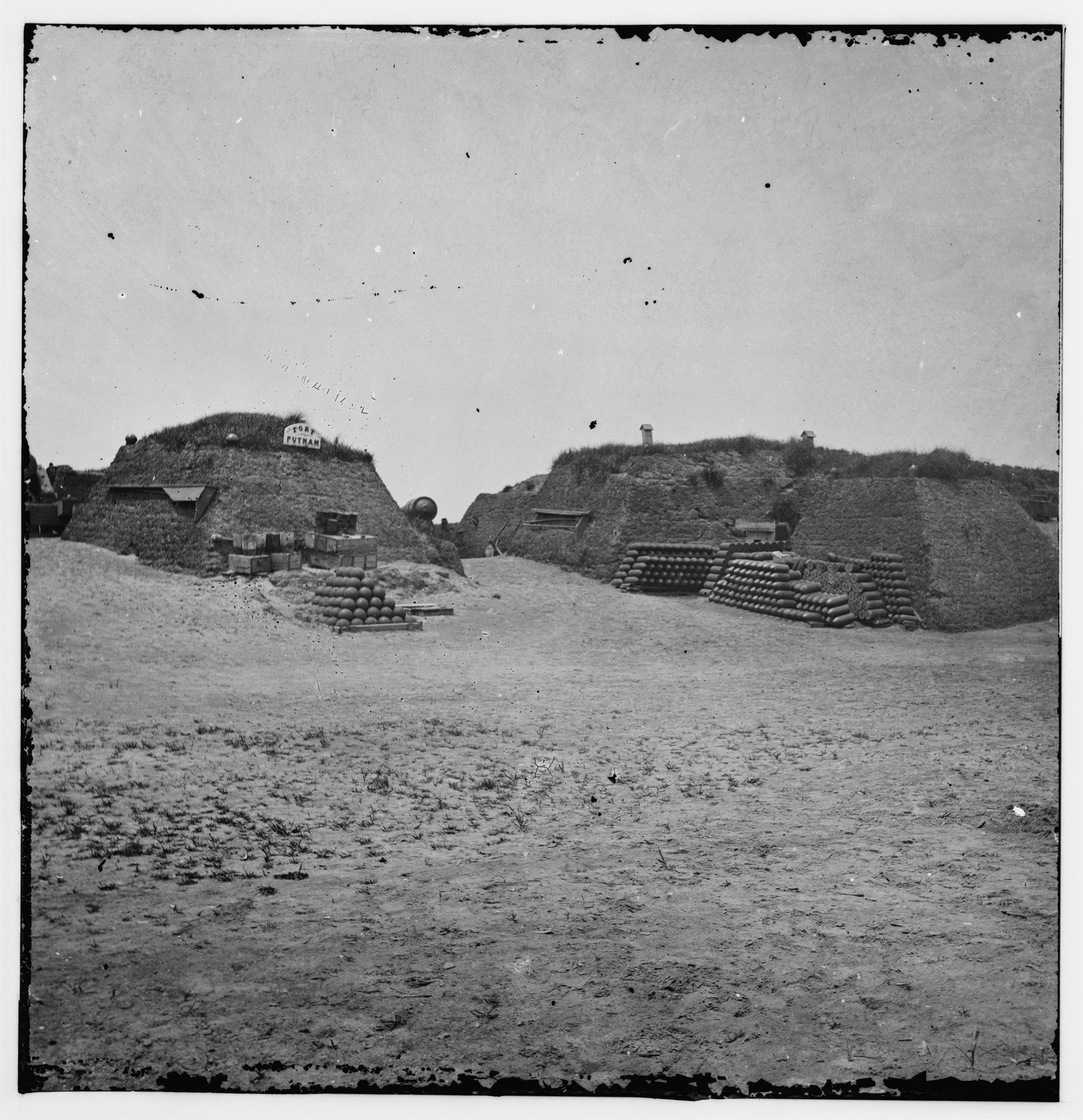
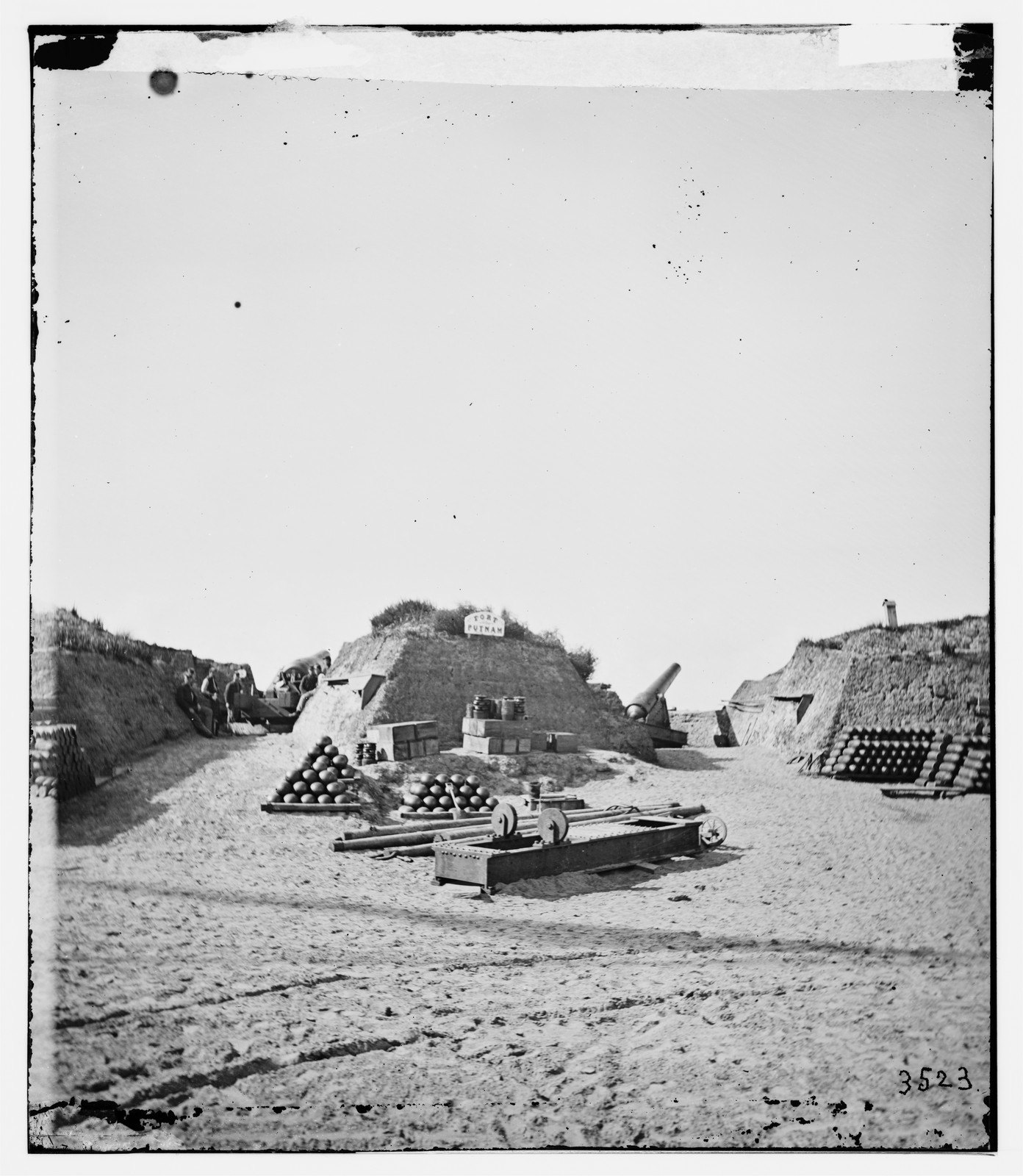
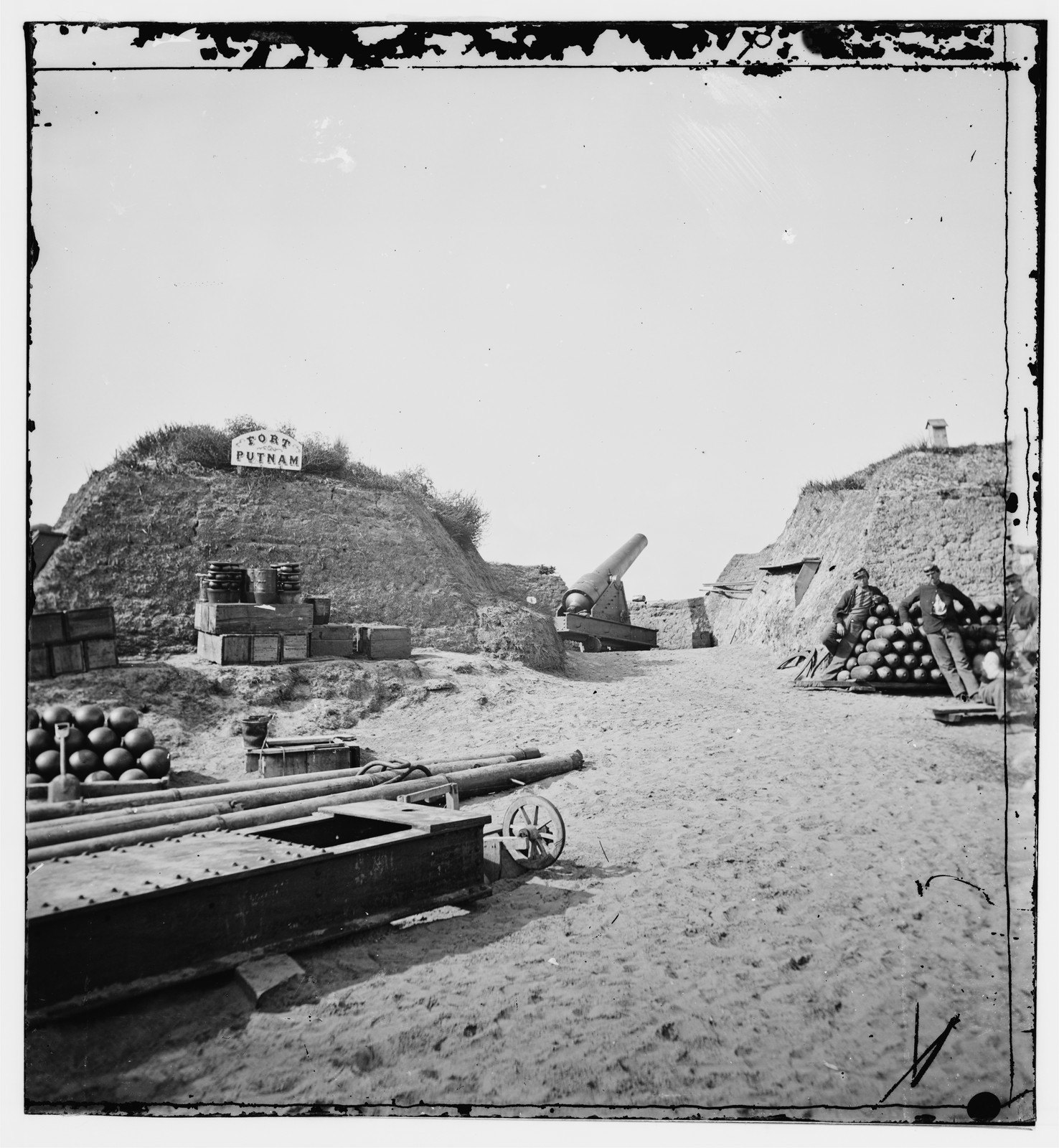
Fort Putnam
The Battery That Ruined a Fort
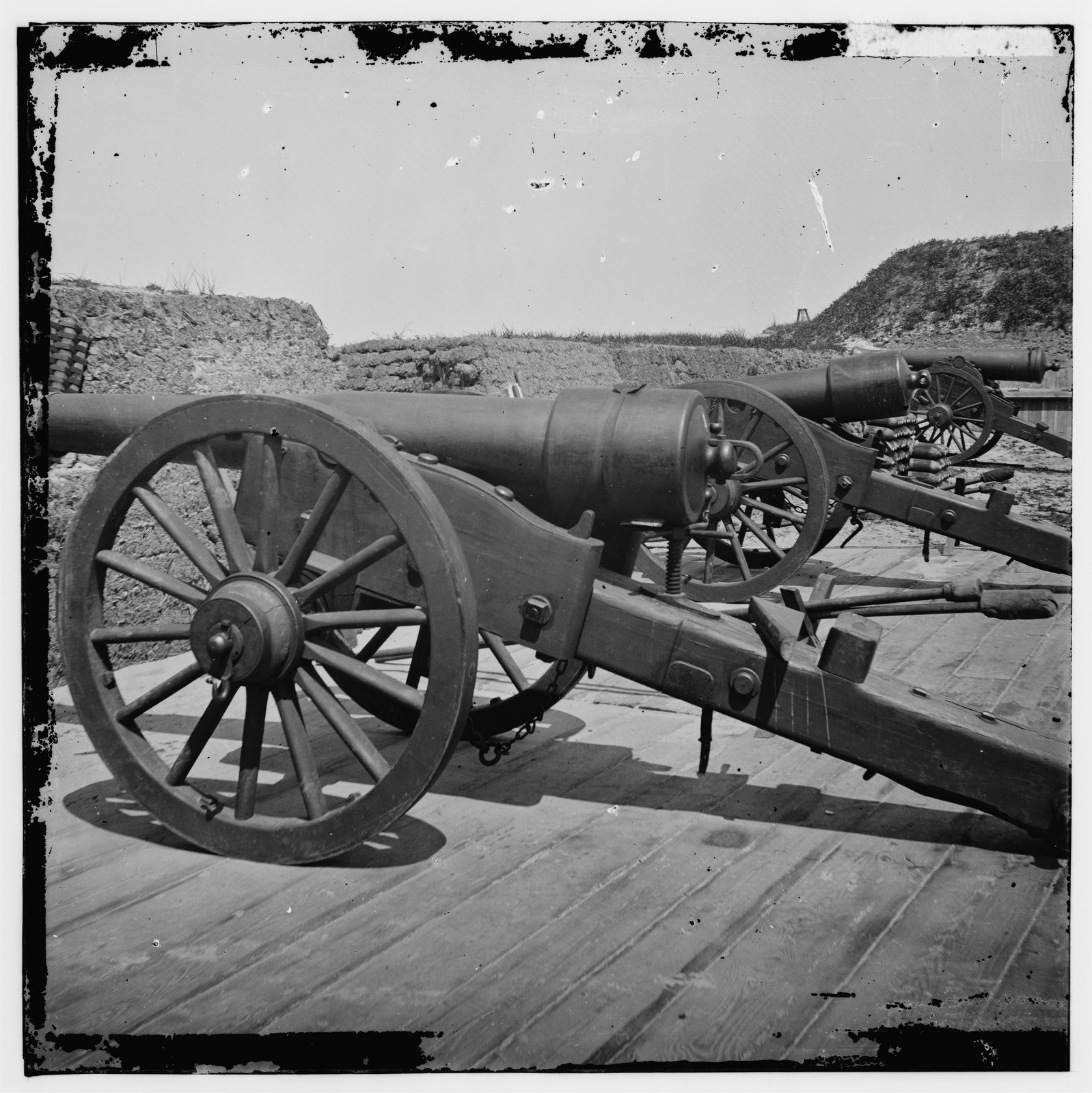
Original scanLibrary of Congress
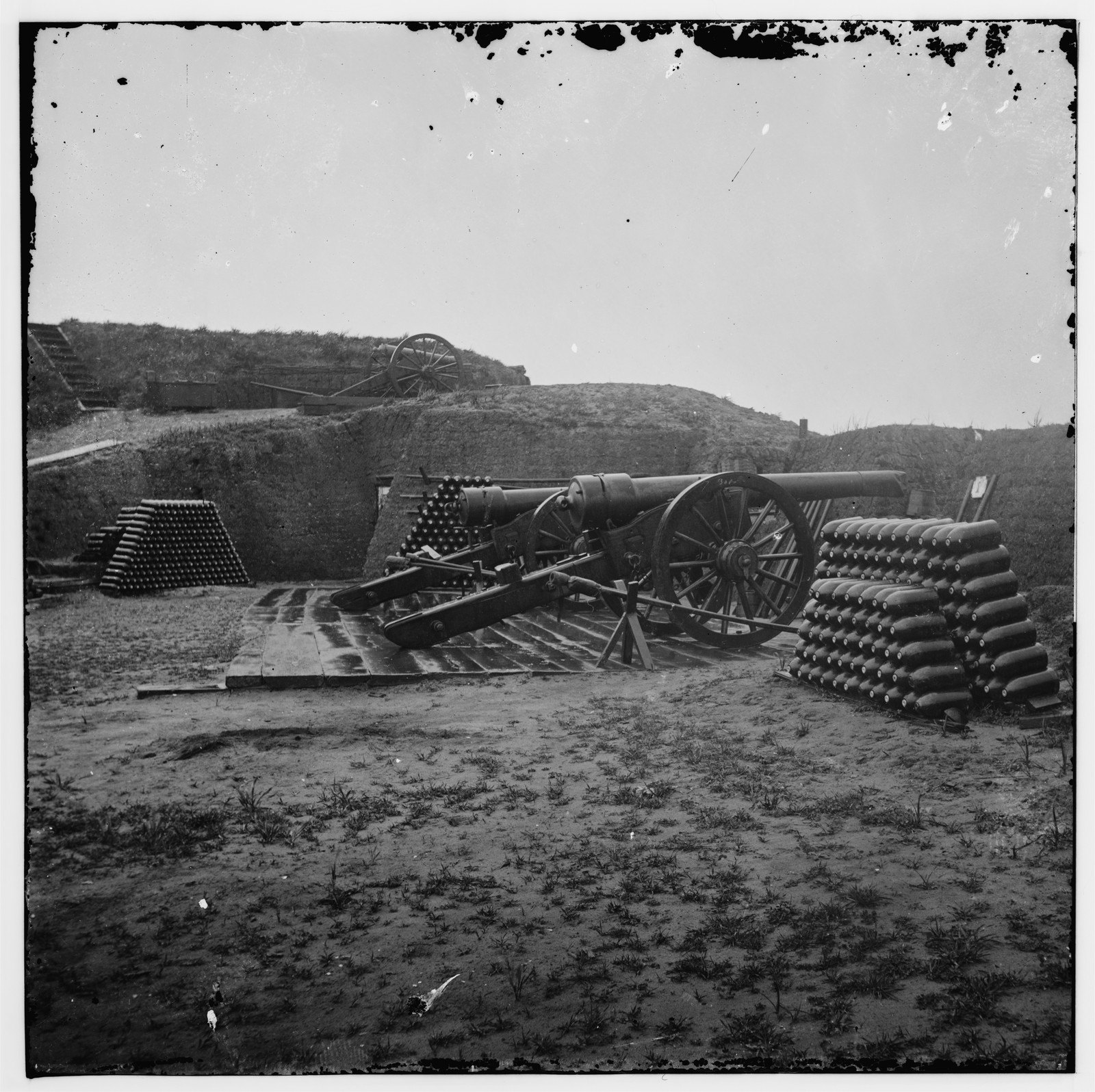
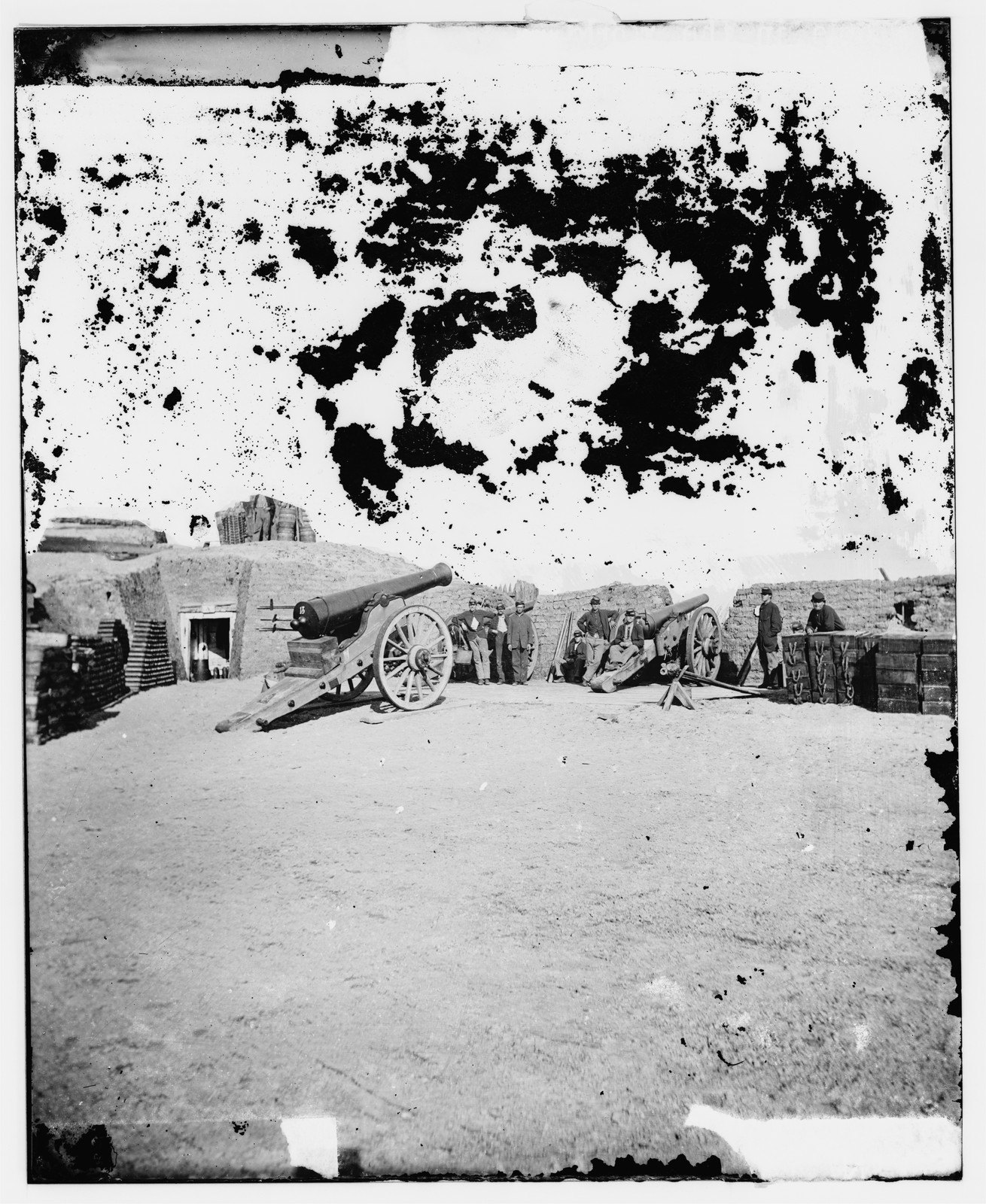
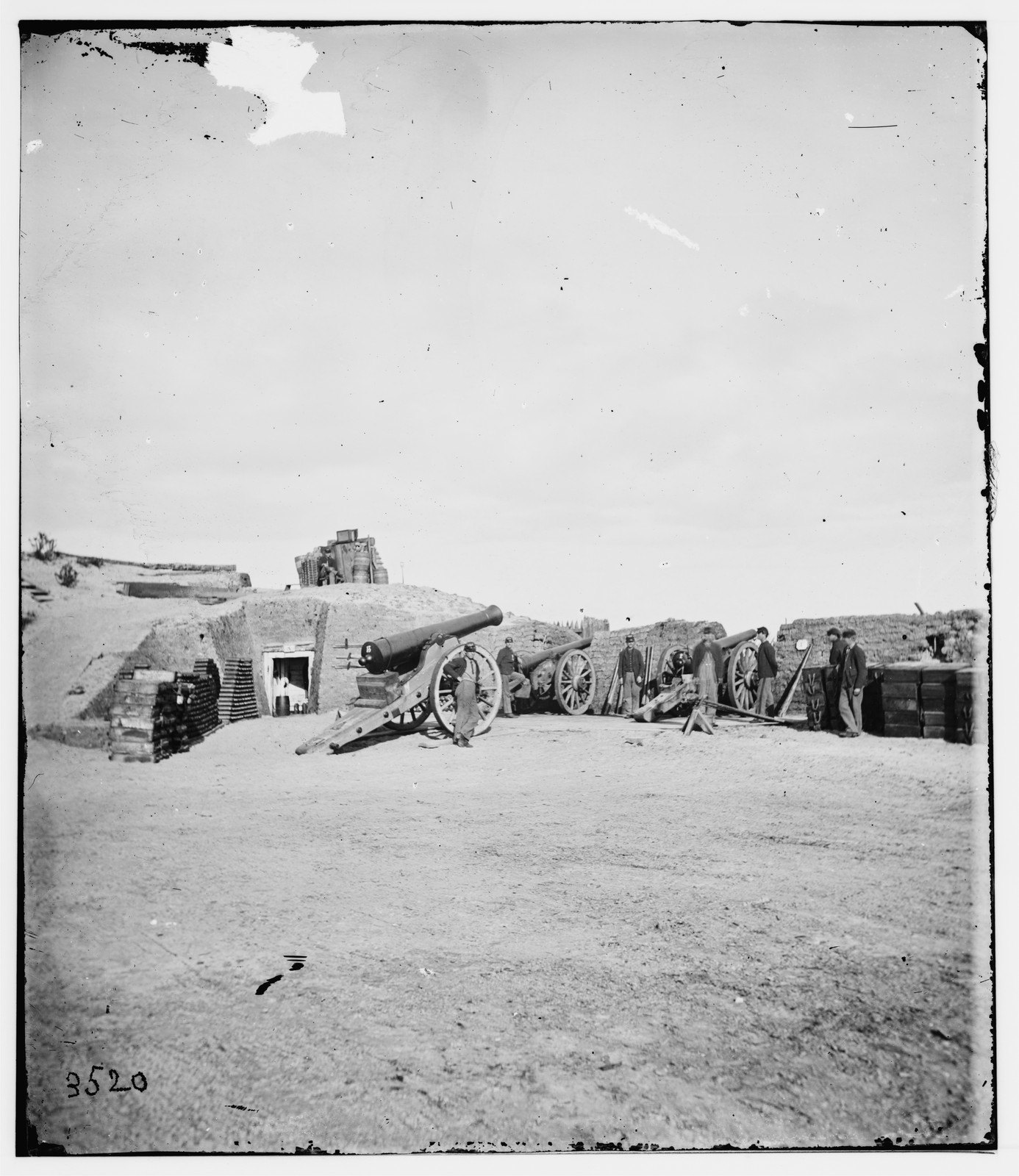
Two 100-pounder Parrott rifles on their wheeled carriages, on plank platforms inside Fort Putnam — the nearer one filling the frame, implements racked against it, the second standing beyond. The photographer set his camera almost against the first gun's wheel, and the effect is what he wanted: iron out of all proportion to the sand that carries it.
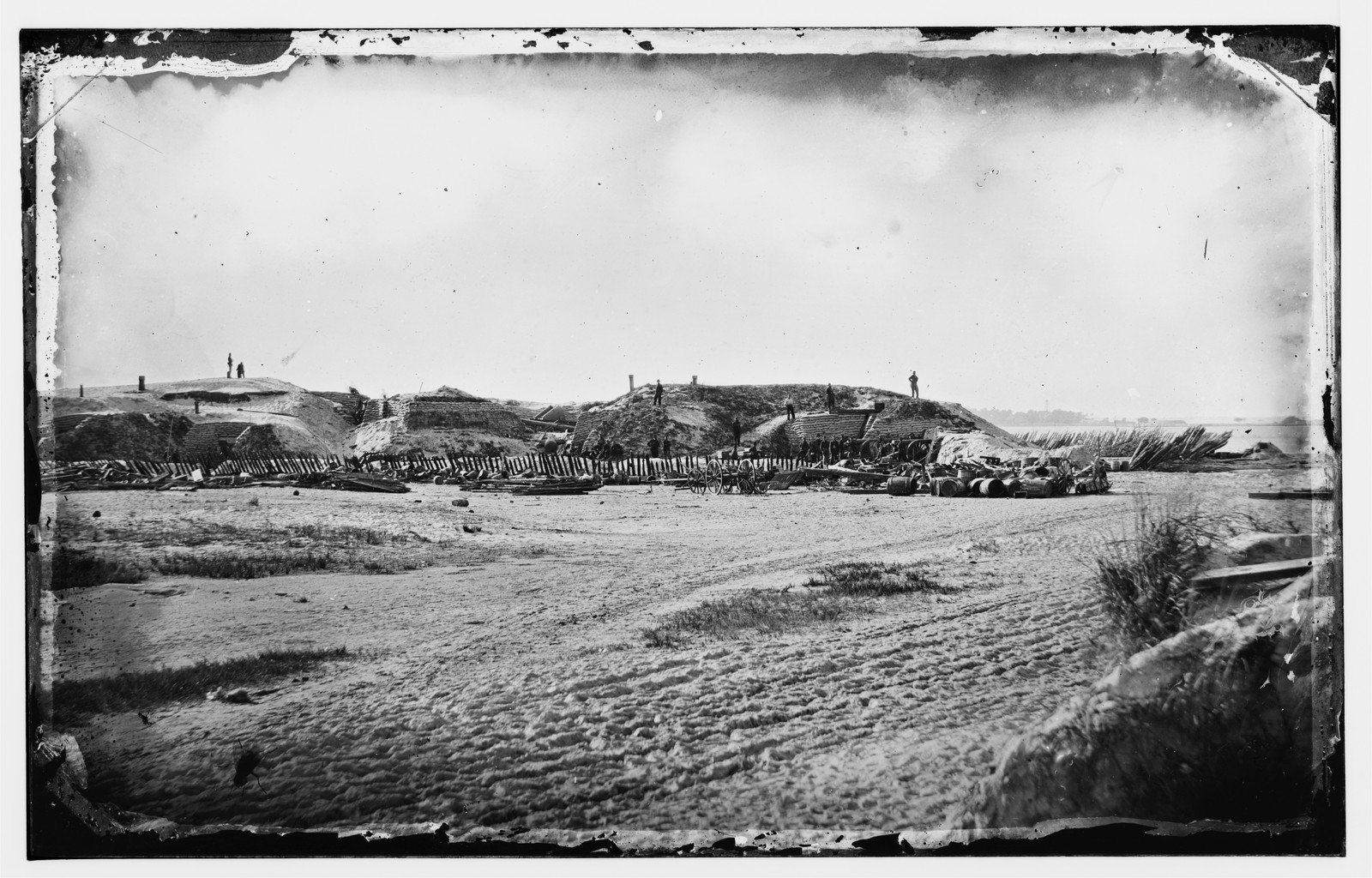
These are the guns of the second career of Cummings Point. From this work — Battery Gregg until the Confederates left it on the night of 6–7 September 1863 — the Federal breaching batteries turned on Fort Sumter, and by 30 October Gillmore could report the fort's southeast face 'more completely a ruin' than its gorge wall. Sumter did not fall for all that; its garrison held the rubble another sixteen months, and the guns here settled into the long habit of firing on it by night.
The Parrott was the siege's workhorse and its gamble at once — powerful, cheap to make, and given to bursting. So many burst before Charleston that their maker put a statement into Gillmore's published report defending their construction. The pair in this view survived to be photographed.
Also at Fort Putnam