Fort Putnam
Ammunition Enough
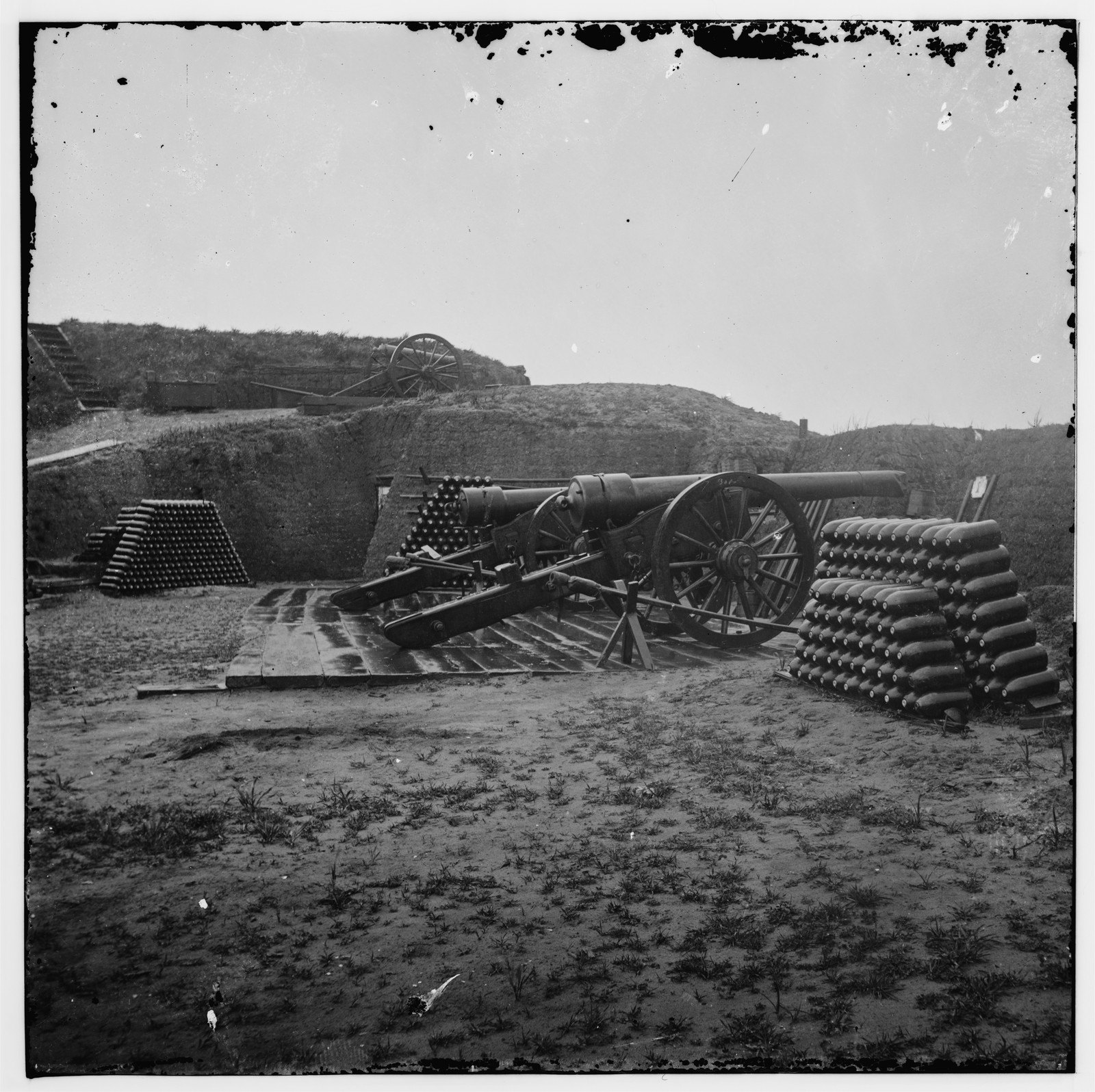
Original scanLibrary of Congress
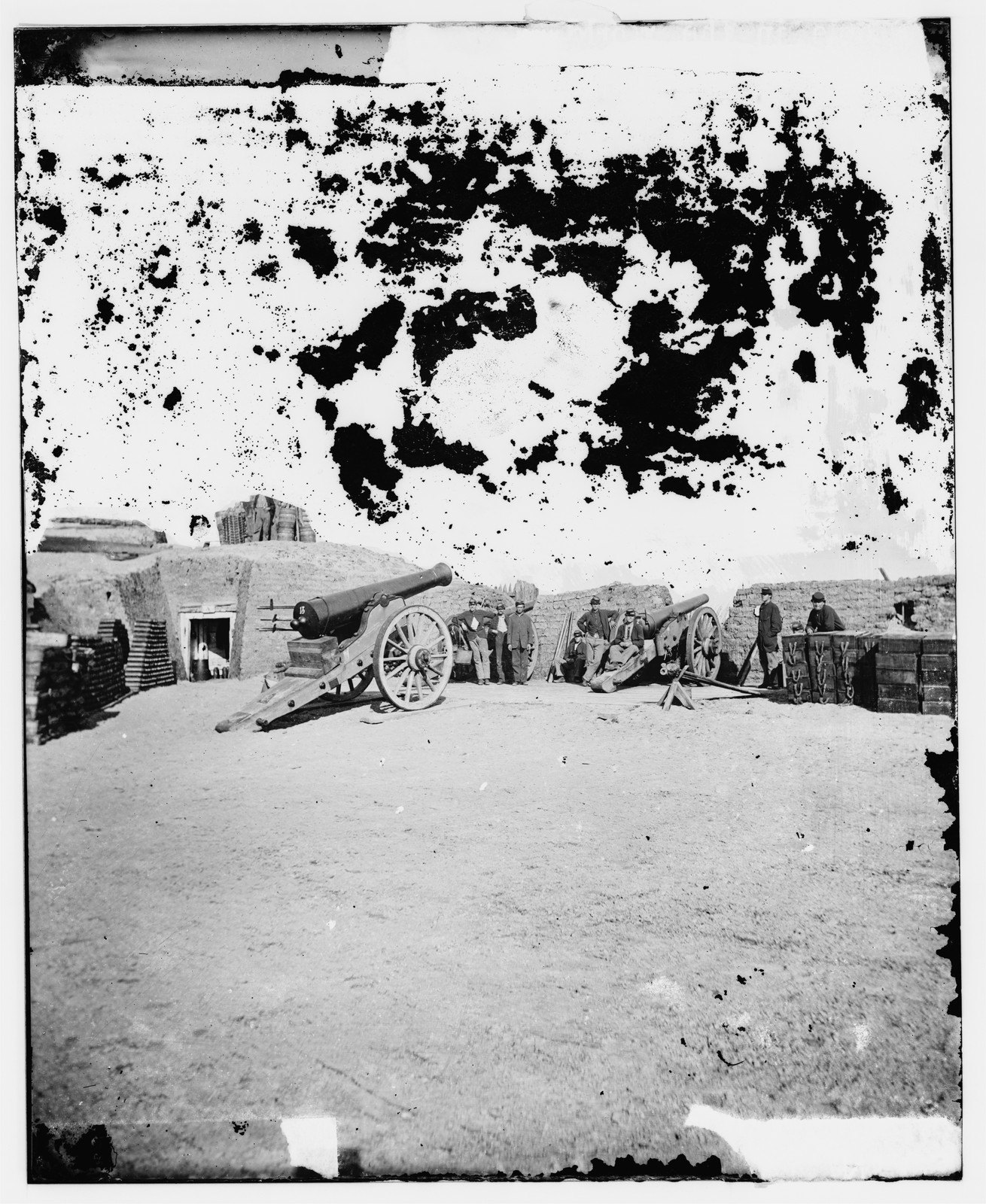
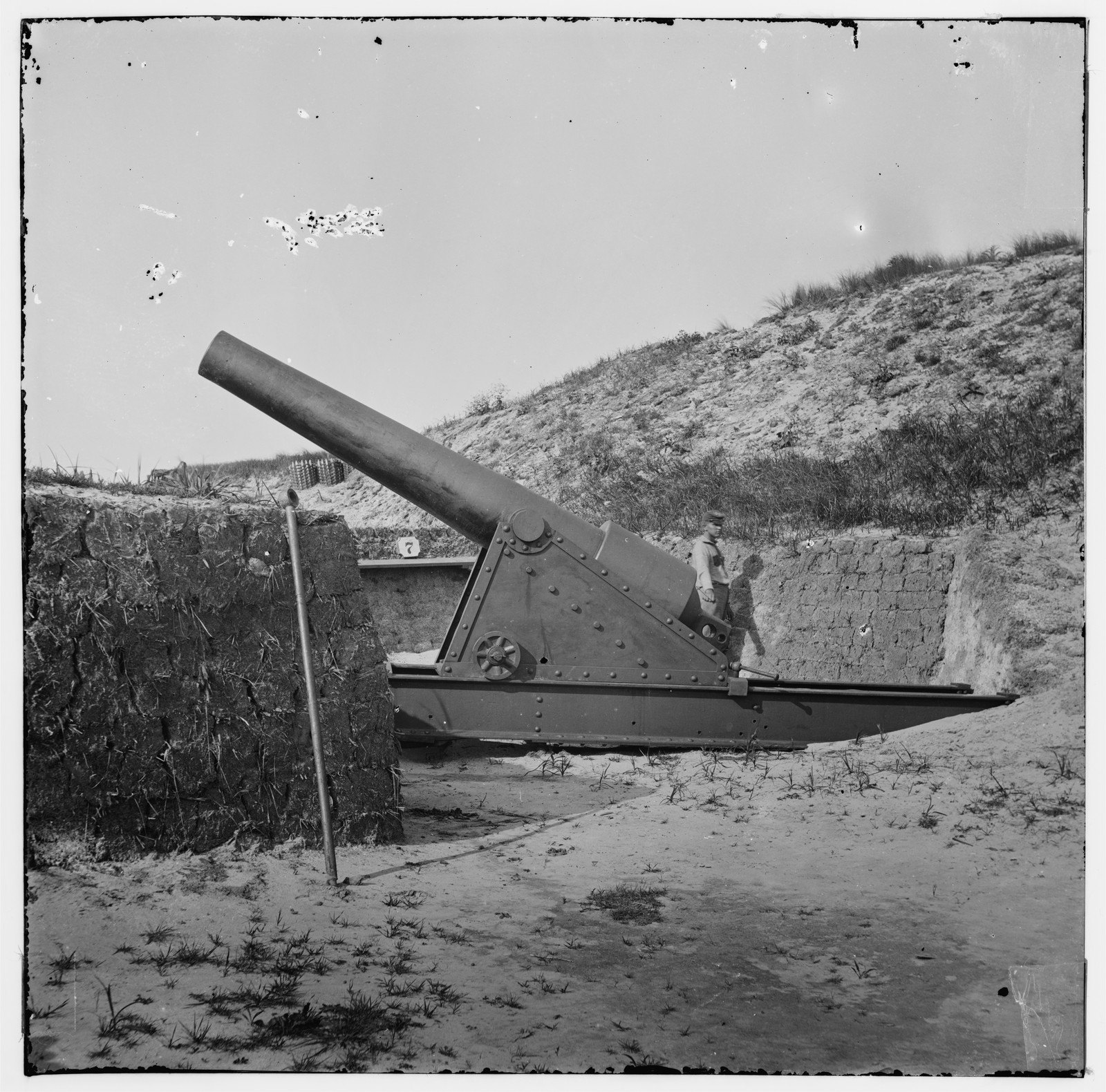
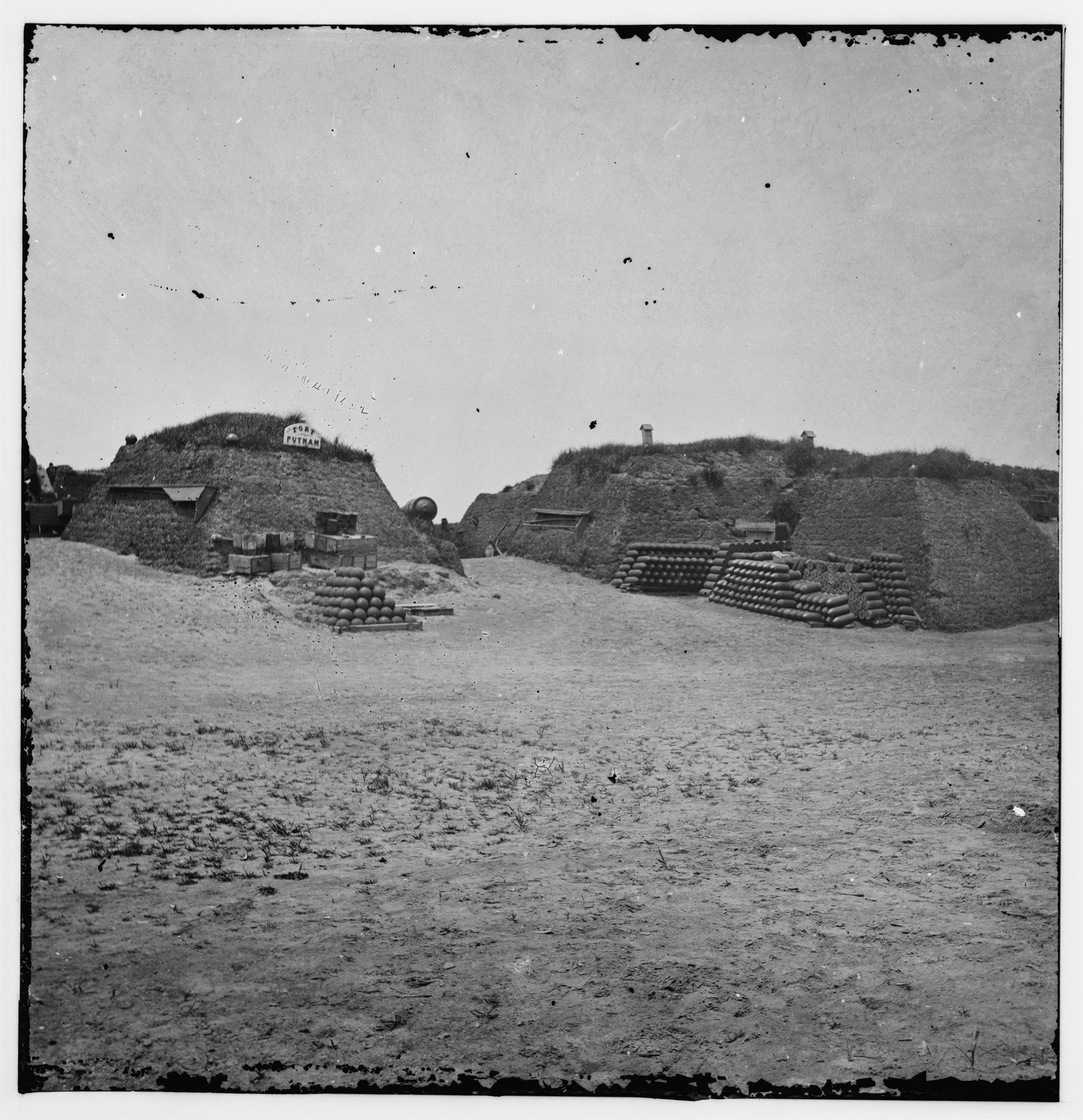
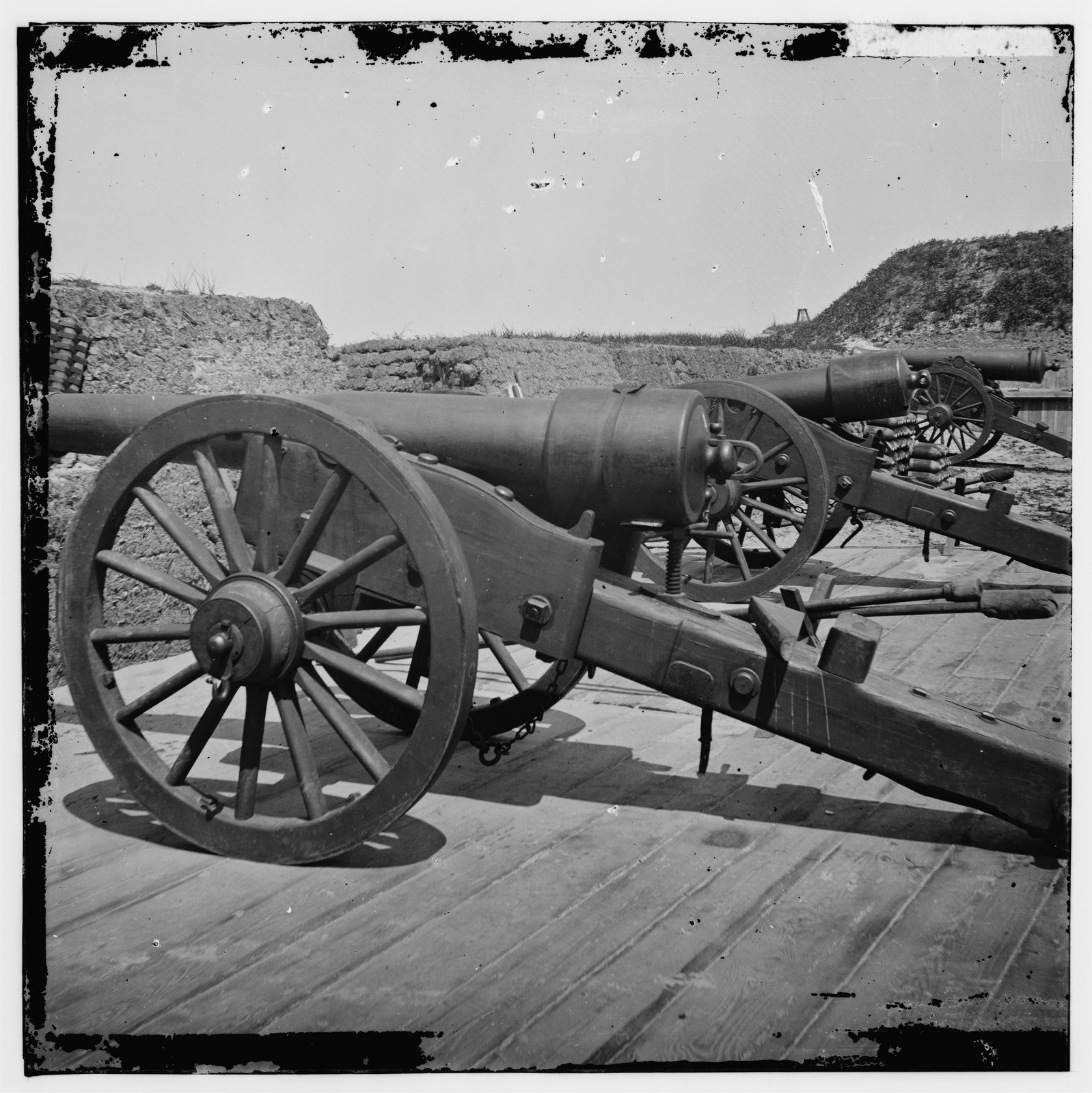
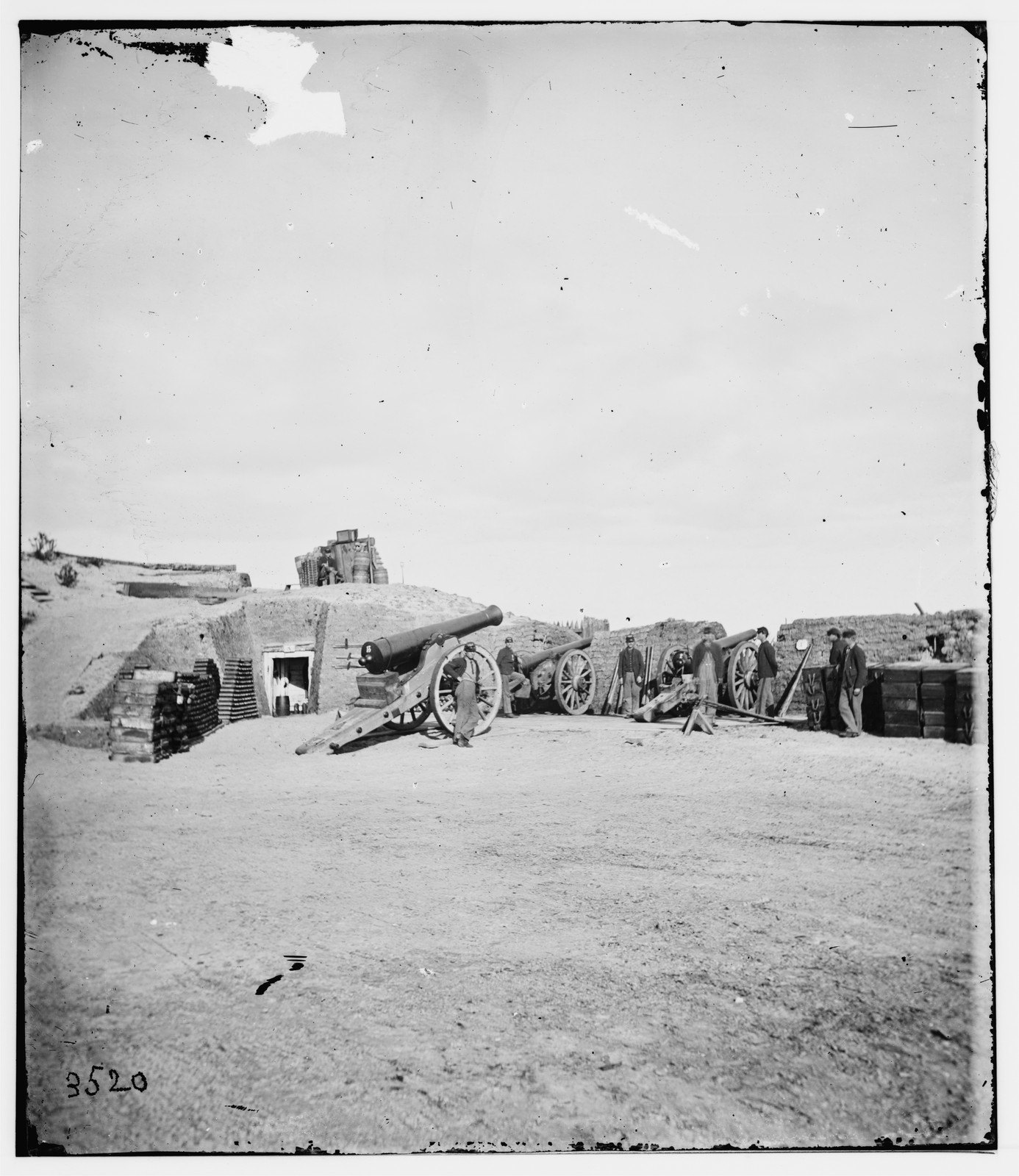
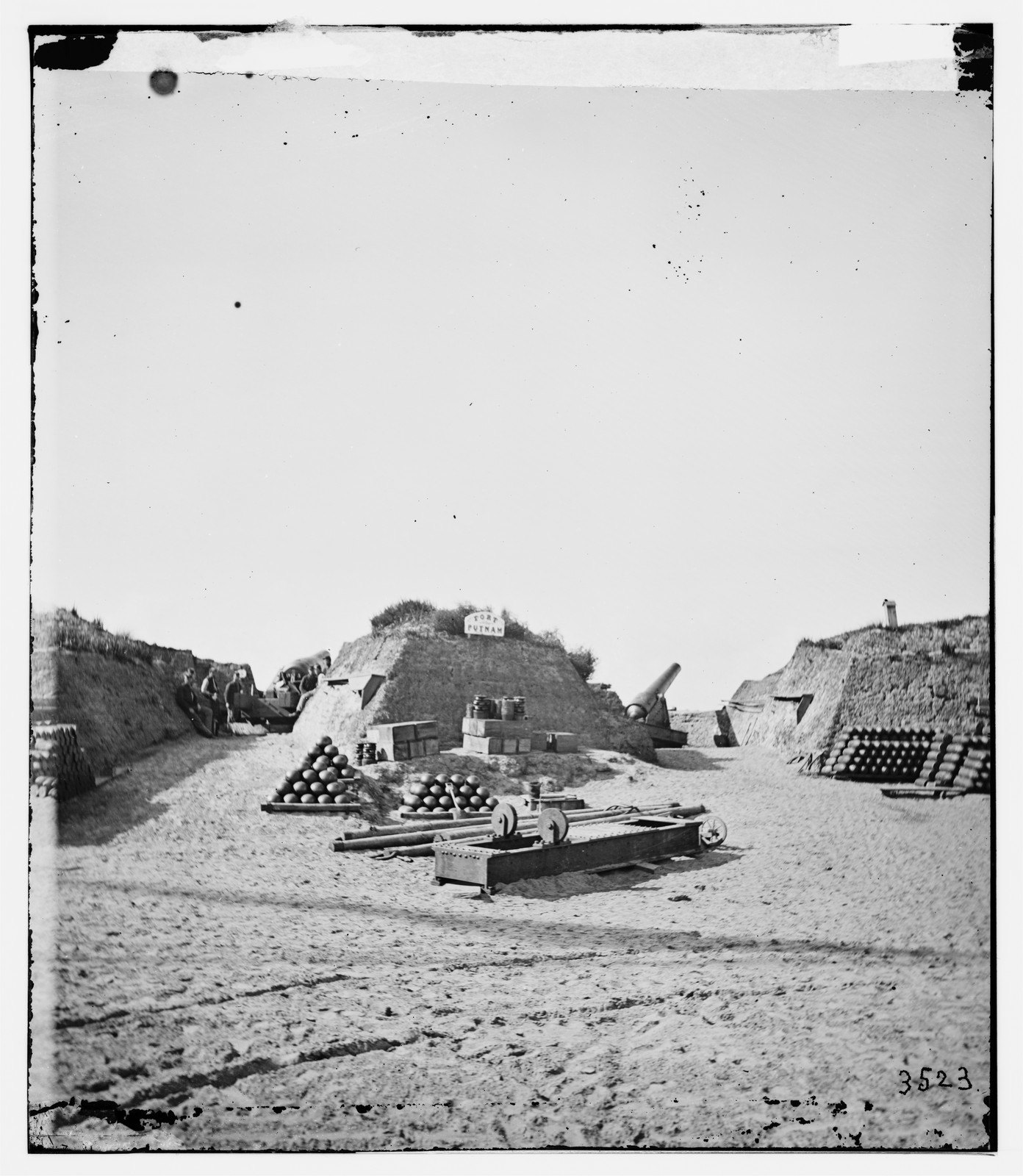
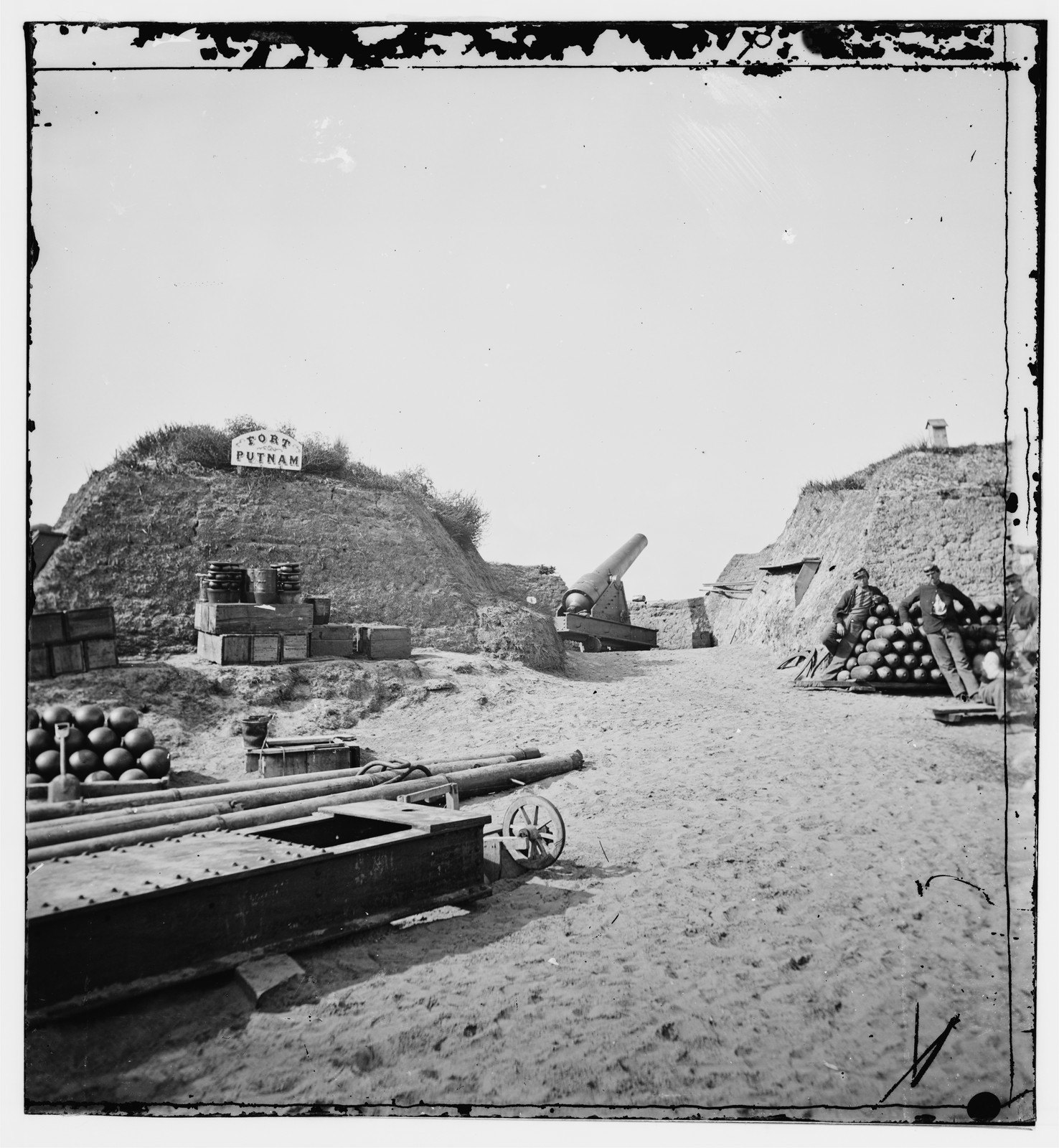
A 100-pounder Parrott stands between stacked pyramids of its own shells inside Fort Putnam, a second gun's wheel showing on the parapet at the left, the magazine mound rising behind. The shells are the subject as much as the gun: course on course of them, fused and waiting, more visible ammunition than most batteries of the war ever saw in one place.
The stacks say something exact about this siege. The Federal batteries on Morris Island fired on Fort Sumter and the city not in assaults but in appropriations — through the summer of 1864 Sumter's returns counted the night's Parrott shells in the dozens, logged how many missed, and filed it as routine. When Foster took the department in 1864 he fired 14,666 rounds at Sumter over sixty days, and stopped, by his own report, for want of ammunition. The stacks in this photograph are what 'want of ammunition' looked like before it arrived.
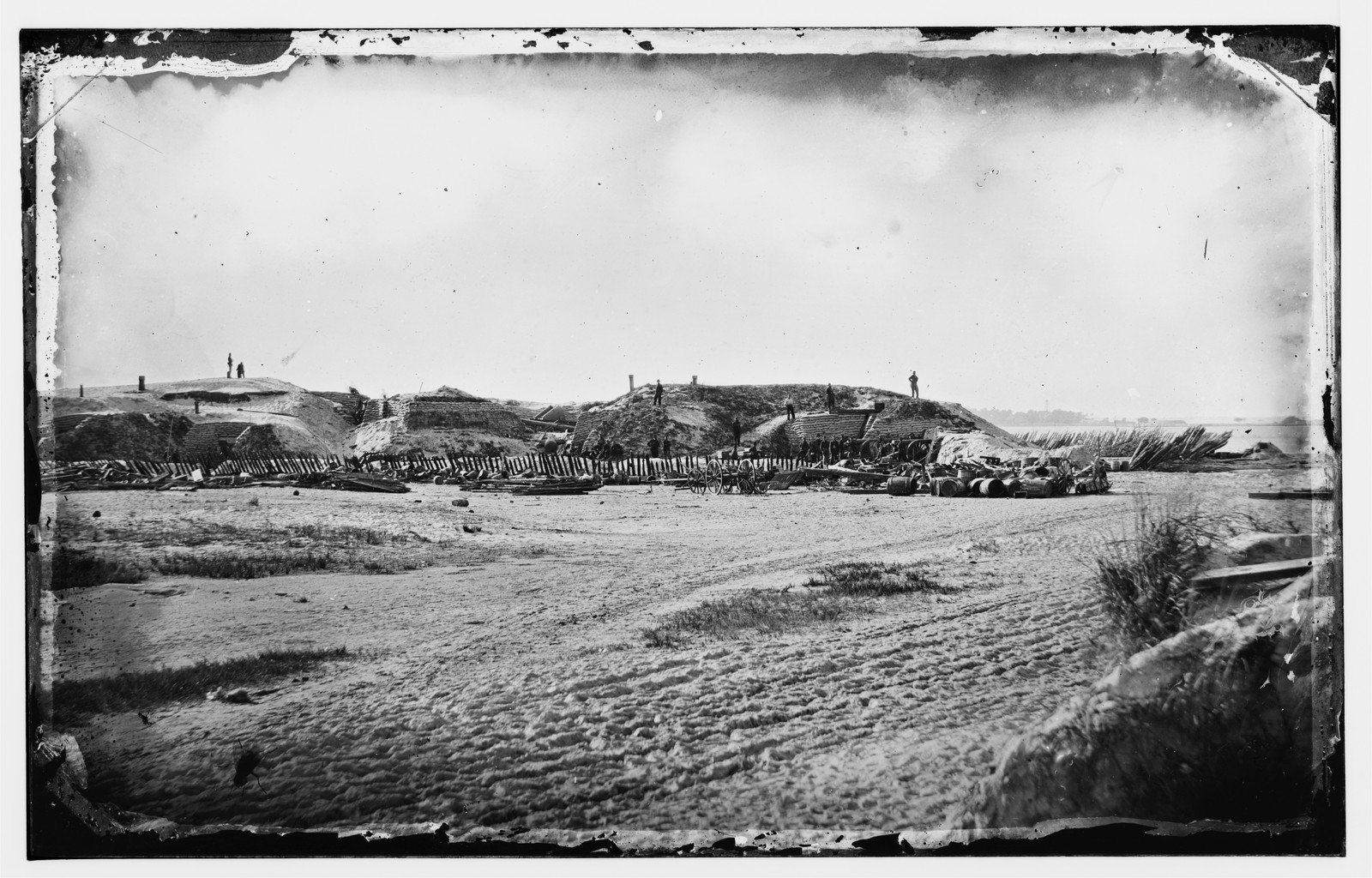
Everything in the frame — guns, carriages, platforms, every shell in every stack — came in over the beach and the engineers' wharves, was hauled up the island, and was stacked by hand. Colonel Serrell's New York engineer regiment built the roads and wharves that moved it; the pyramids are as much a monument to that work as the guns are to the gunners.
Also at Fort Putnam