Fort Putnam
Cummings Point, Under New Management
Original scanLibrary of Congress
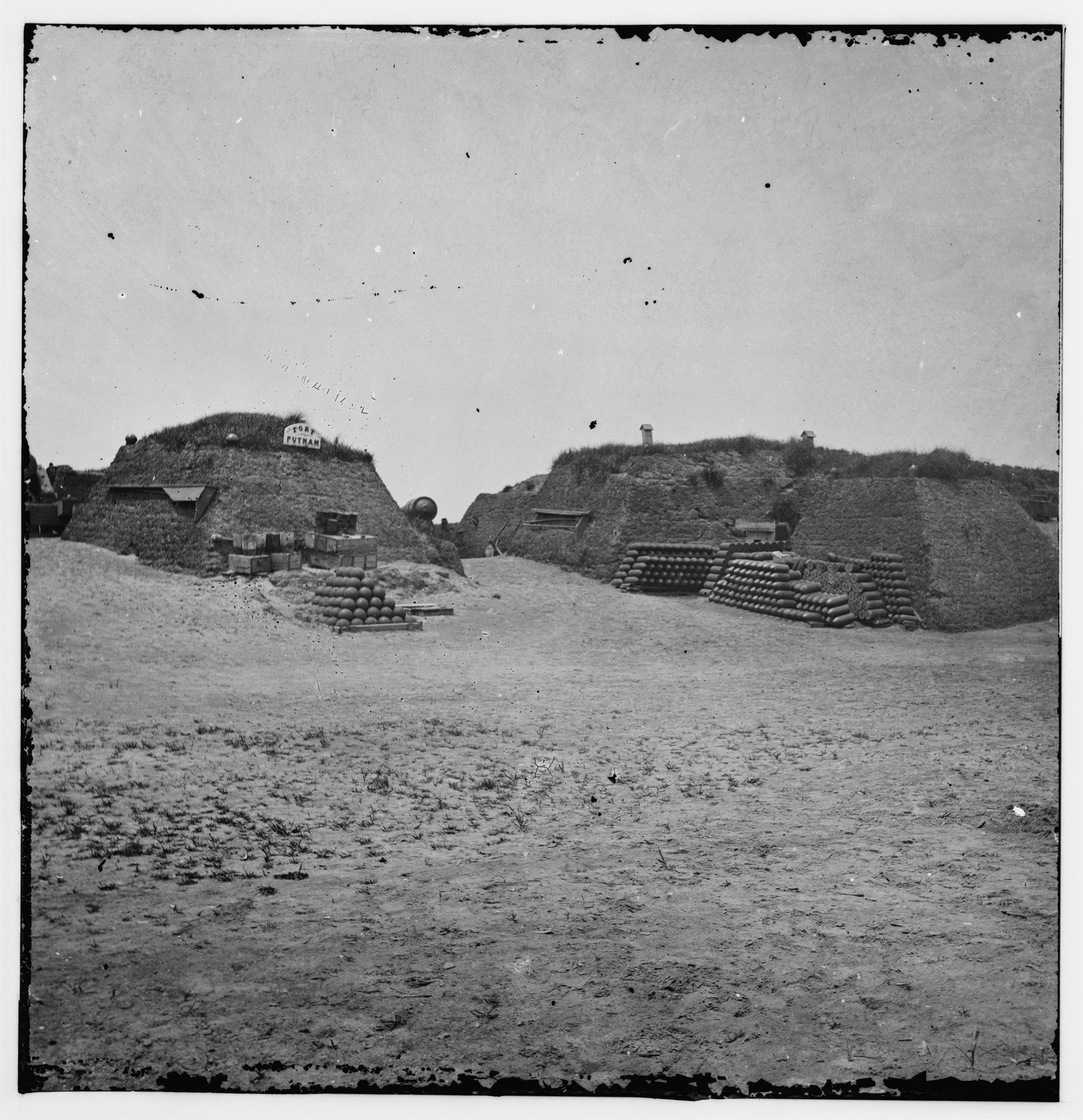
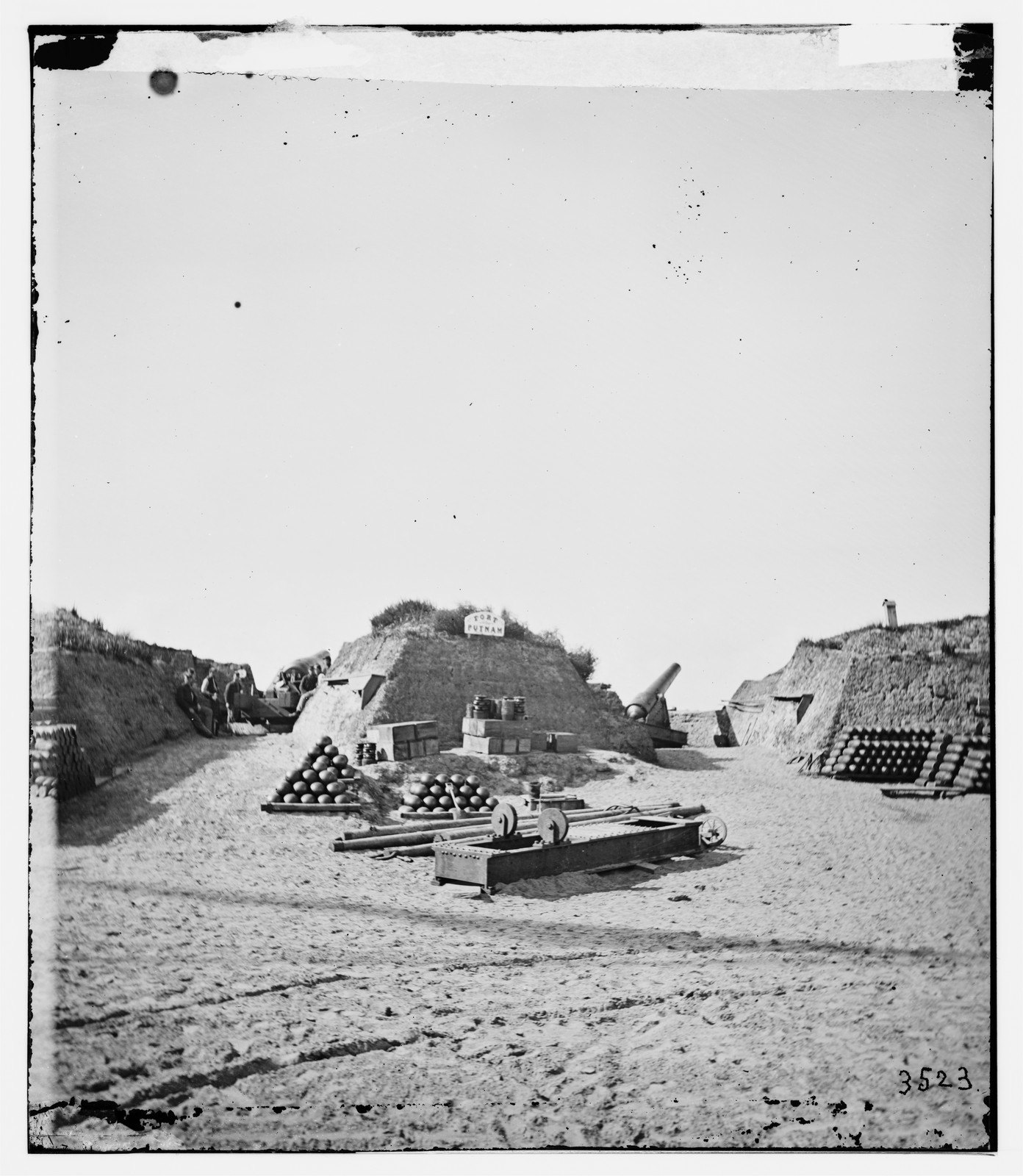
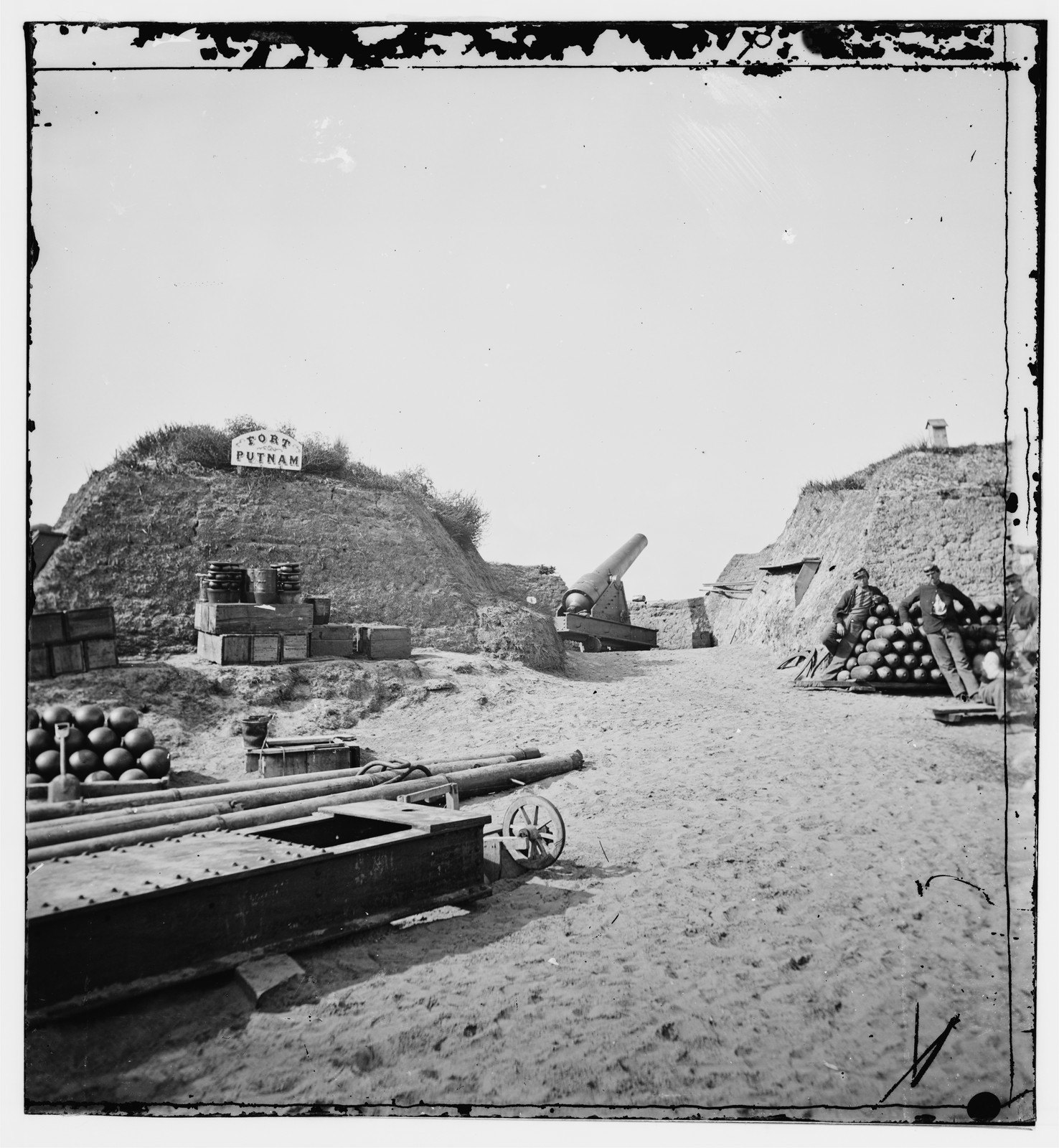
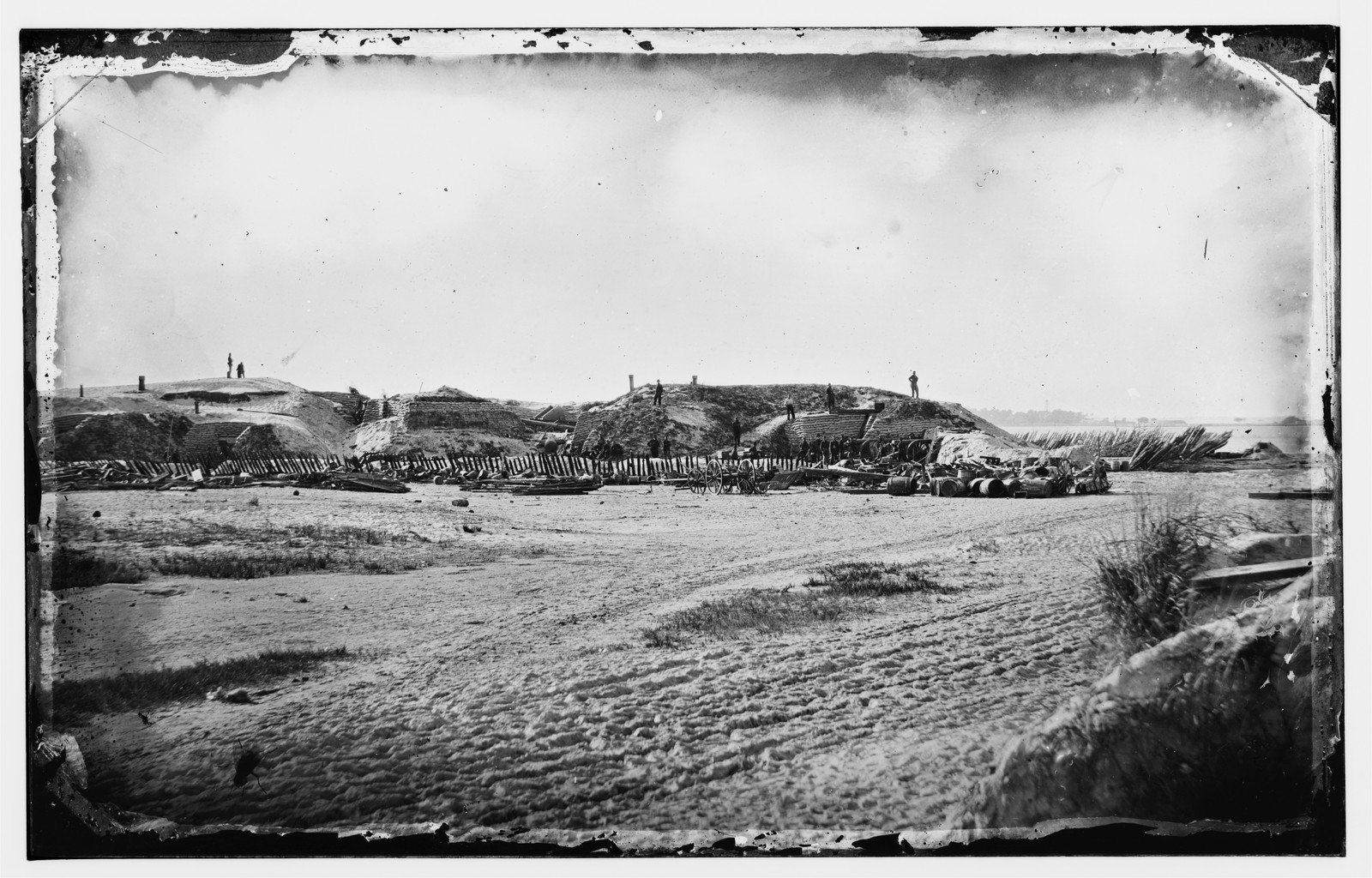
A low sand fort seen from outside — figures on the parapets, a line of sharpened stakes running along the front, the harbor beyond. The Library of Congress title carries the whole story in a phrase: Fort Putnam, formerly Confederate Battery Gregg.
This is Cummings Point, the northern tip of Morris Island, and no piece of ground in the harbor changed meaning so completely. In the spring of 1861 the Confederates built their ironclad battery here, faced with railroad iron, and fired on Fort Sumter with Edmund Ruffin among the spectators. On the night of 6–7 September 1863, after fifty-eight days of siege, Colonel Keitt took the garrisons of Wagner and Gregg off the island by boat, losing three boats and forty-six men in the doing of it.
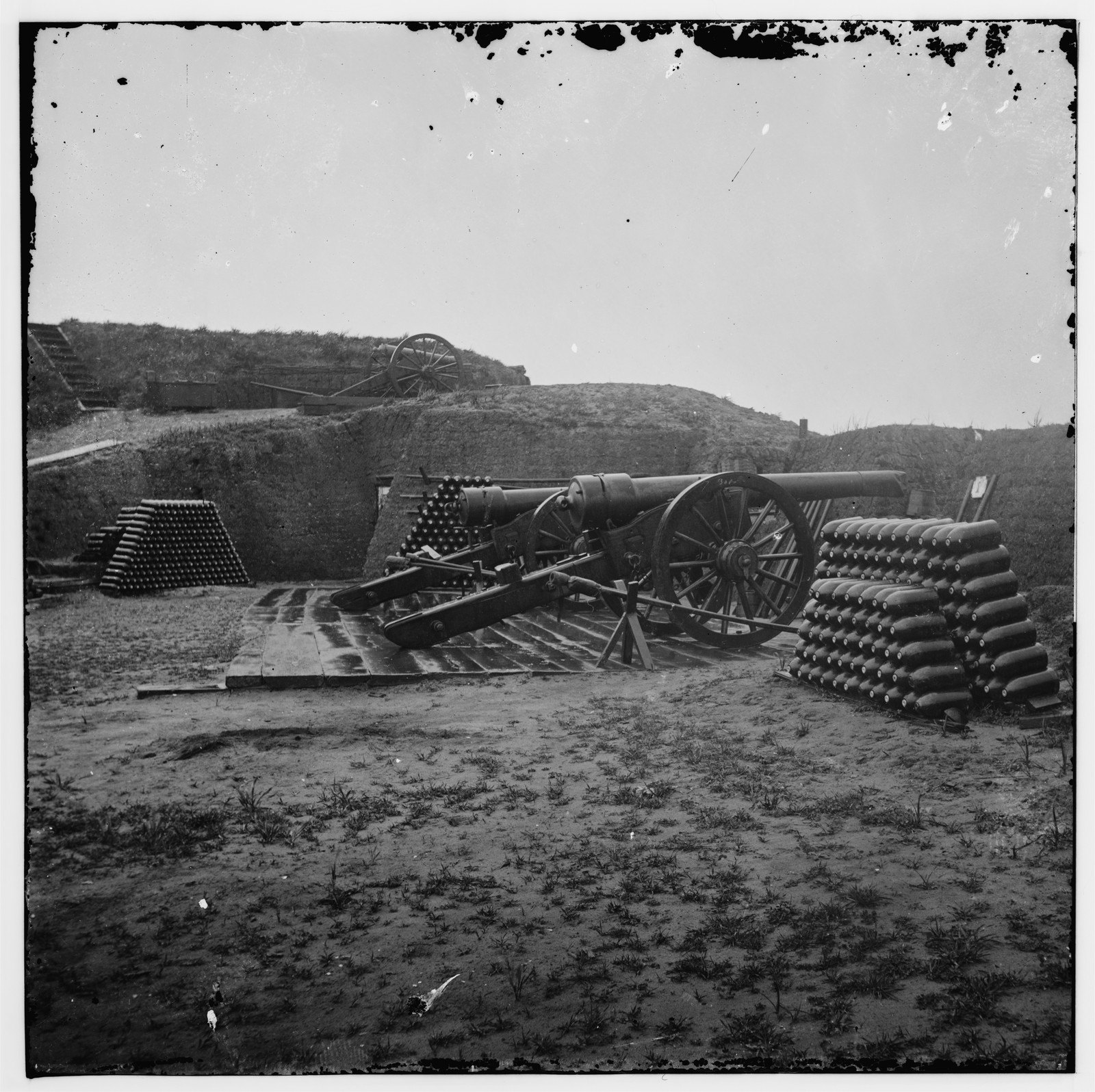
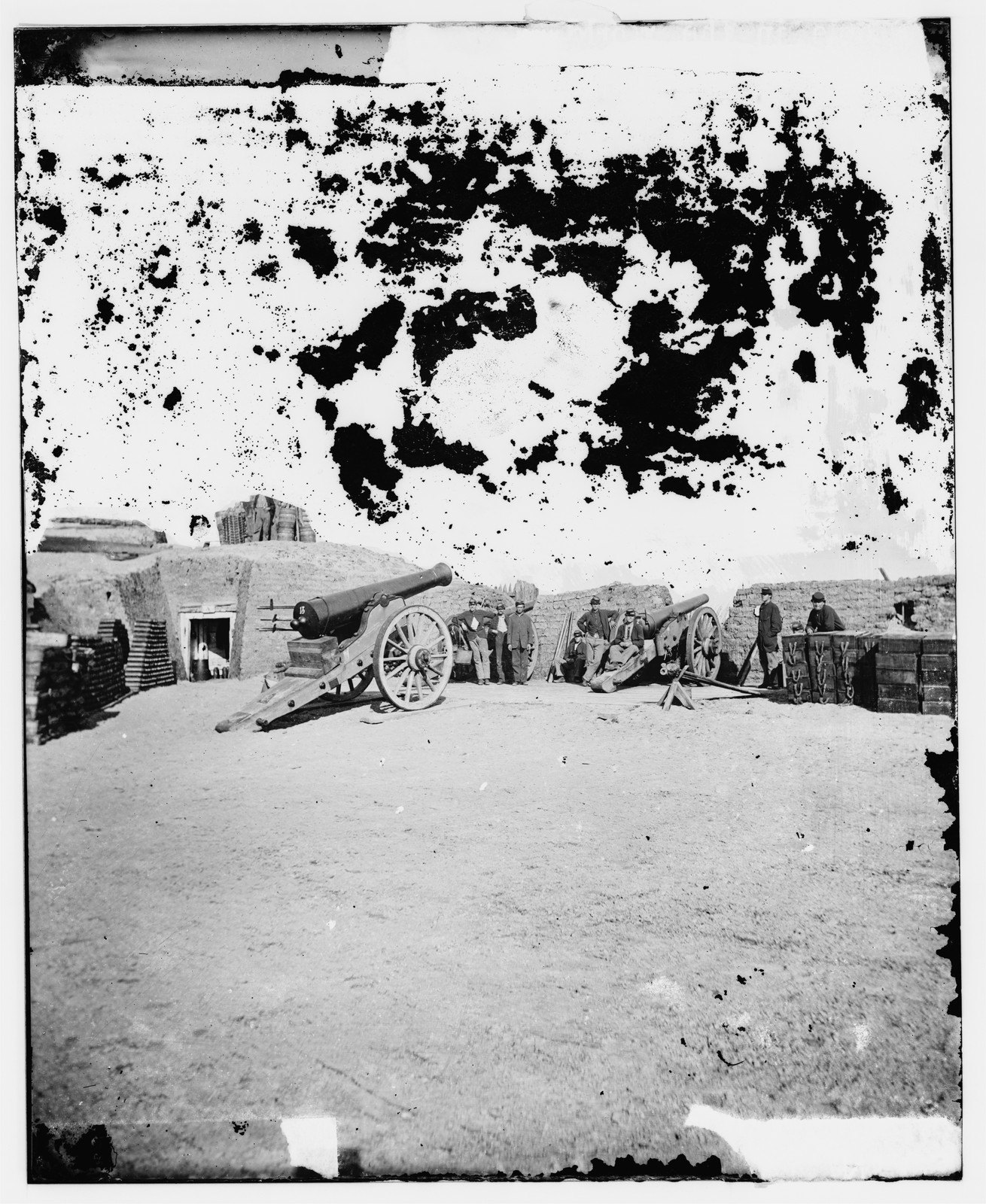
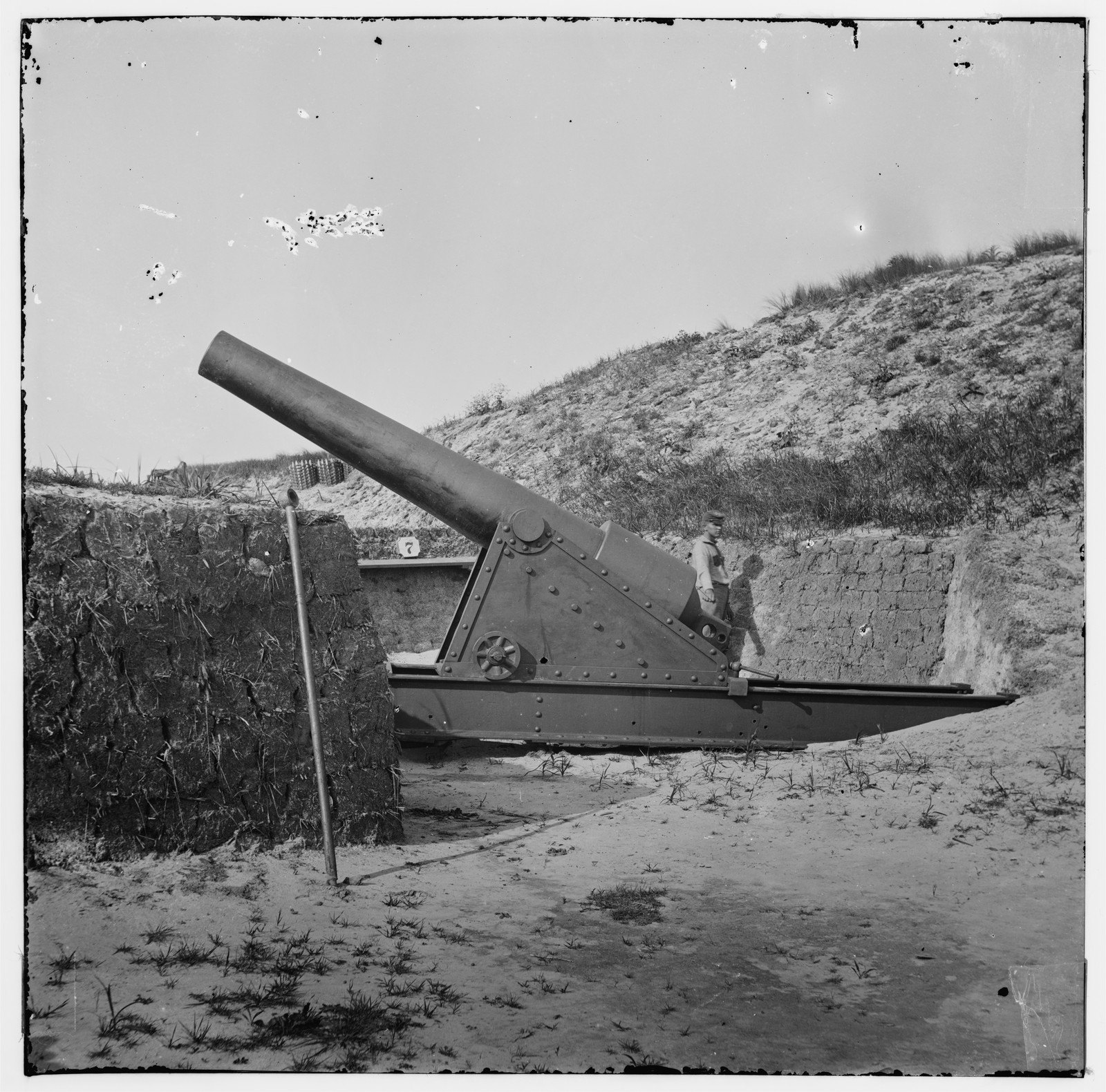
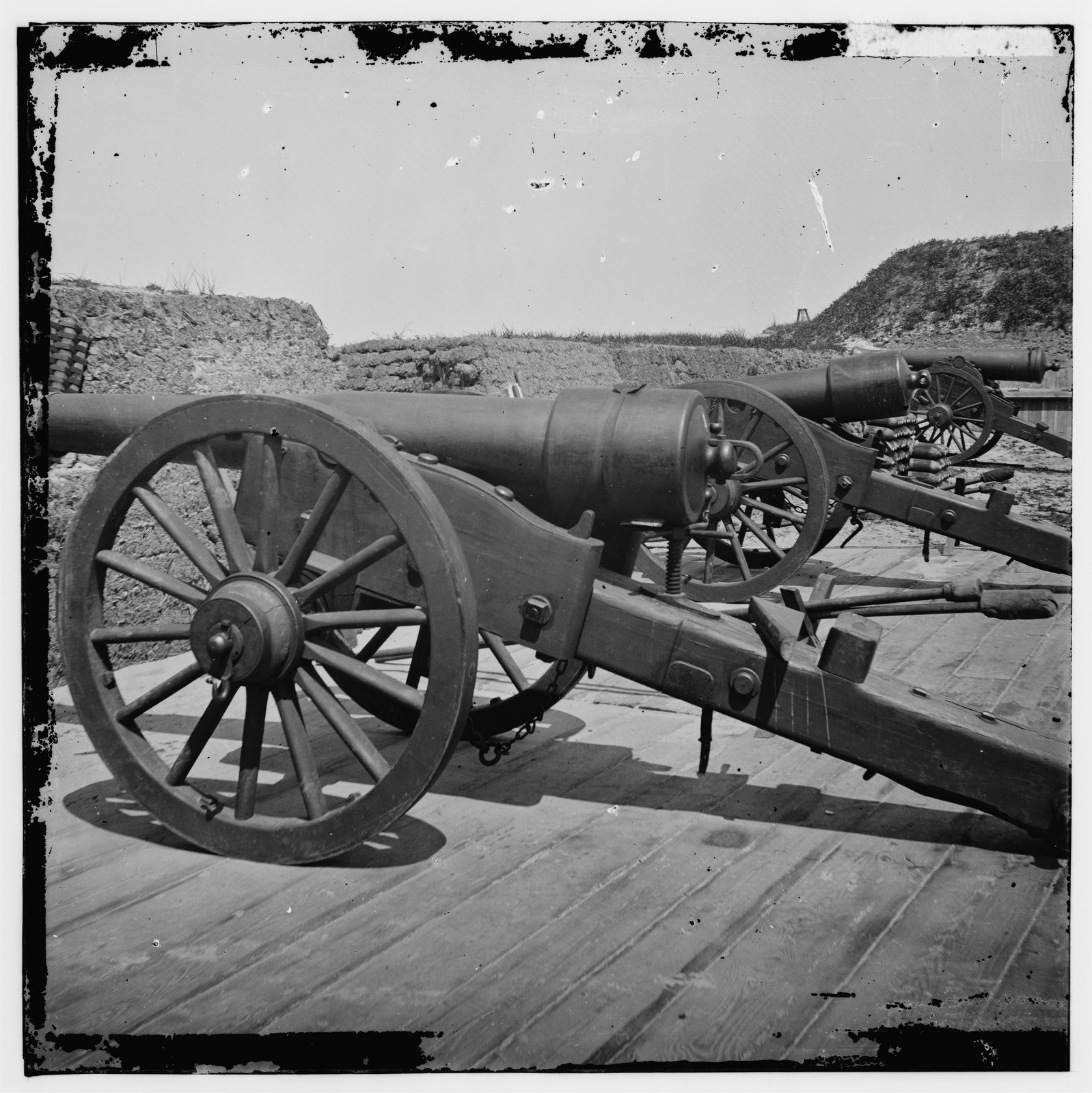
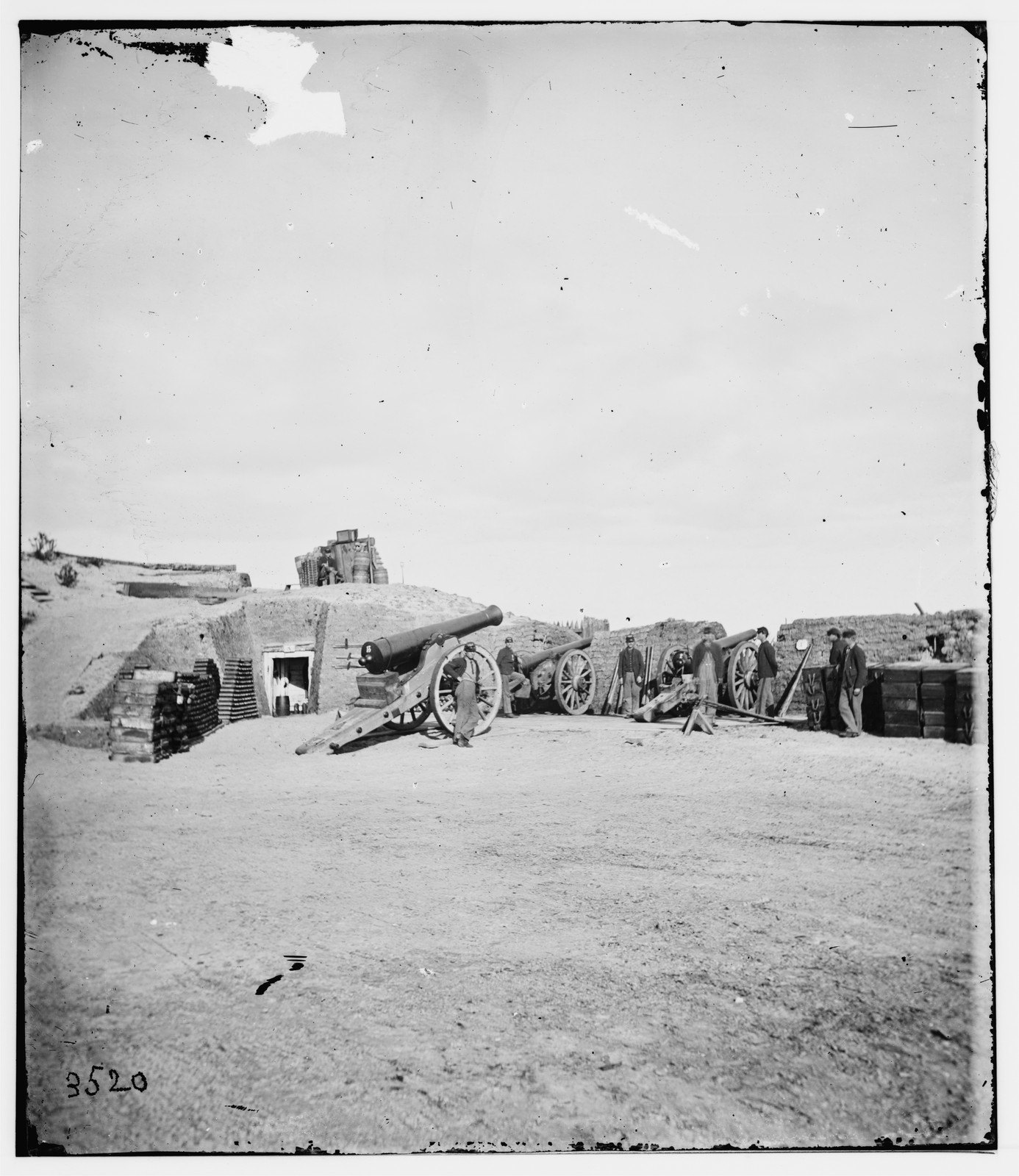
The Federals turned the works around within weeks. By the end of October Gillmore was reporting to Halleck that the breaching guns in Wagner and Gregg — renamed Fort Strong and Fort Putnam — had done all he could desire against the southeast face of Fort Sumter, which was now 'more completely a ruin' than the gorge wall. The guns of this little sand fort, pointed the other way, did much of that.
The stockade line in the view is the kind of detail Sumter's lookouts logged daily across the water: in September 1864 the fort's post returns noted a covered way connecting Gregg with the sand hills, and a new stockade going up on its left. Each side watched the other's shovels for a year and a half.
Also at Fort Putnam