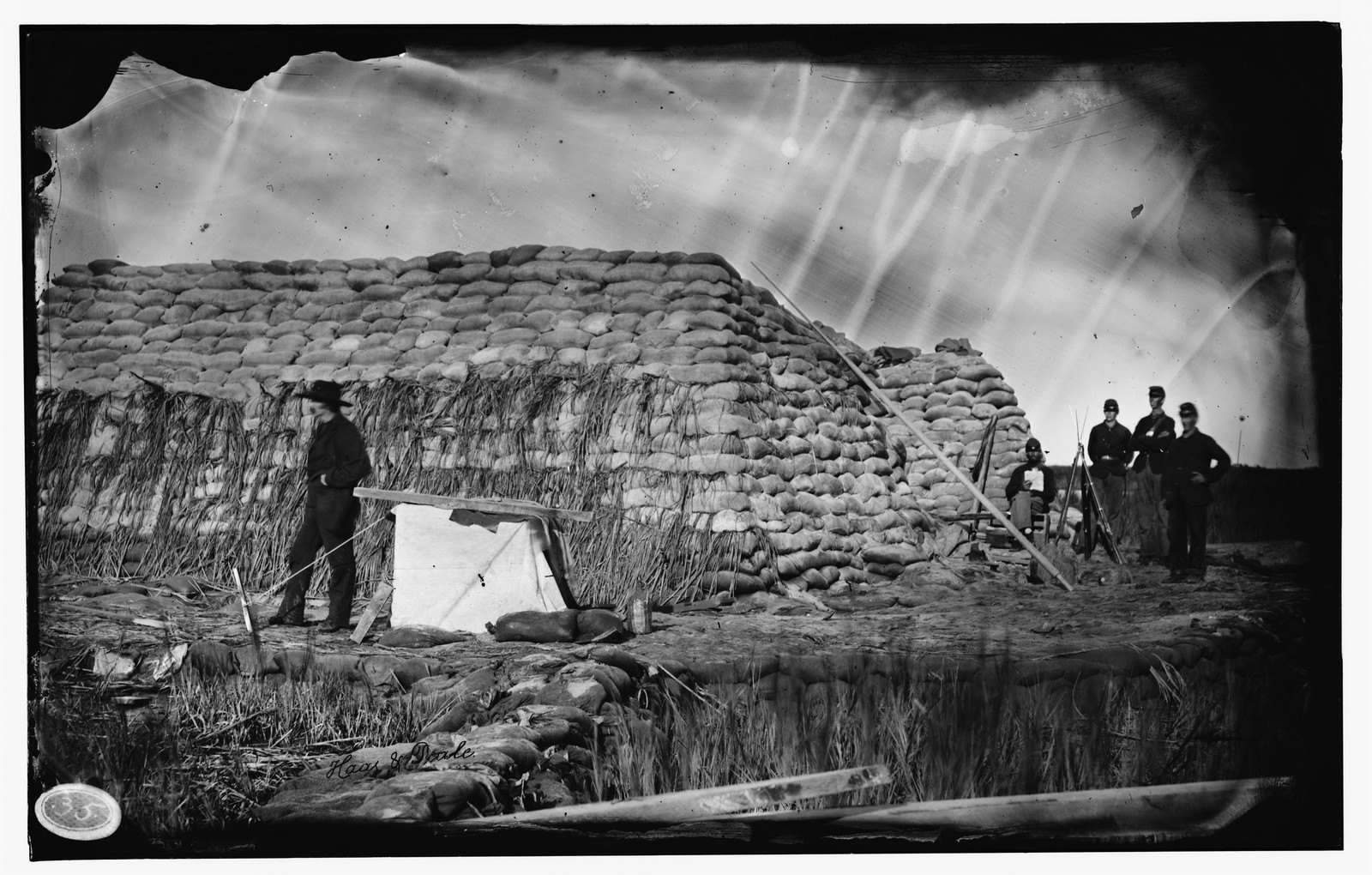
The Marsh Battery
The Marsh Battery After the Burst
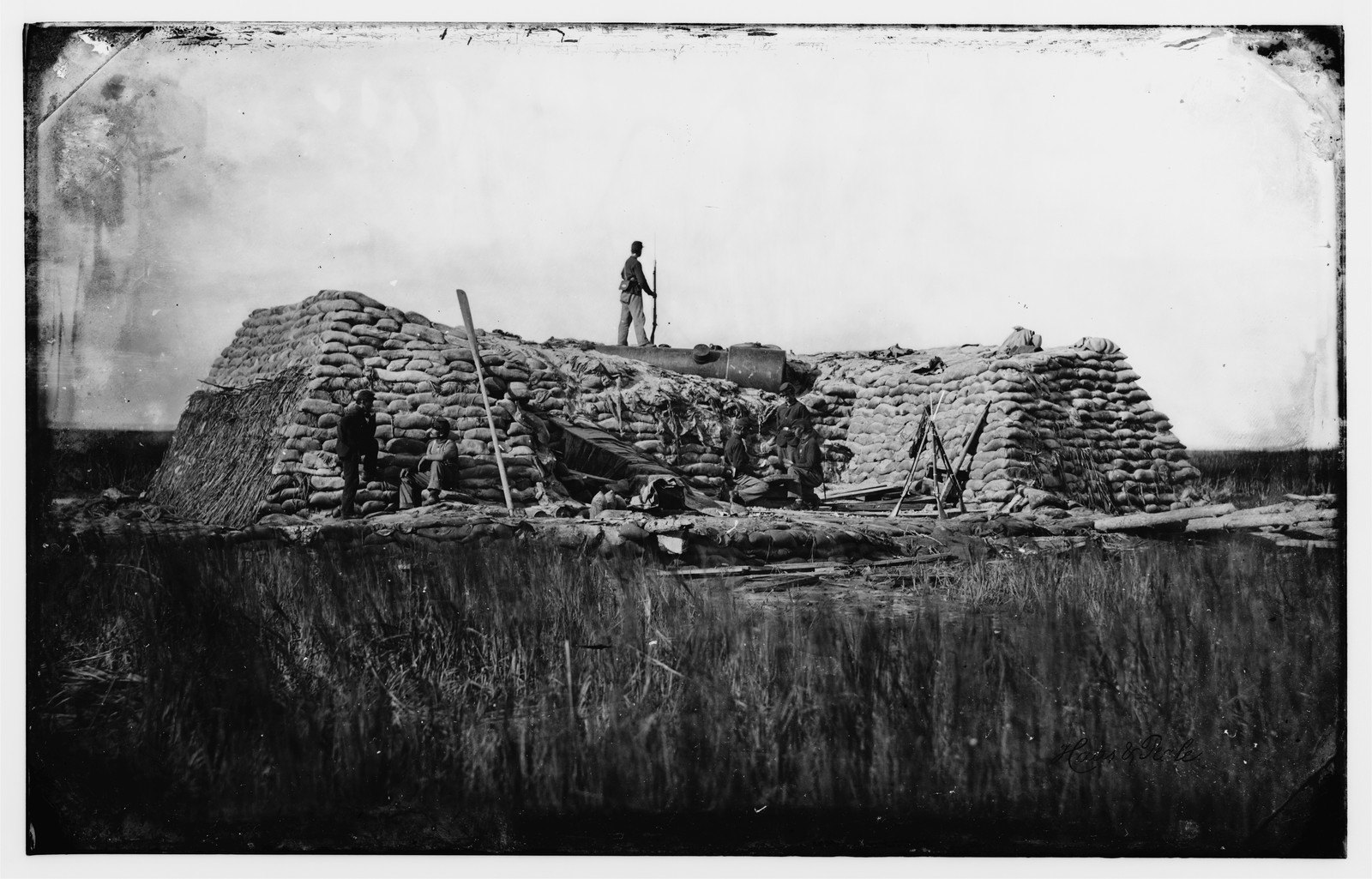
Original scanLibrary of Congress
This is what was left of the Swamp Angel. The parapet still stands — sandbags stacked in courses, sagging where the marsh took them — but the right-hand end has been torn open, and the gun that made the battery famous is gone from it.
The problem the engineers solved here was mud. There is no ground between Morris Island and James Island, only pluff mud that will not hold a footprint, let alone sixteen thousand pounds of Parrott rifle. So they drove piles, floated a grillage of logs on top, and built the parapet of sandbags on that. The Confederates watching from Battery Wagner reported it as a battery going up on Thomas Island; the Federals called it the Marsh Battery, and then everyone called it the Swamp Angel.
The gun was an 8-inch 200-pounder Parrott. At half past one in the morning of 22 August 1863 it threw the first shell into Charleston, better than four miles off, after Gillmore's demand for the evacuation of Morris Island and Fort Sumter had gone across unsigned at a quarter to eleven the night before. On its thirty-sixth round, on the 23rd, it blew out its own breech and was finished.
The Library of Congress dates this view to the explosion of 22 August 1863. The gun in fact burst on the 23rd; the catalog line is repeated here as the repository has it. A second exposure of this same view is published alongside.
Also at The Marsh Battery