The Battery
The Battery Row, One House Burned Out
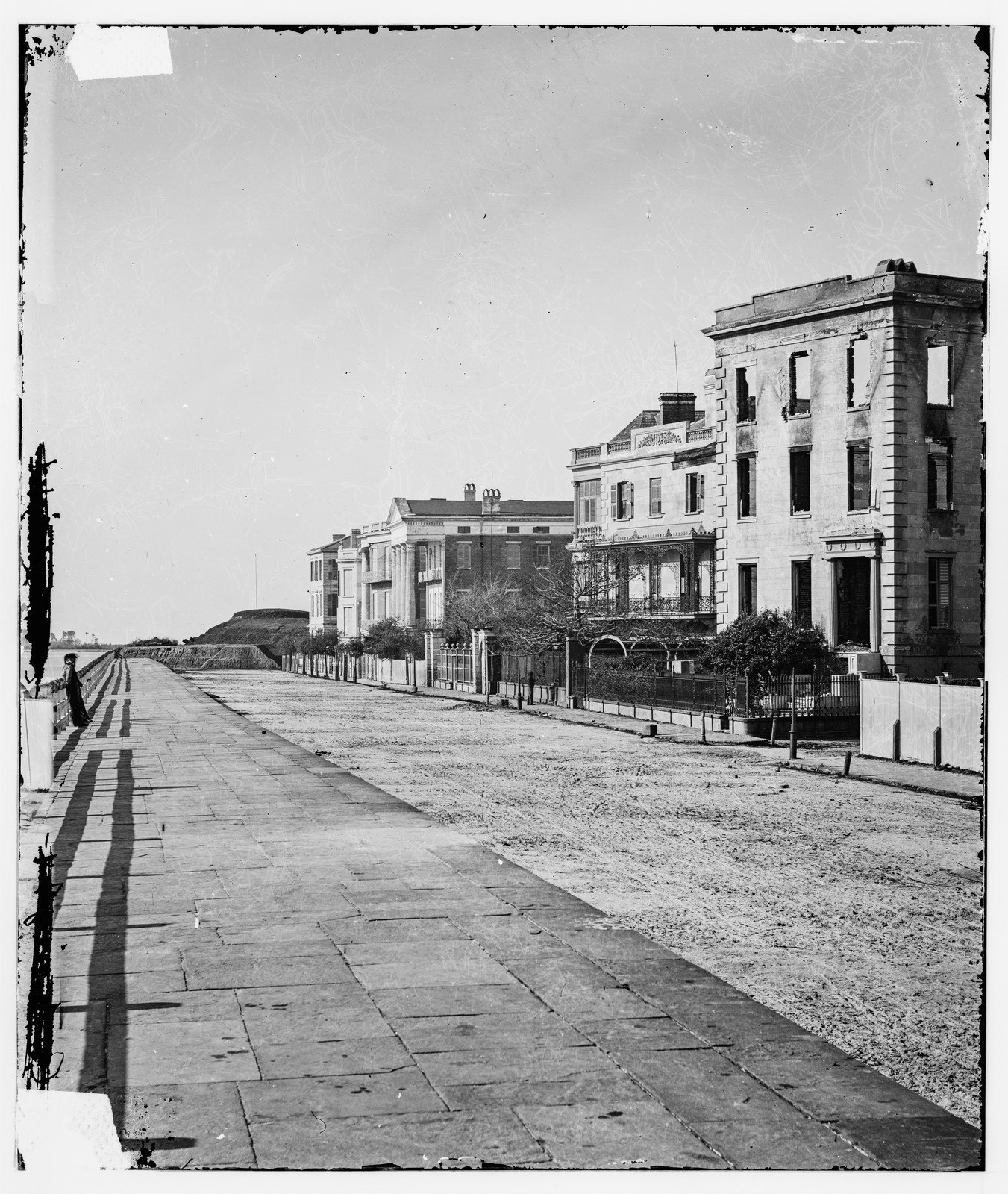
Original scanLibrary of Congress
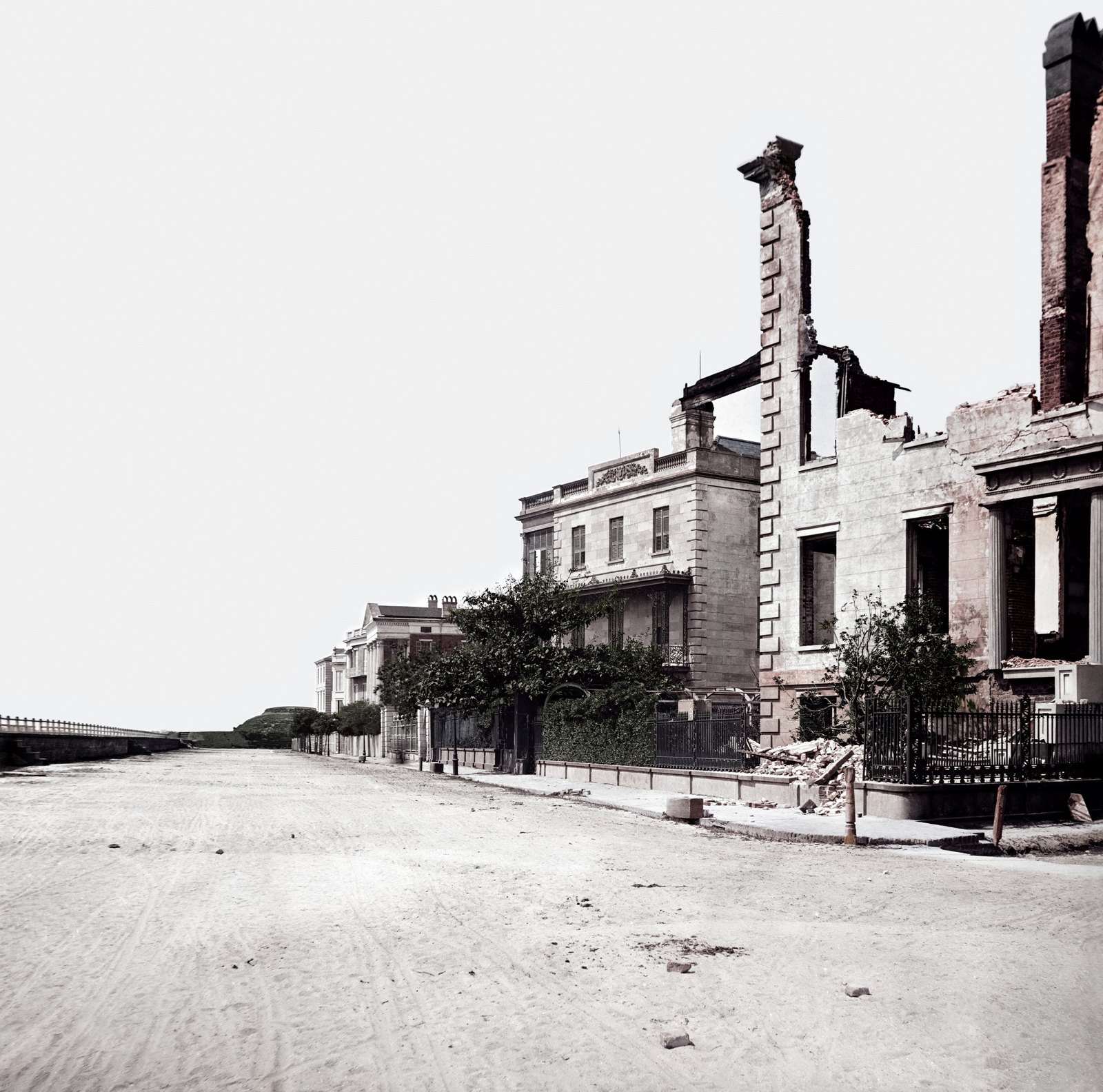
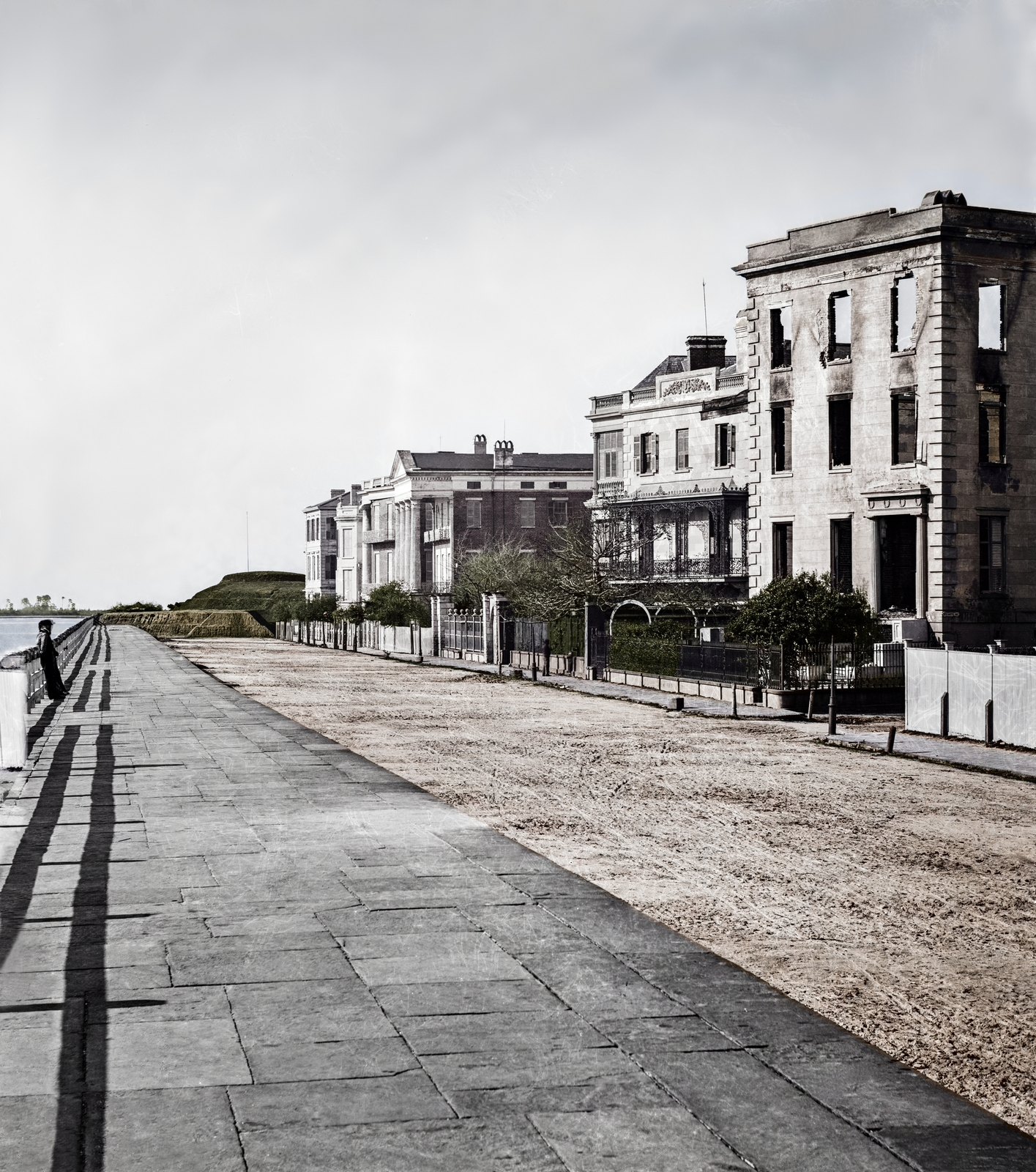
The promenade of East Battery runs up the left of the frame, and the great houses face it in a row. The nearest one is a shell — roof gone, windows blind, the walls standing hollow. Its neighbors to the north look untouched.
That is what the bombardment of Charleston actually looked like on the ground. The first Federal shells fell on the city in the early morning of 22 August 1863, and the shelling ran on and off for eighteen months — never continuous, coming in bursts, with whole quiet months between them. The lower half-mile of the peninsula lay within reach of the heavy Parrott rifles on Morris Island, and Charlestonians named it the Shell District. Most of its people moved up the peninsula, and the houses along the Battery stood shuttered, taking their chances one address at a time.
A burned-out house in this row was more likely fired by a shell than by any accident: the same fate, from the same cause, gutted Daniel Heyward's mansion a little way along East Battery. Which family's house this is, the catalog does not say, and no identification is made here.
Also at The Battery