View
The Result of the Bombardment
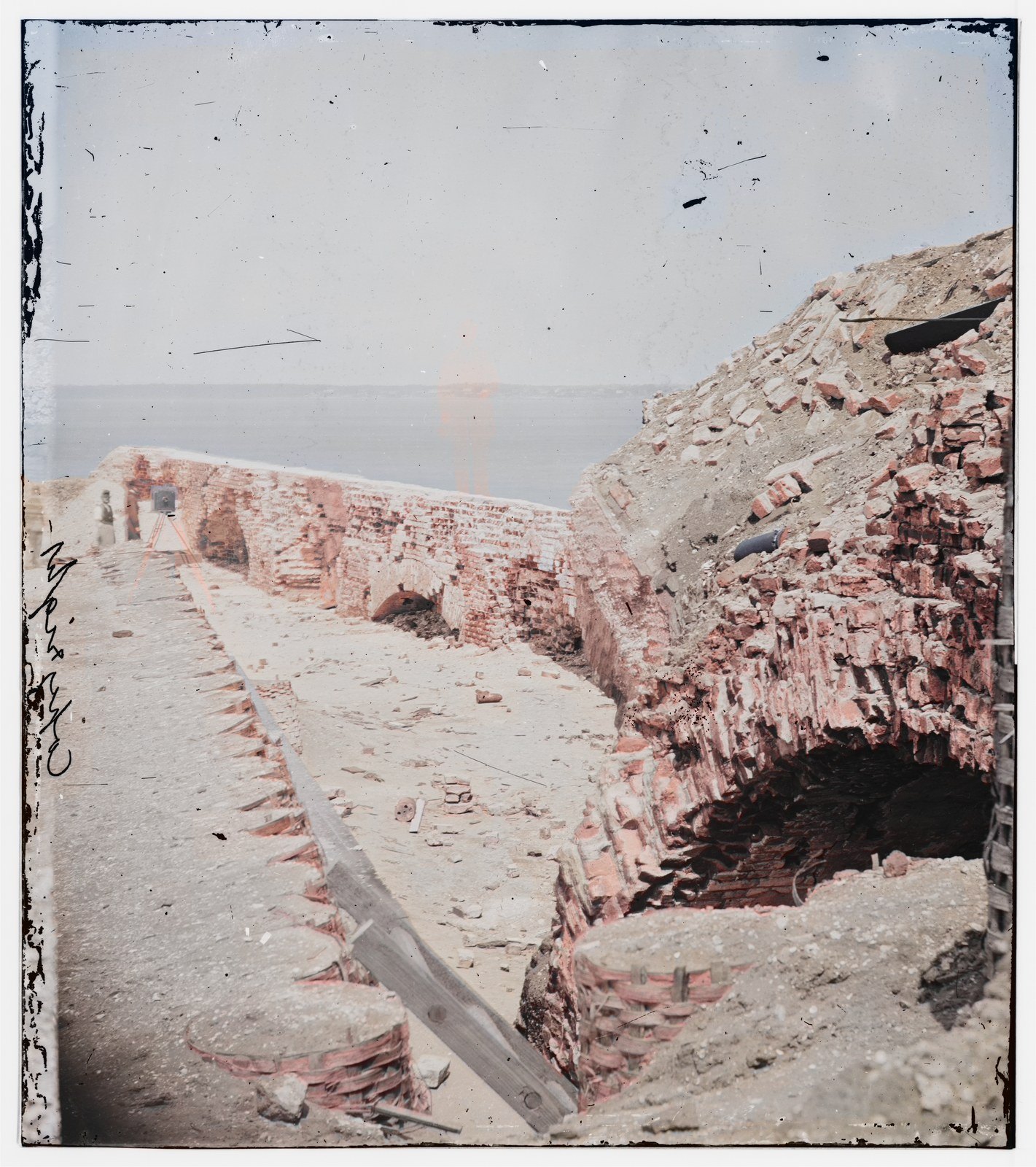
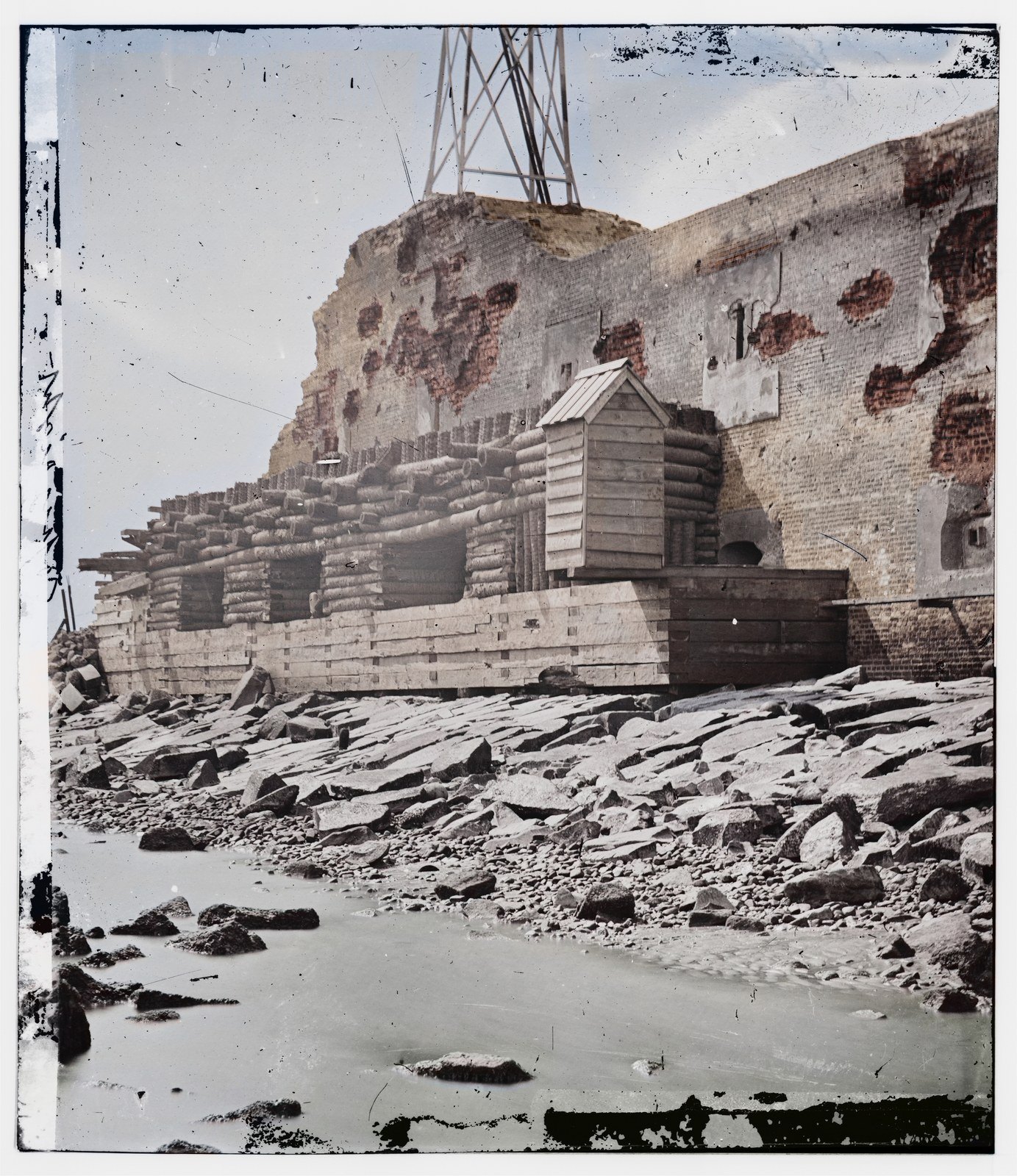
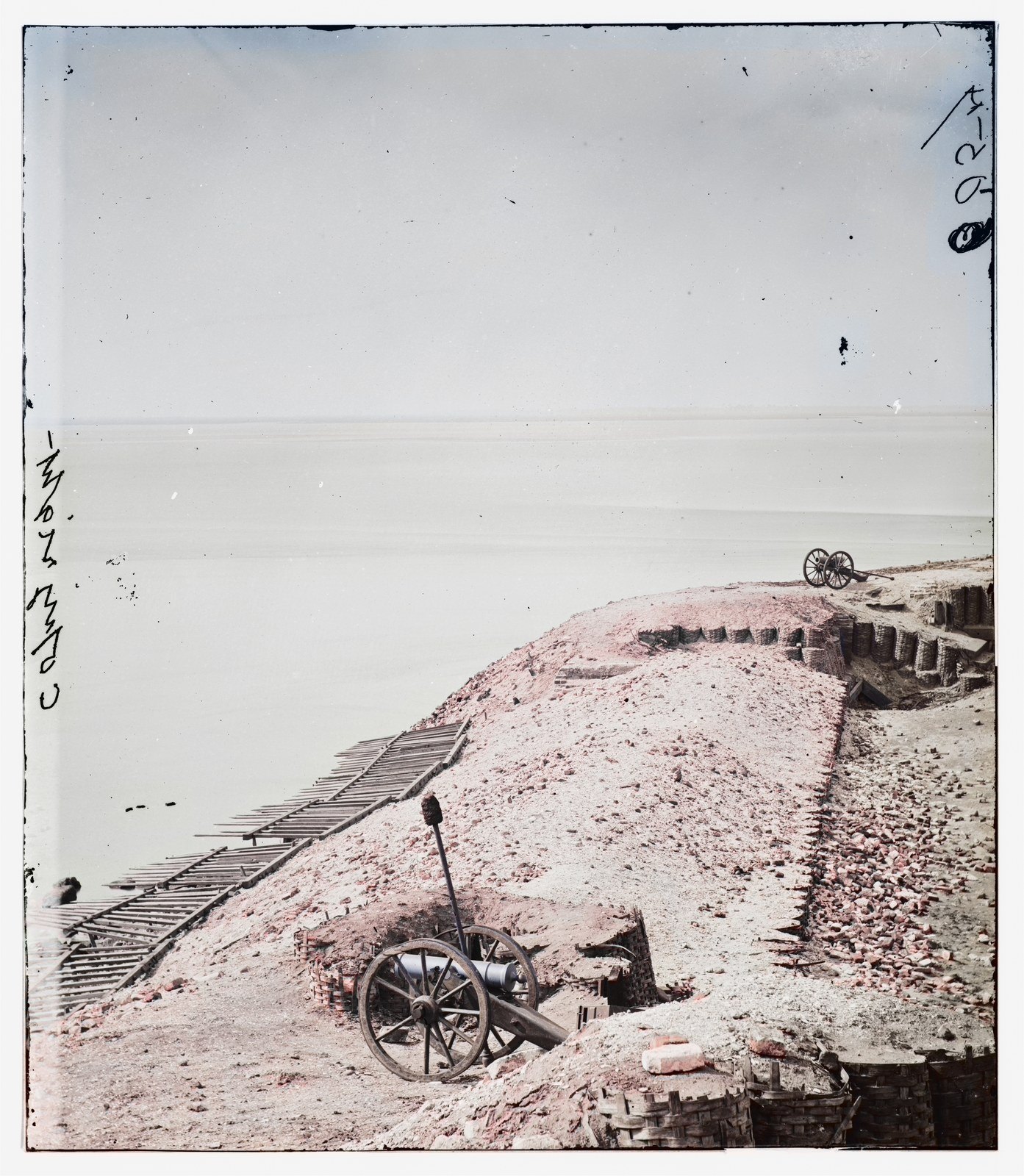
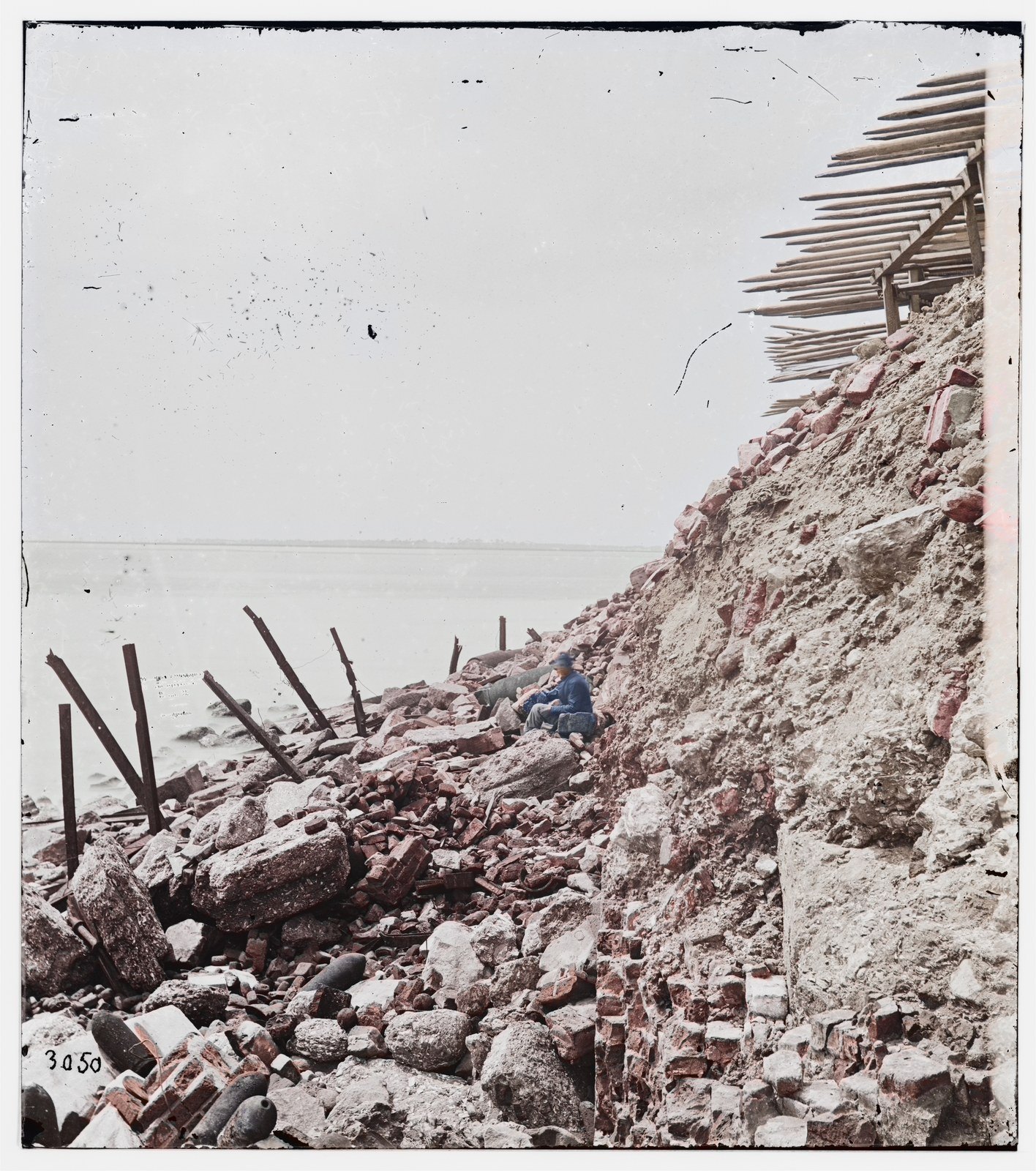
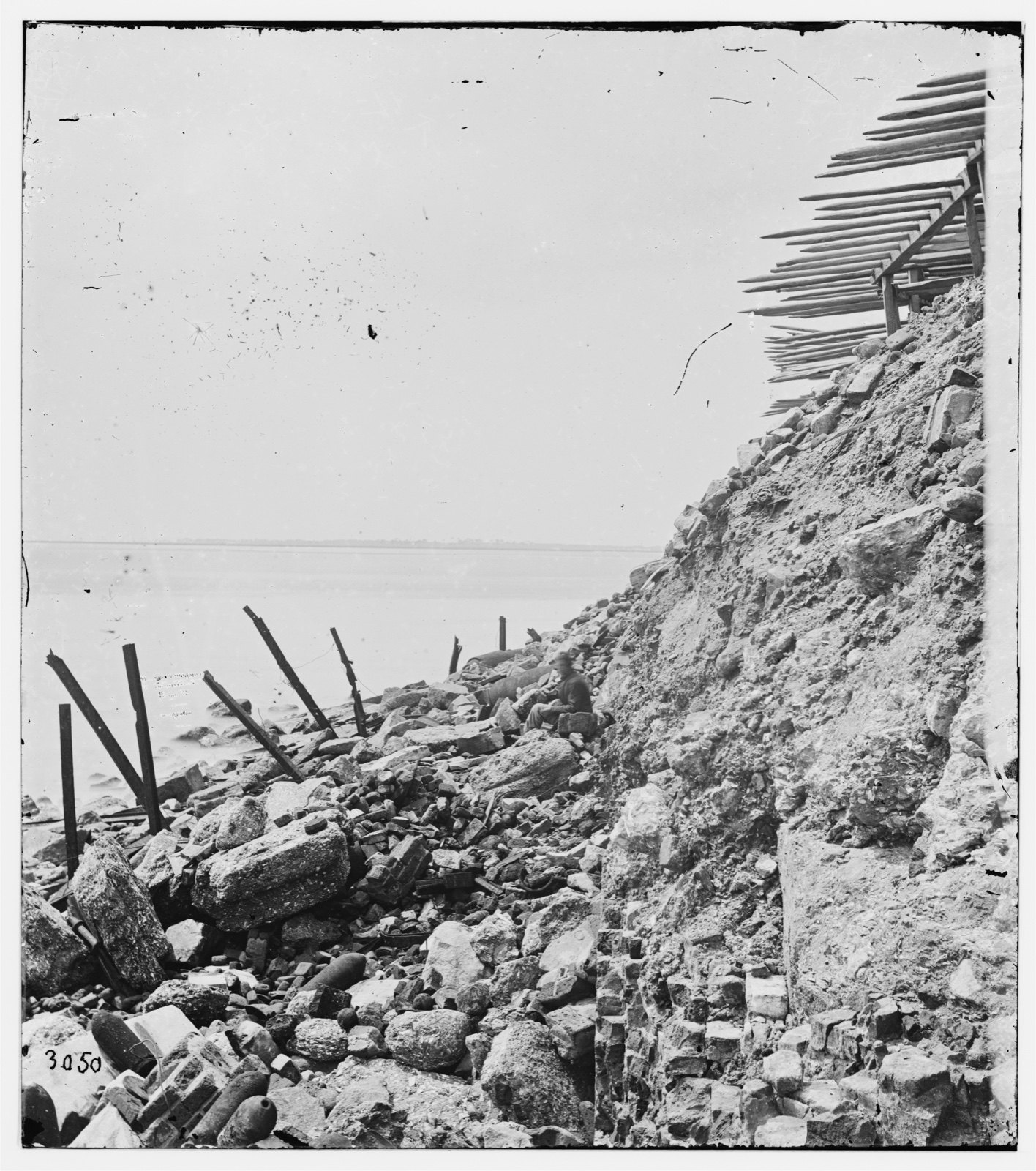
The exterior after the first great bombardment, with chevaux-de-frise set against assault.
Drag to compareLibrary of Congress
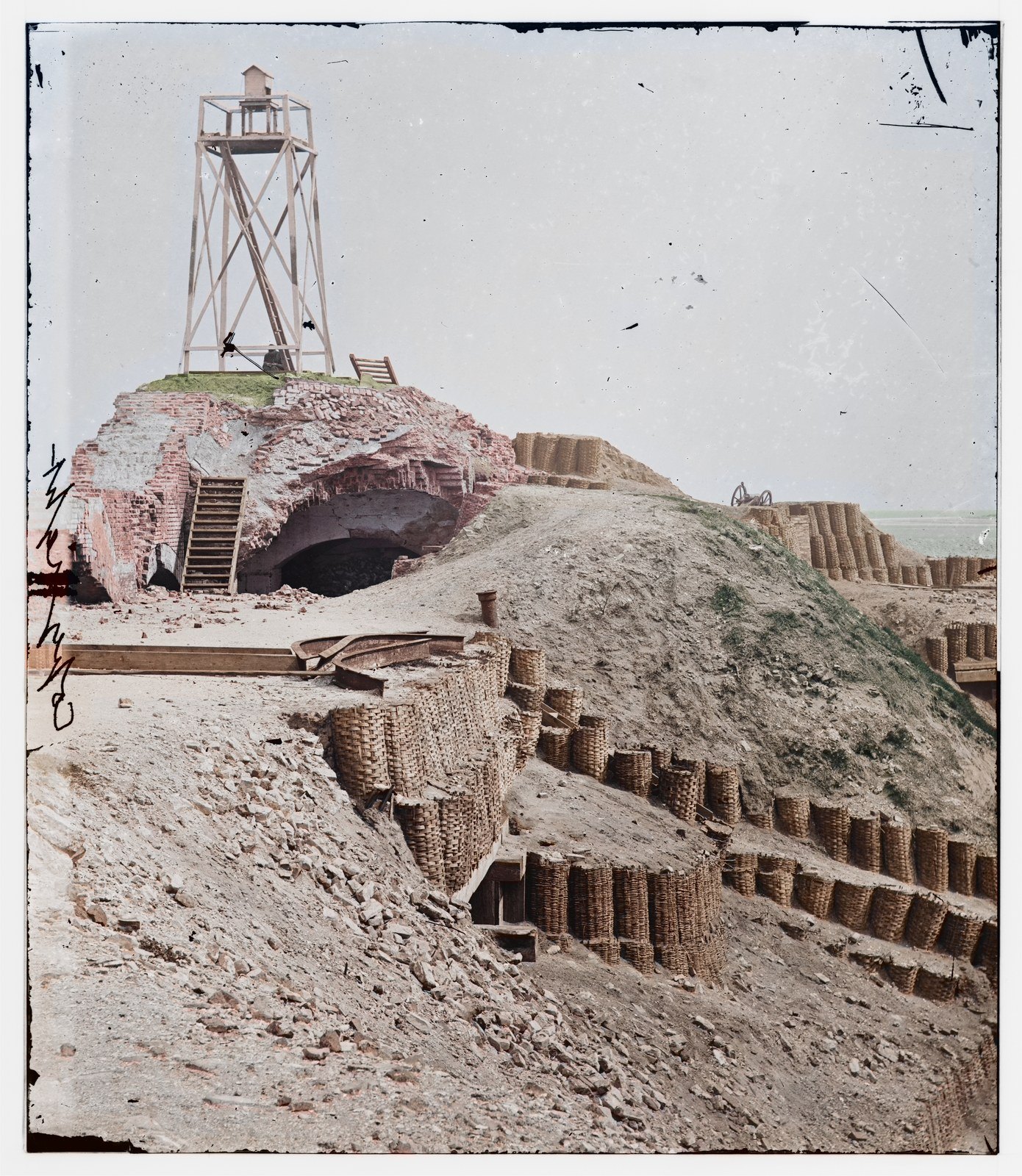
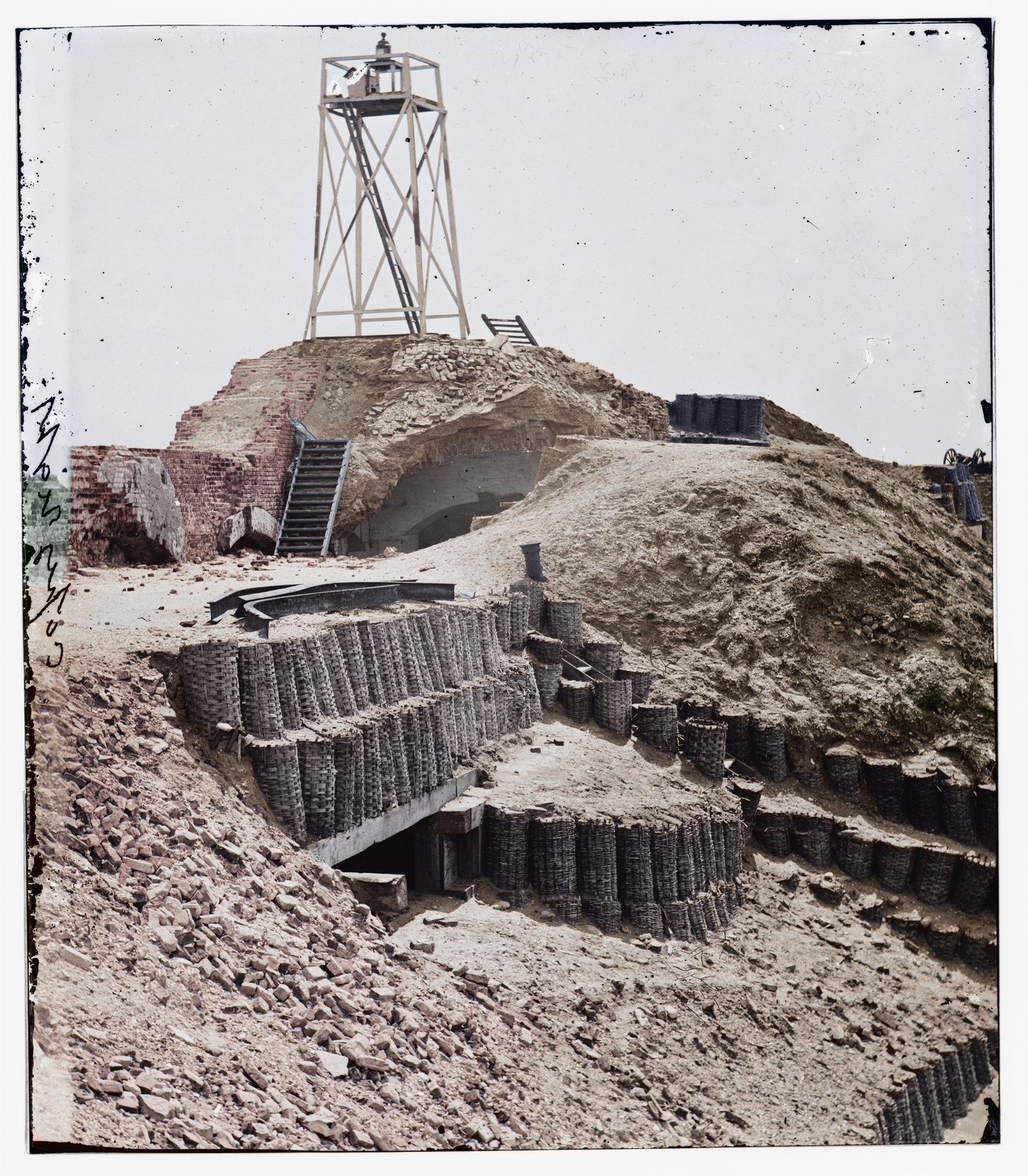
The Library of Congress titles this view as showing the result of the bombardment from August 17 to September 23, 1863, together with the chevaux-de-frise set out against assault. Both halves of that description are visible, and together they tell you what the garrison expected.
The first great bombardment opened on August 17, 1863 and ran for weeks. It was the heaviest concentrated artillery fire directed at a fortification up to that time, and it succeeded in its immediate object: the masonry came down. It failed in its larger one, because a collapsed brick fort filled with its own rubble and revetted with sand turned out to be harder to reduce than the fort had been.
The pointed timbers projecting from the slope are chevaux-de-frise — beams set with sharpened stakes, laid along the approaches to break up an assaulting line. They are here because the Confederates had learned, on the night of September 8, exactly how the Federals intended to come.
So the plate holds both halves of the argument: artillery had proved it could destroy the fort's walls, and the garrison had concluded that walls were not what would stop the next attempt.
Also at Fort Sumter