Charleston Scenes · Book p. 60
Where Did the First Shell Fall?
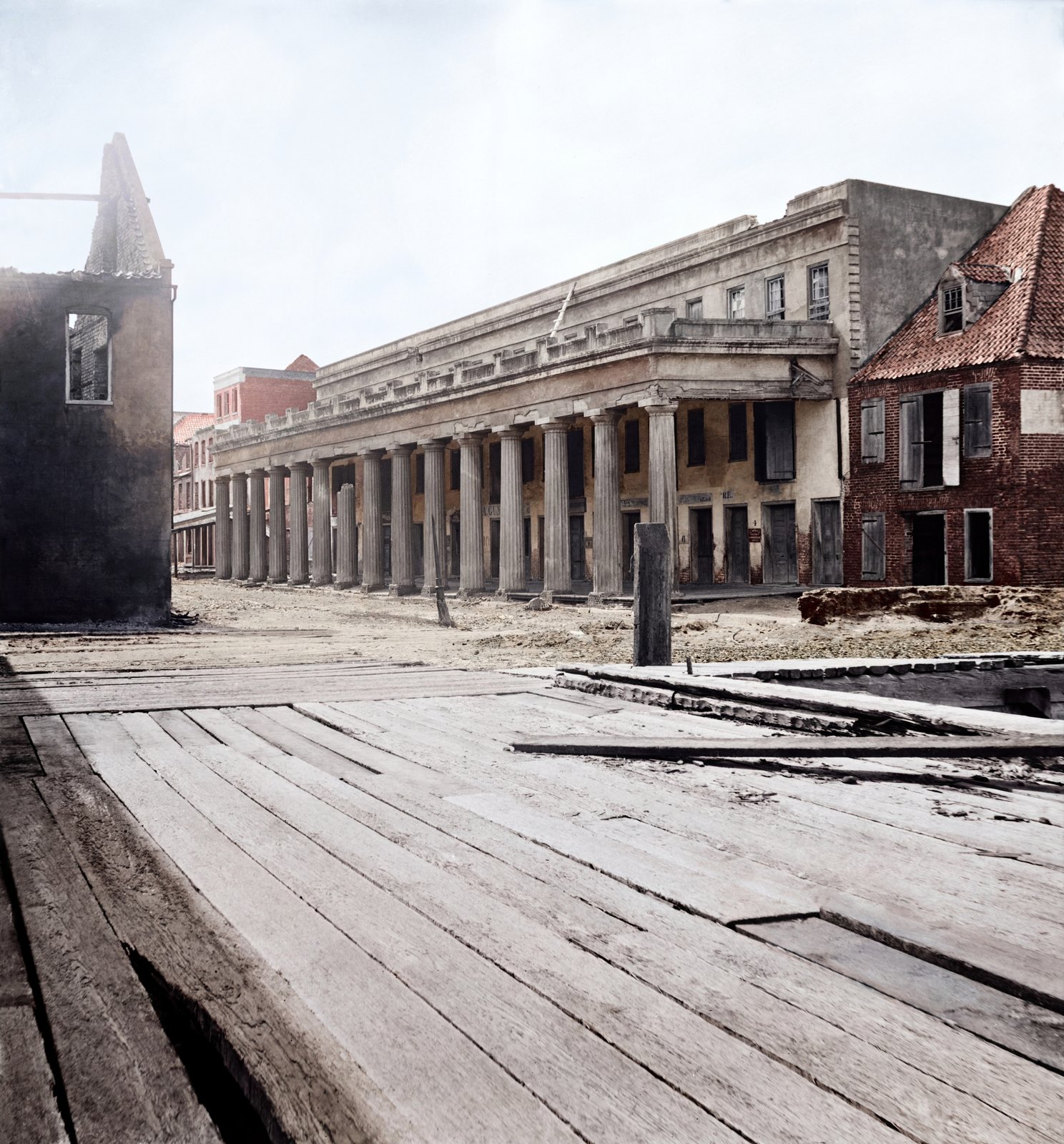
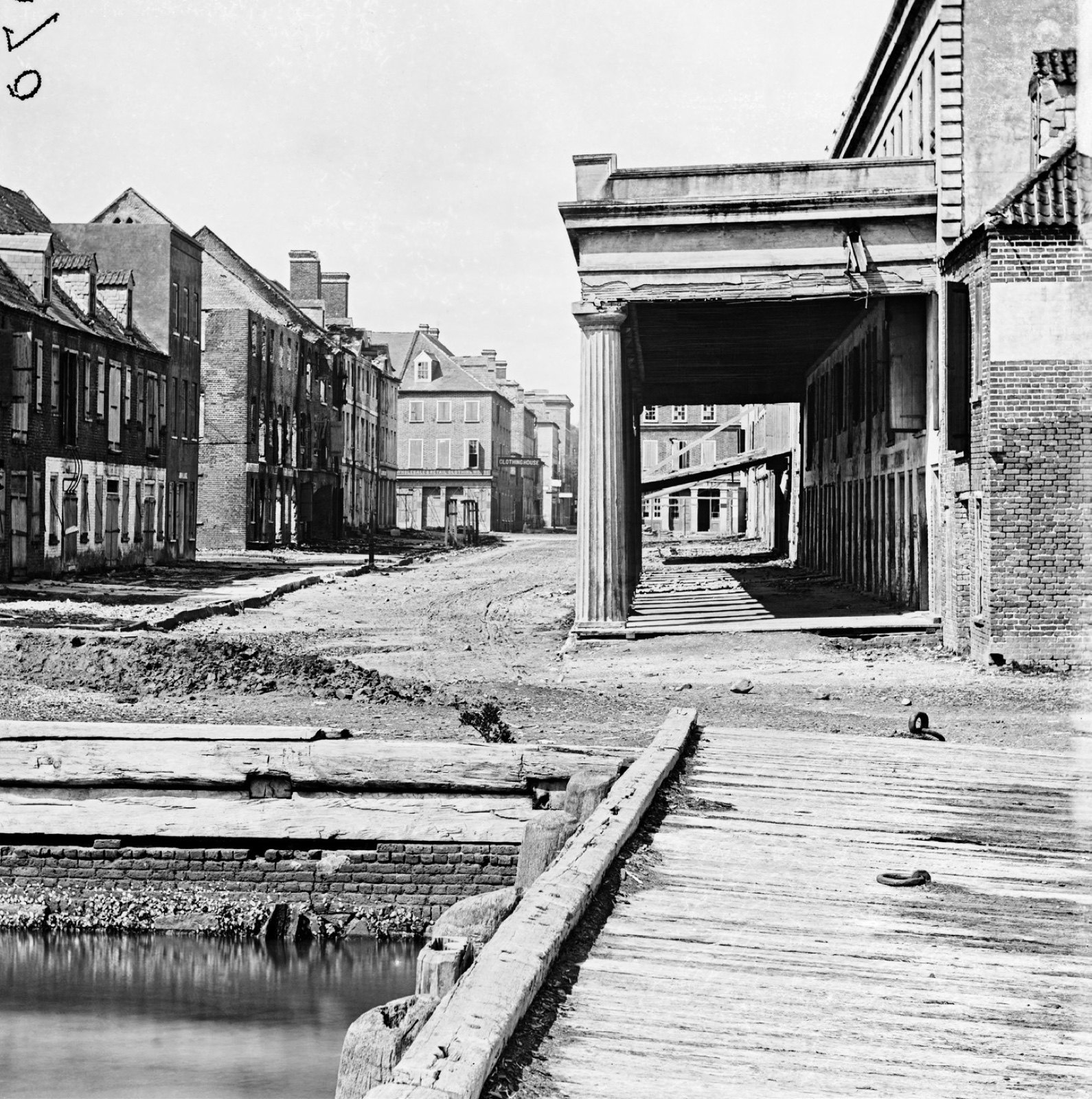
Barnard was told the first shell struck the building at the left. The claim is disputed; the date is not.
Drag to compareLibrary of Congress
Gillmore's Swamp Angel opened on Charleston at half past one in the morning on August 22, 1863, from a platform driven into the marsh on the landward side of Morris Island. The 8-inch Parrott threw its shell almost five miles across the harbor before it burst in the city.
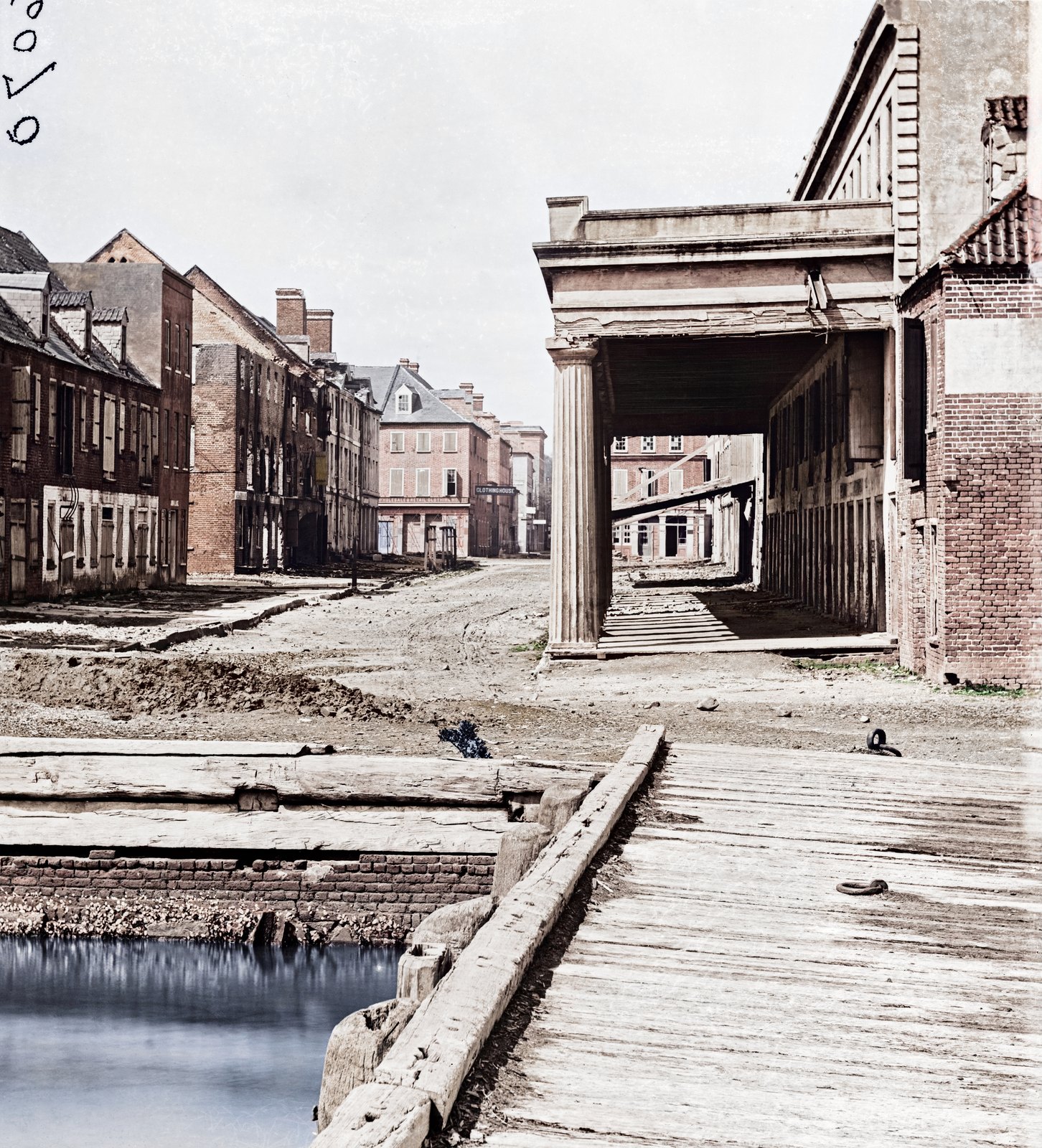
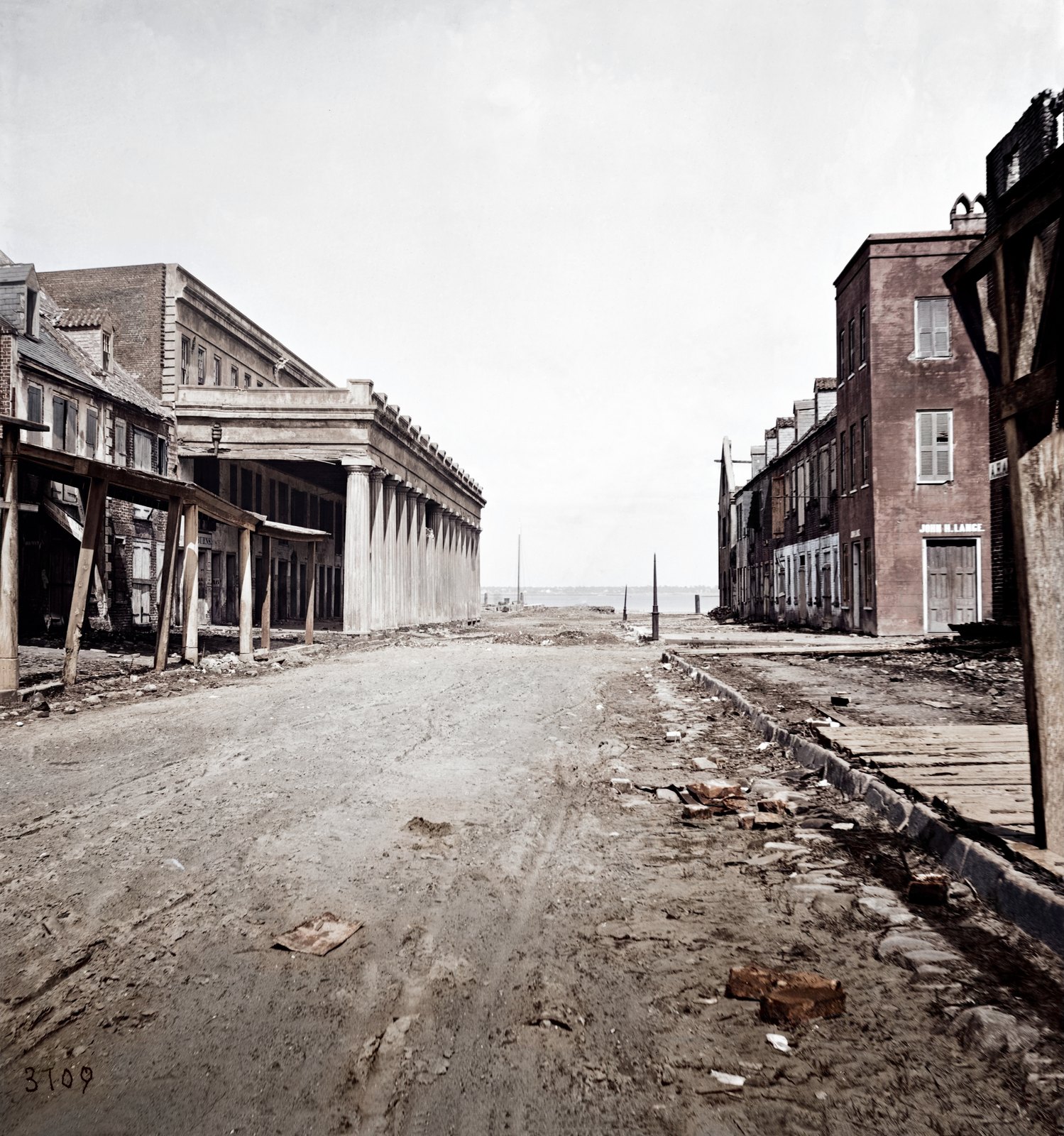
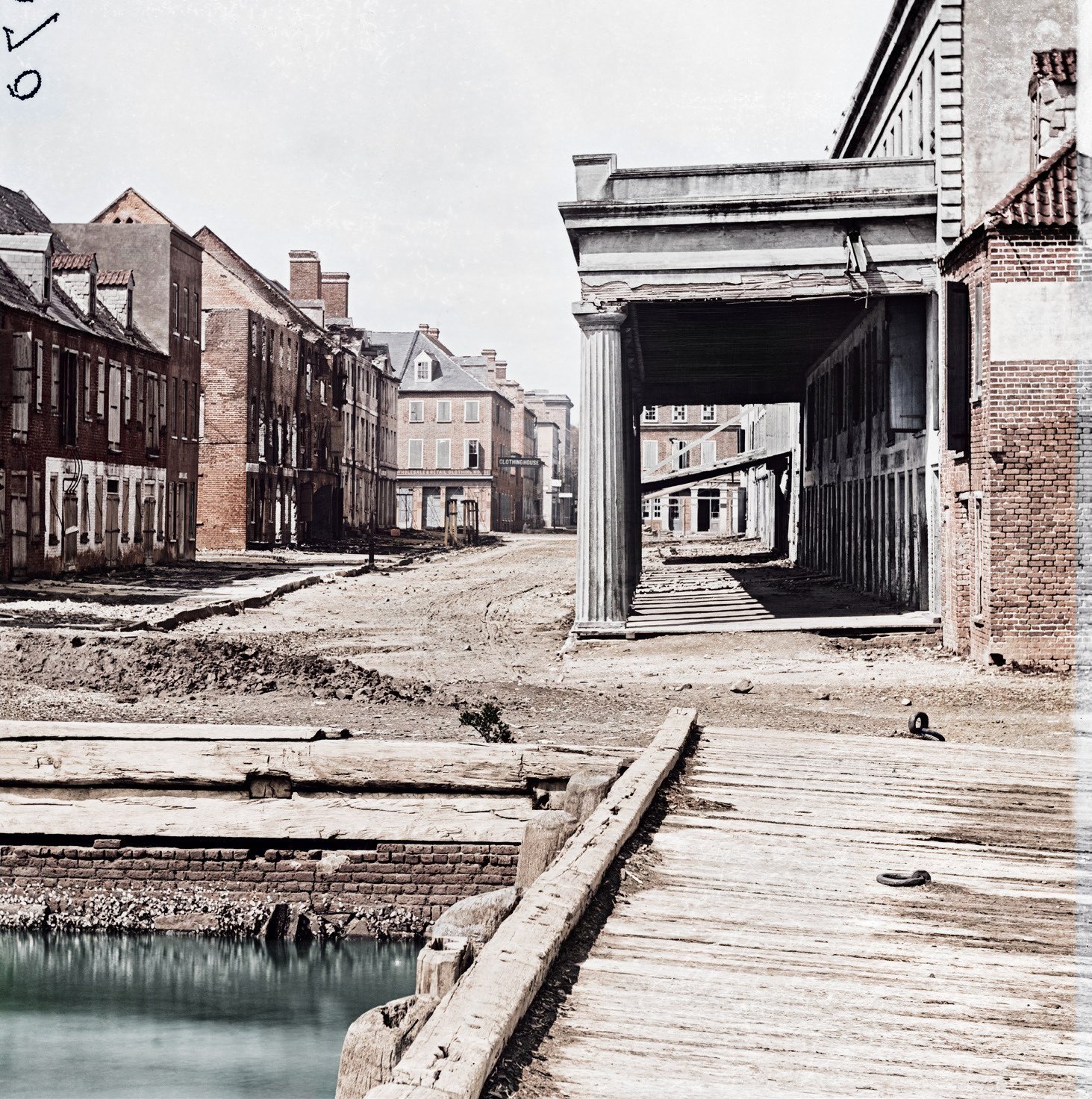
George Barnard, who made this photograph, had been told that the first round struck the building at the left. Where the first shell actually fell is open to argument and probably always will be — a shell that lands in the dark in an evacuating district does not leave a signed receipt. What is not in doubt is what that round began.
The Swamp Angel itself lasted two nights. It burst at the muzzle firing its thirty-sixth round on August 23, and the shelling stopped until October. It resumed, stopped and resumed again into early 1865, never continuous and never finished.
Richard W. Hatcher III, long the historian at Fort Sumter and Fort Moultrie, put the total at more than 12,500 Parrott rounds — 30-, 100- and 200-pounders — fired into the city across the siege. It gave Charleston a distinction no city wants: the longest-shelled city of the Civil War.
Also at Vendue Range