Charleston Defenses · Book p. 102
The King Street Battery
Drag to compareNational Archives
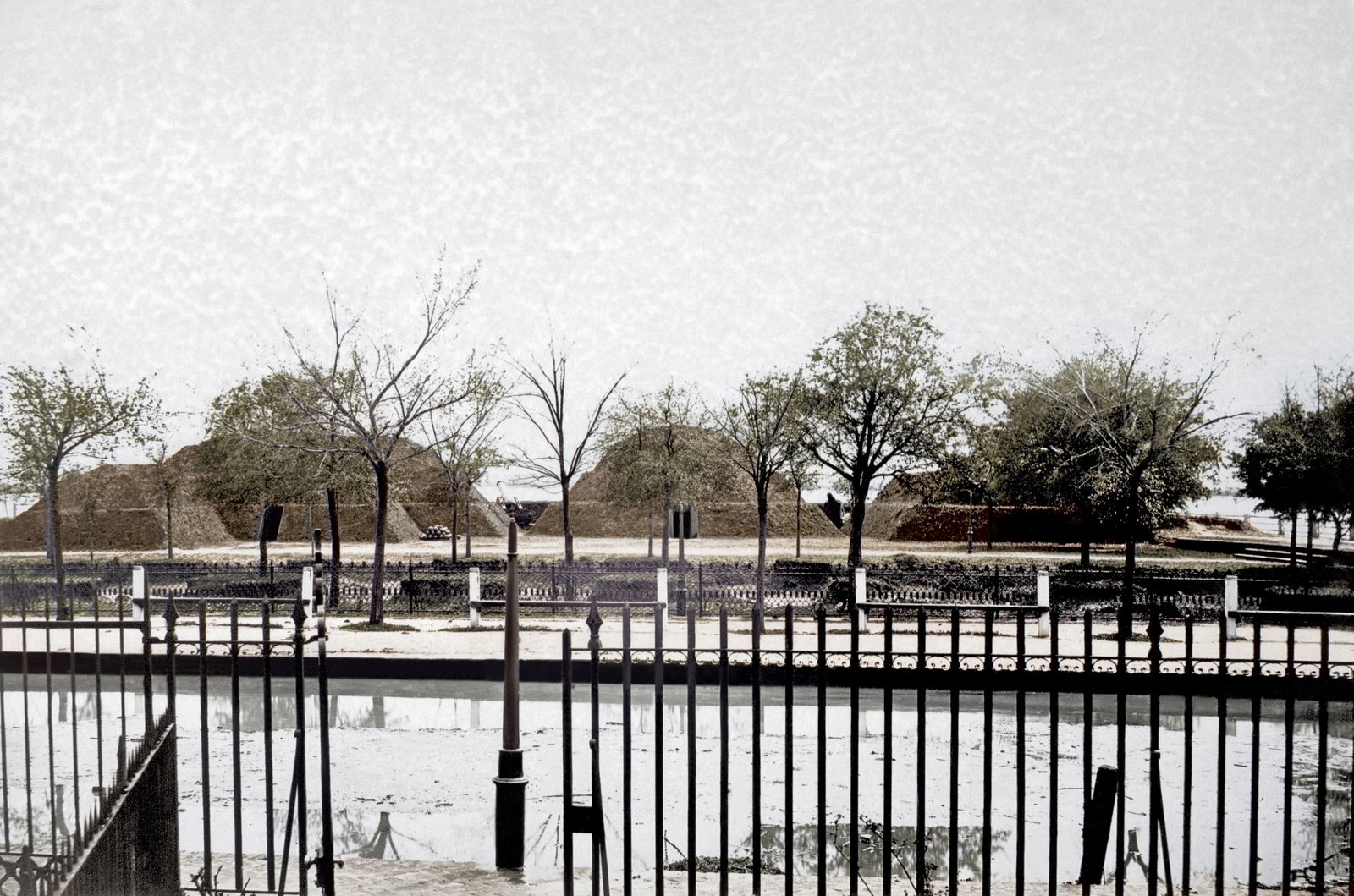
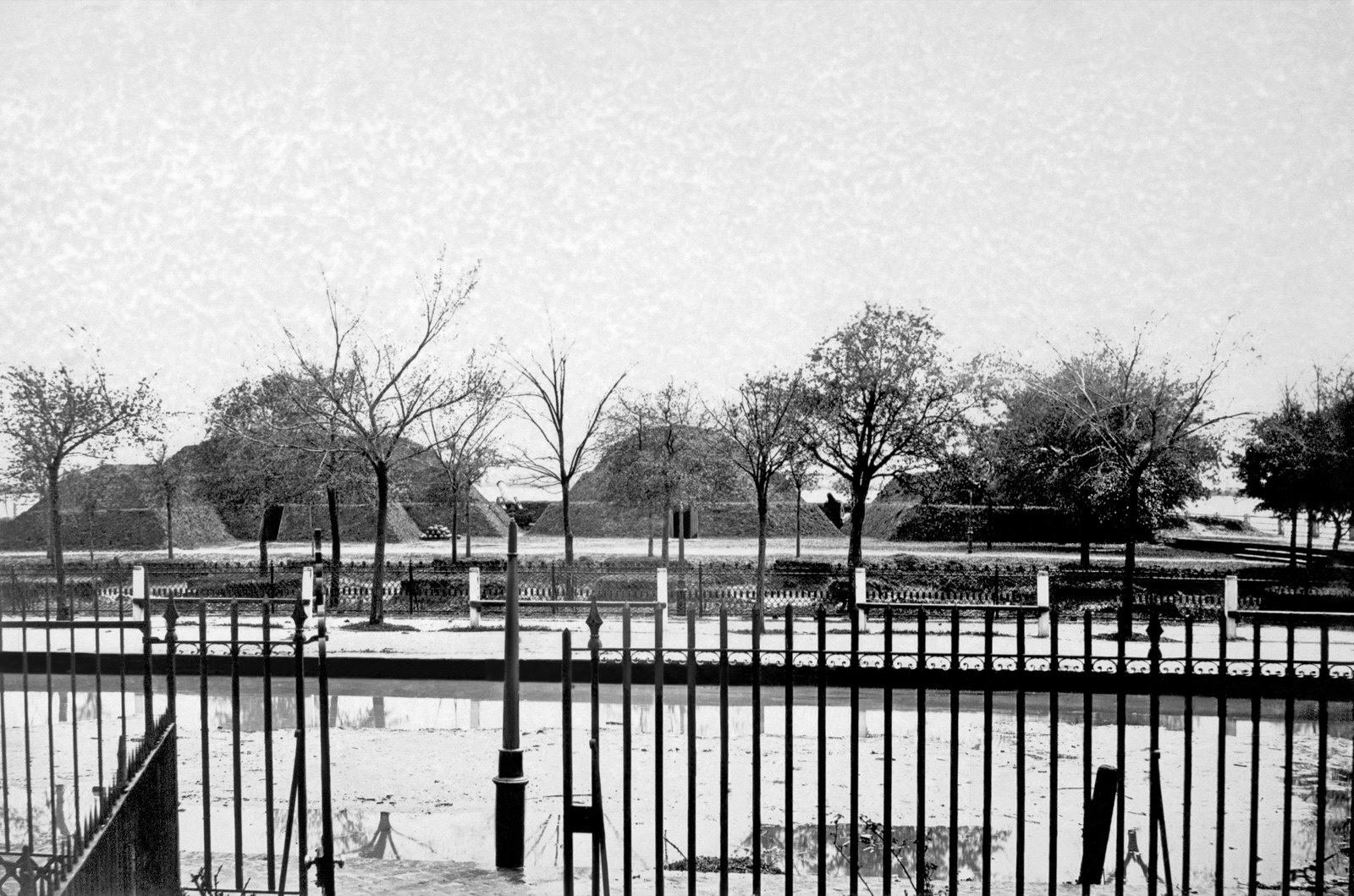
At the southern end of Battery Ramsay, in White Point Garden, the Confederates mounted a 10-inch Columbiad smoothbore and a rifled and banded 42-pounder.
The pair is a good illustration of how a hard-pressed defense armed itself. The Columbiad was a heavy smoothbore of proven design, good for throwing solid shot at a ship's hull. The 42-pounder was an older smoothbore that had been bored out with rifling and then reinforced with a wrought-iron band shrunk over the breech — an upgrade, done because rifled guns were wanted and there were not enough of them. Banding was necessary because rifling an existing tube raised the pressures it had to contain. Charleston's defenses were full of such conversions.
Both guns bore on the inner harbor and the Ashley River, and both were protected by the traverse that dominates this photograph. A traverse is simply a thick bank of earth thrown up to shield a gun and its crew from fire arriving from the flank; it left the men exposed only to a shot coming in head-on, which required a Union vessel to work its way into the harbor first. Magazines and bombproofs were dug into the same mounds.
The view looks south across South Battery at King Street and out into the harbor. The photographer set up behind the iron fencing of James Spear's residence and shot through it, which is why the foreground is barred.
The caption as printed in the book
Located at White Point Garden on the southern portion of Battery Ramsay was mounted a 10-inch Columbiad smoothbore and a rifled and banded 42-pounder. The guns, bearing on the inner harbor and on the Ashley River, were protected by a traverse shown in this photograph, taken looking south across 32 South Battery Street at King and out into the harbor. The guns’ earthen protection shielded crew members from anything other than a head-on shot, should a Union vessel get close enough. Confederates had also built magazines and bombproofs into the mounds. The photographer took this view looking through the iron fencing of James Spear’s residence.