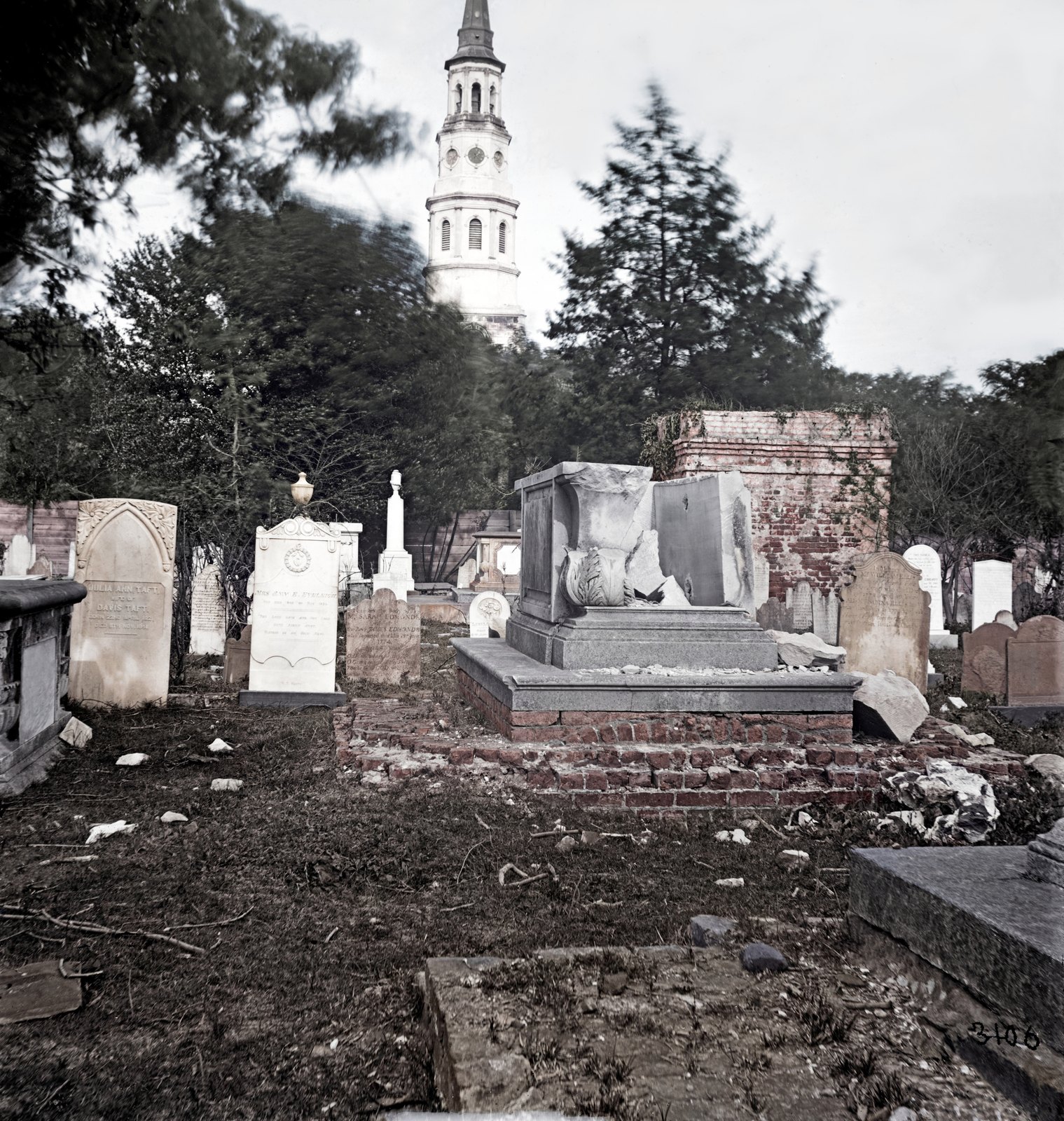
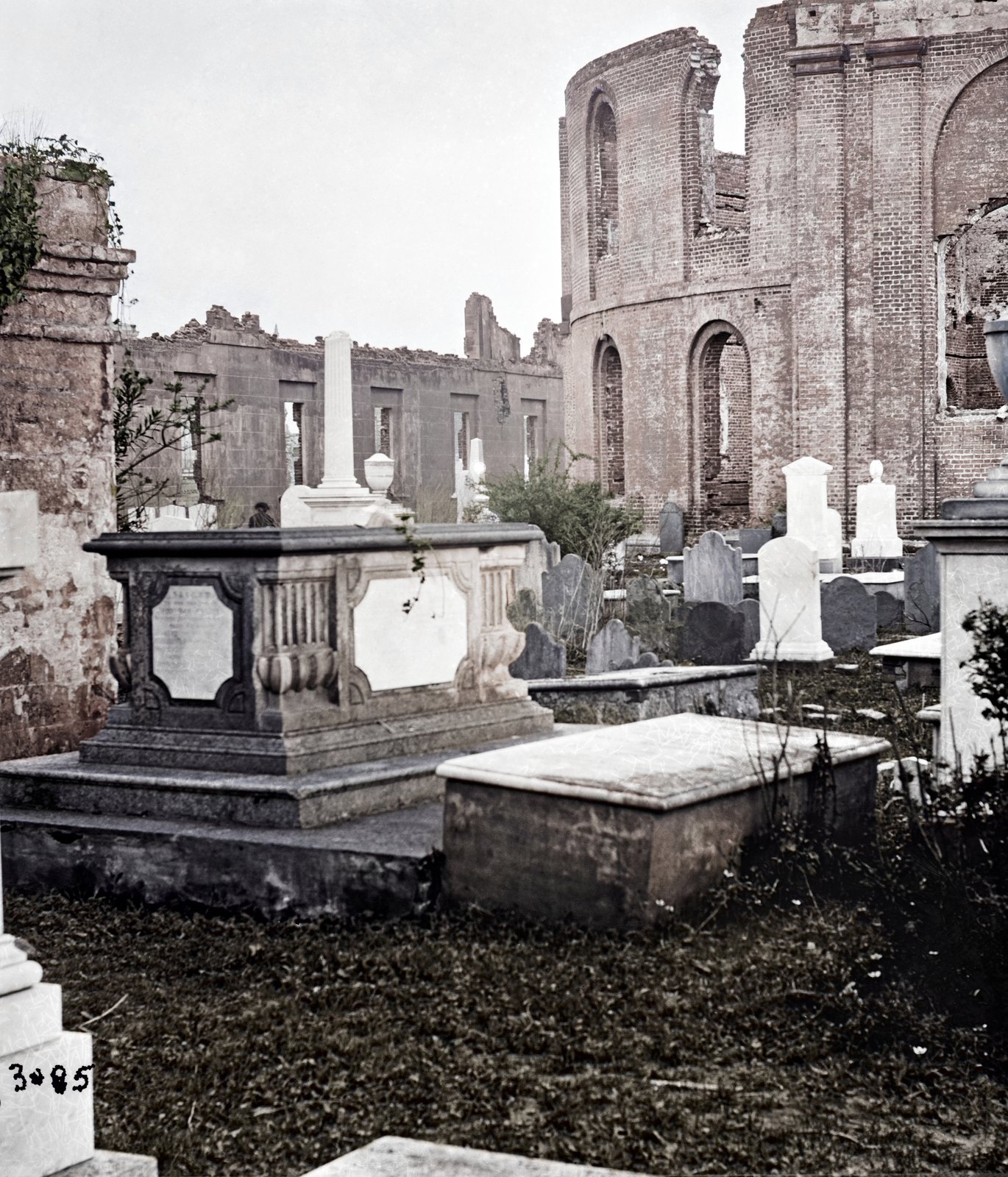
The Holy City · Book p. 128
The Circular Church
The dissenters' meeting house that gave Meeting Street its name, rebuilding after the fire.
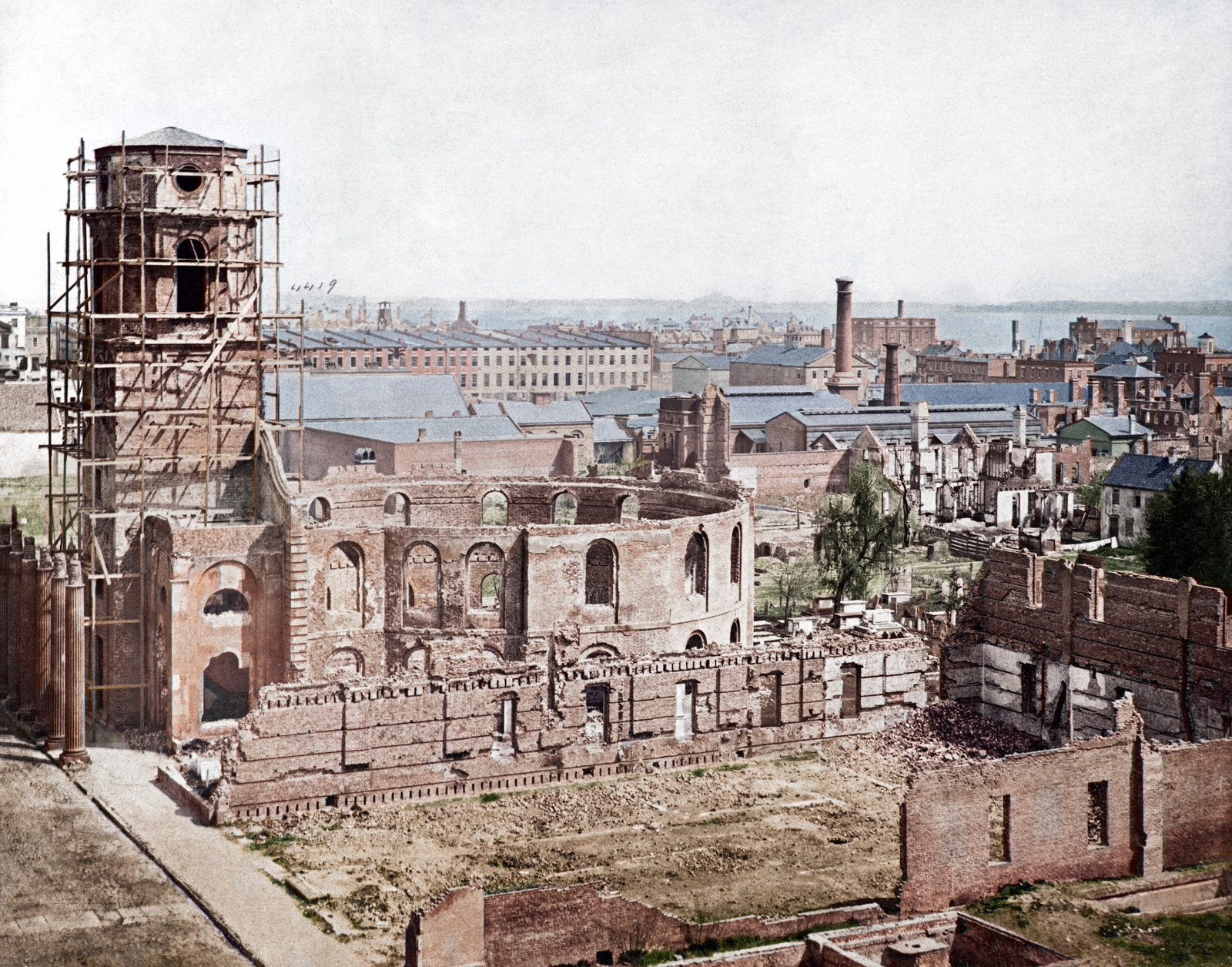
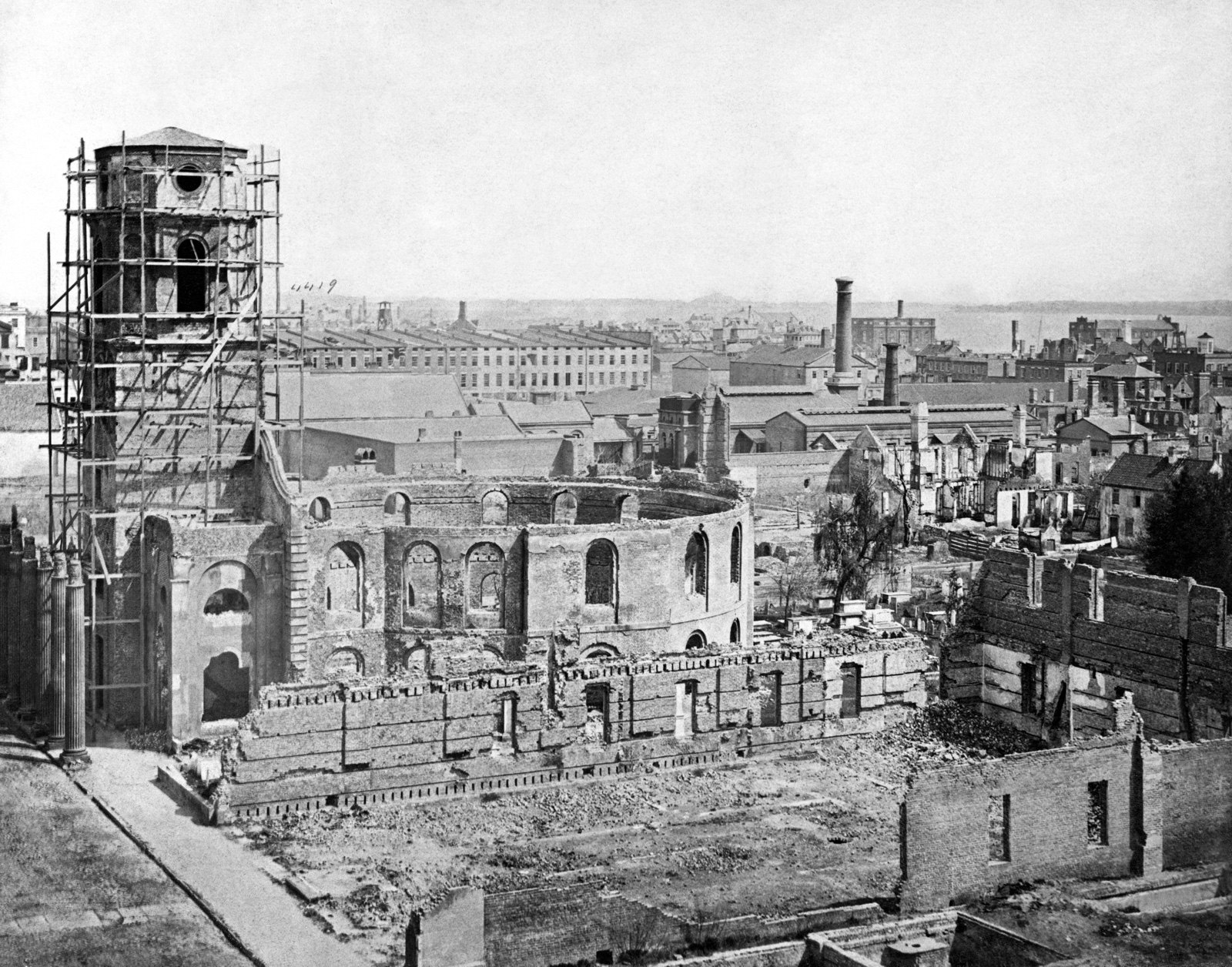
Drag to compareLibrary of Congress
Charlestonians have never been afraid to dissent. Lawrence Stallings told a gathering of Southern writers here in 1932 that what he liked about Charleston was that it had resisted Abraham Lincoln's attempt to put the country into Arrow Collars.
The habit is old. At the same time St. Philip's Anglican Church was going up in 1680–81, the Independent Church of Charles Towne was founded — French Huguenots, Scots Presbyterians and English Congregationalists, colonists who would not conform to the Church of England. In colonial Carolina the Anglican establishment was supported by public taxes, but membership was not compelled by law, so the dissenters simply built their own.
They worshipped in a white brick building known as the Presbyterian Meeting House, and called variously Independent and Congregational. It was also called the White Meeting House — and that is where Meeting Street got its name. The principal street of Charleston is named after a dissenters' chapel.
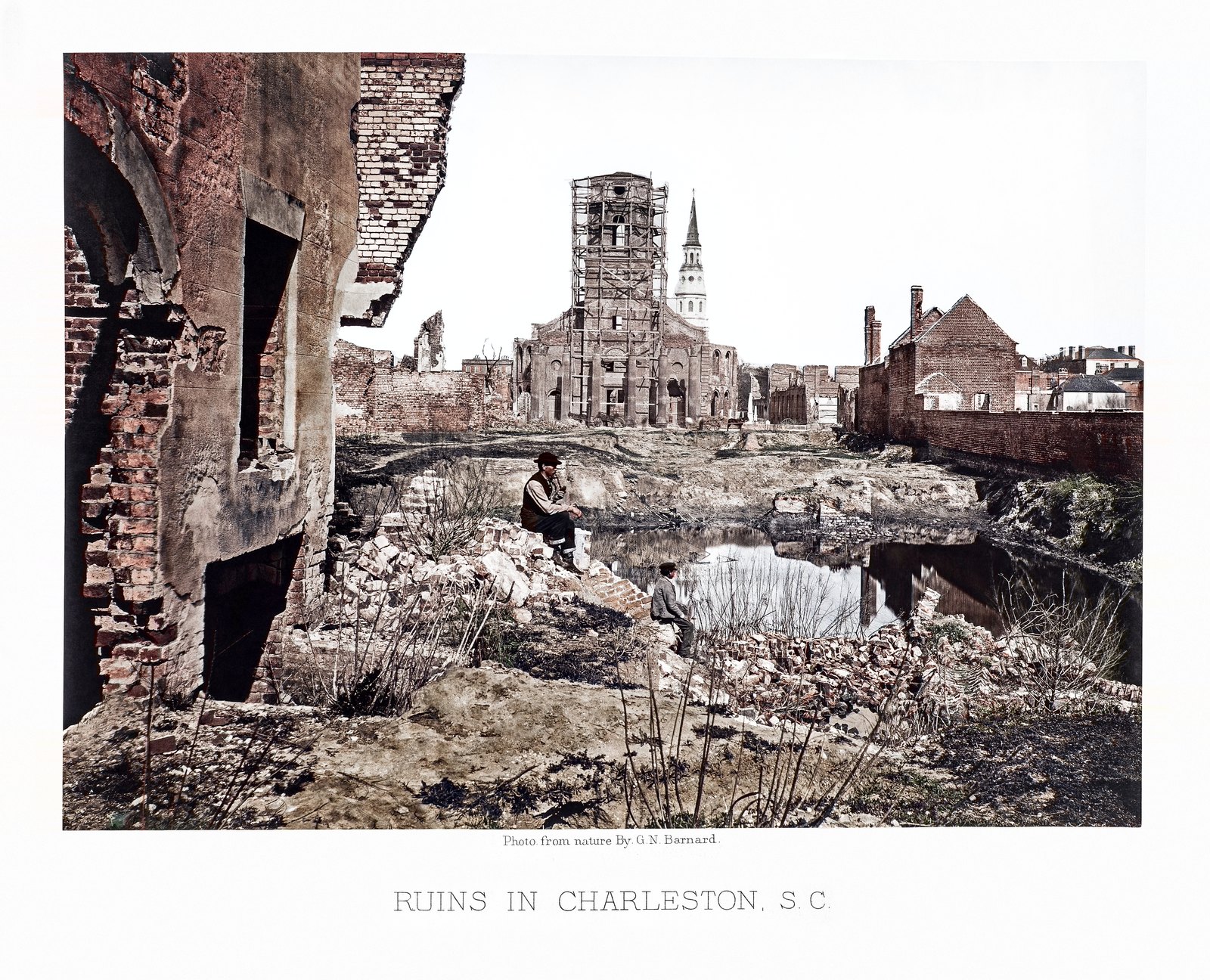
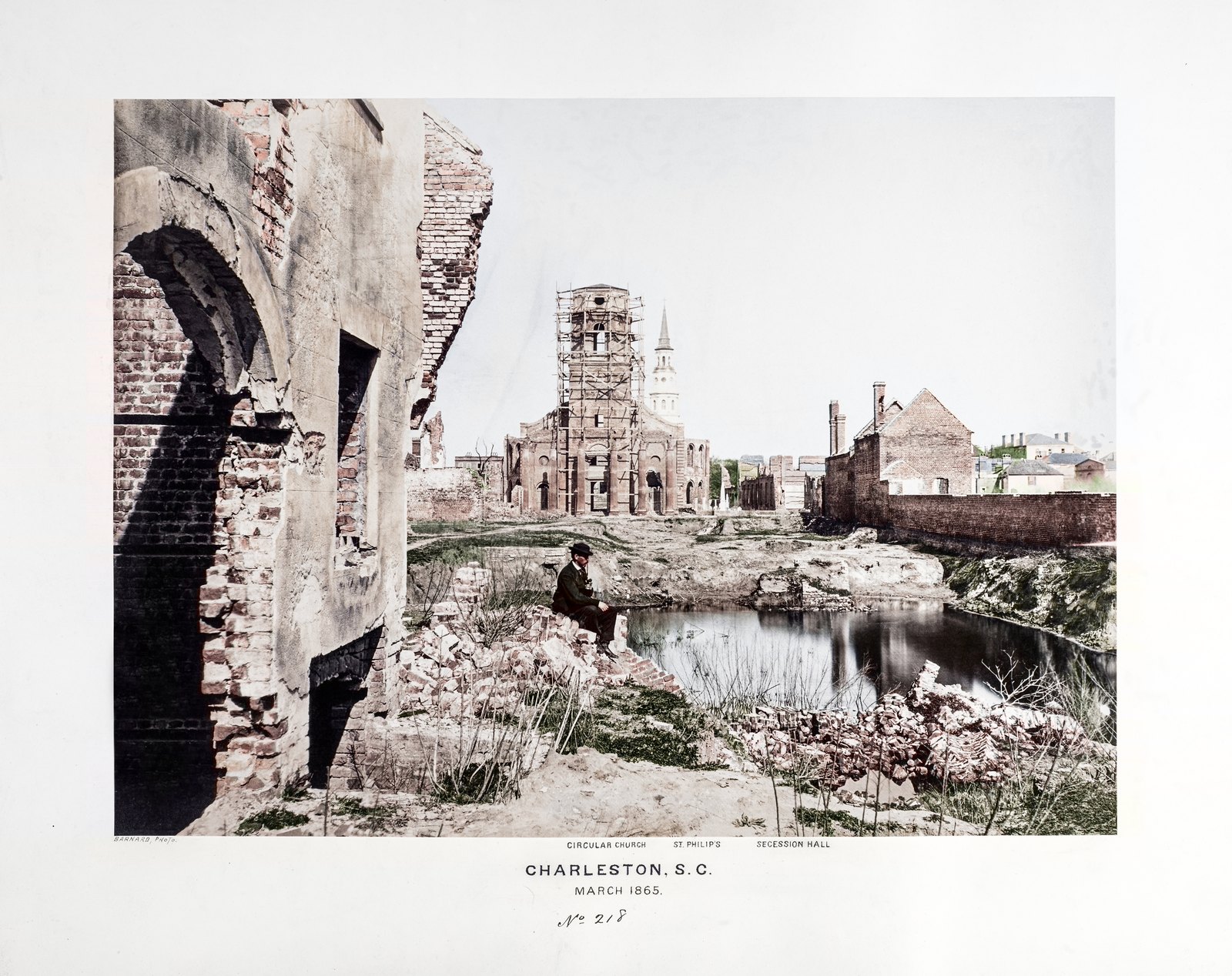
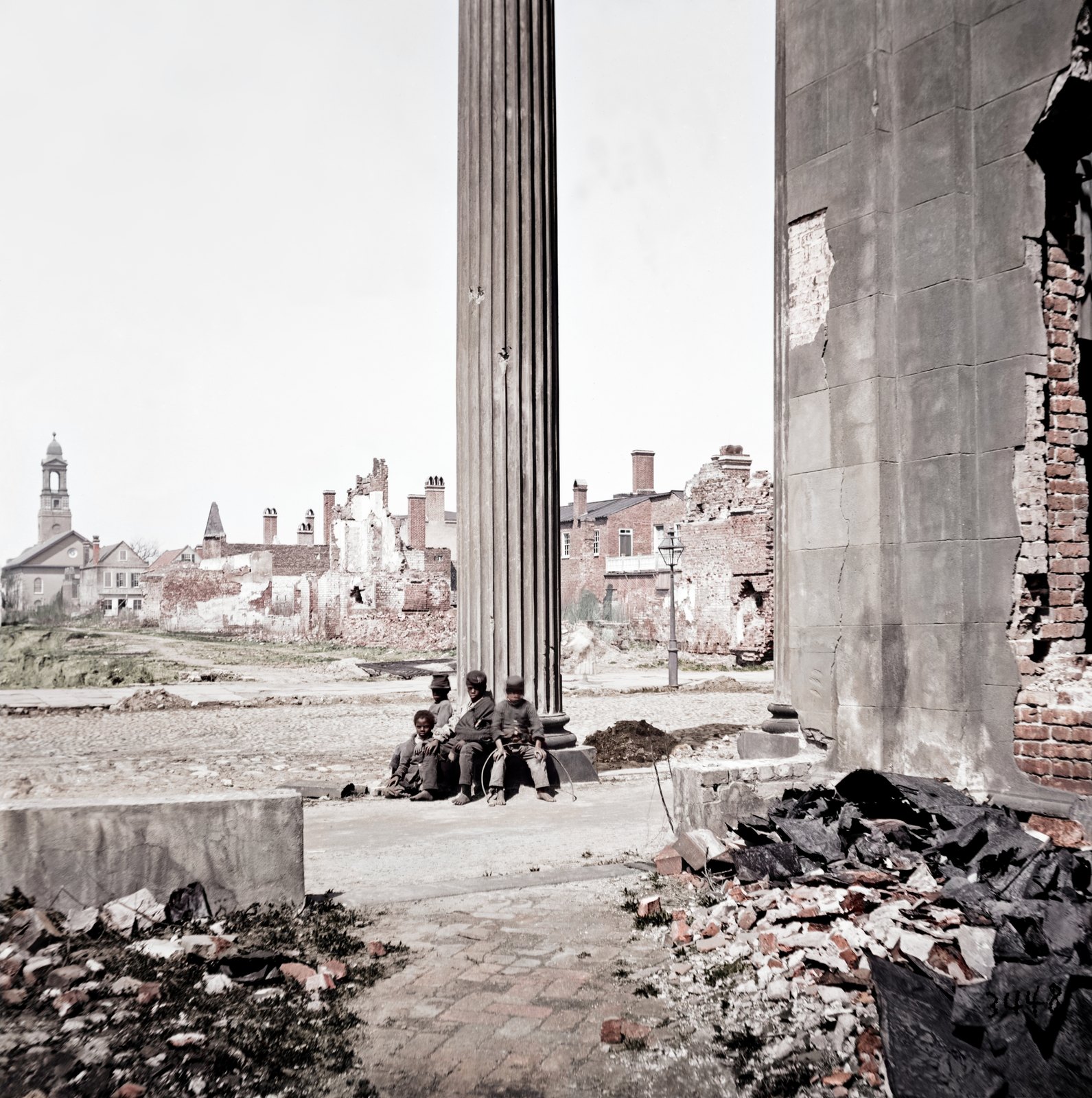
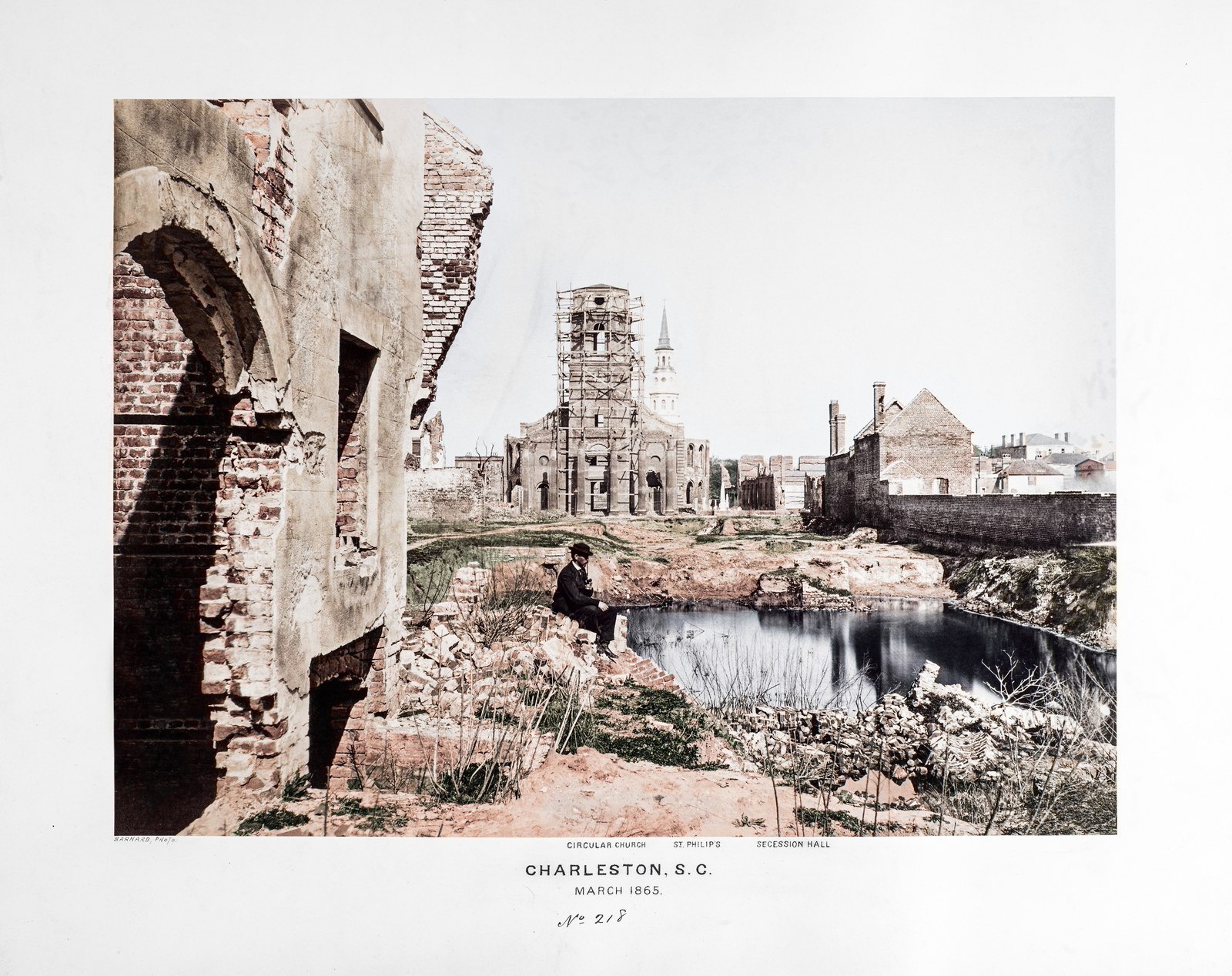
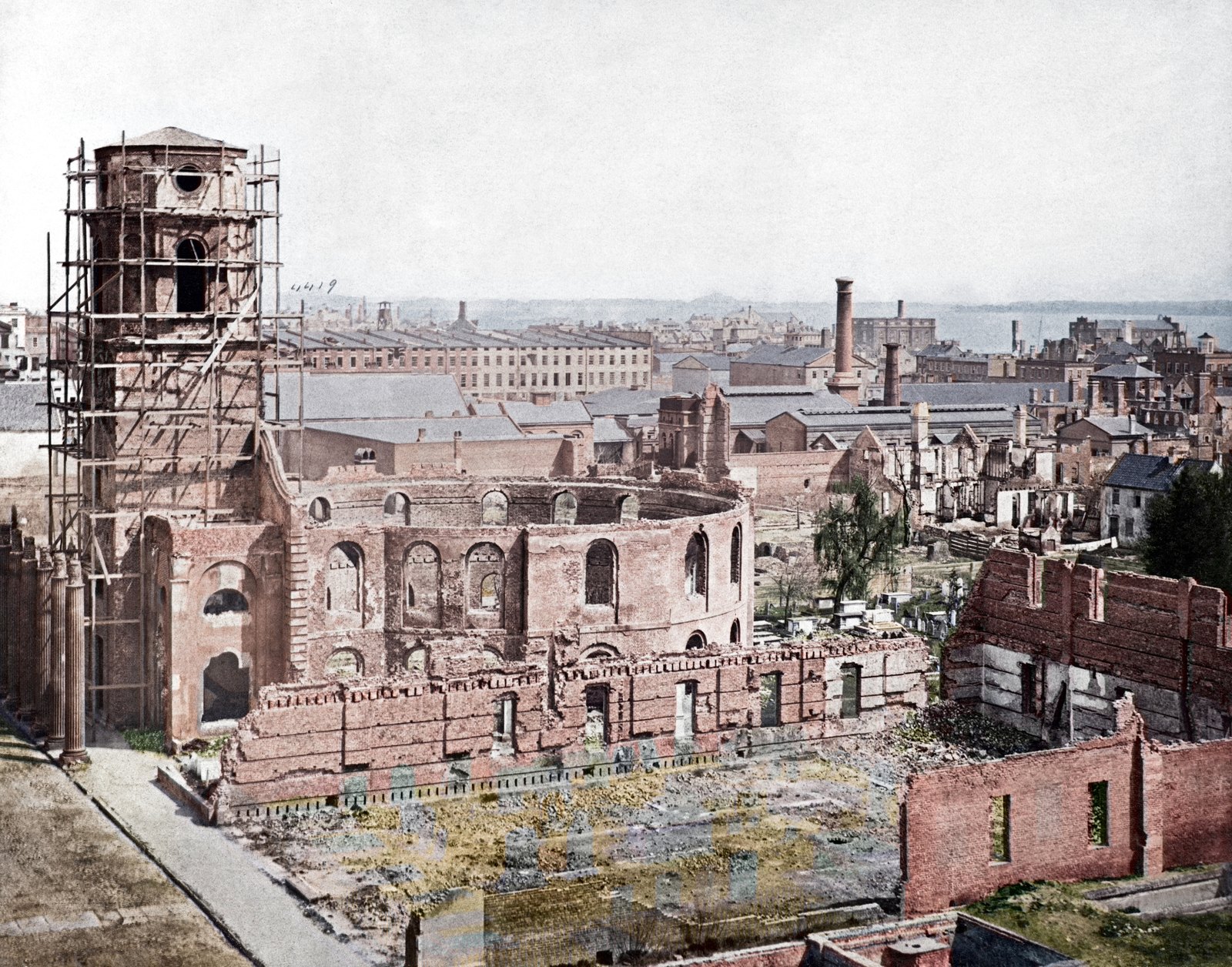
The congregation grew, and in 1806 built the imposing round structure that gave the church its later name, seating as many as two thousand. It burned in the Great Fire of 1861 and was being rebuilt when this photograph was taken in 1865.
The ruins in the foreground are Secession Hall — South Carolina Institute Hall, where the Ordinance of Secession was signed on December 20, 1860. The dissenters' church survived to be rebuilt. The hall did not.
Also at Circular Congregational Church