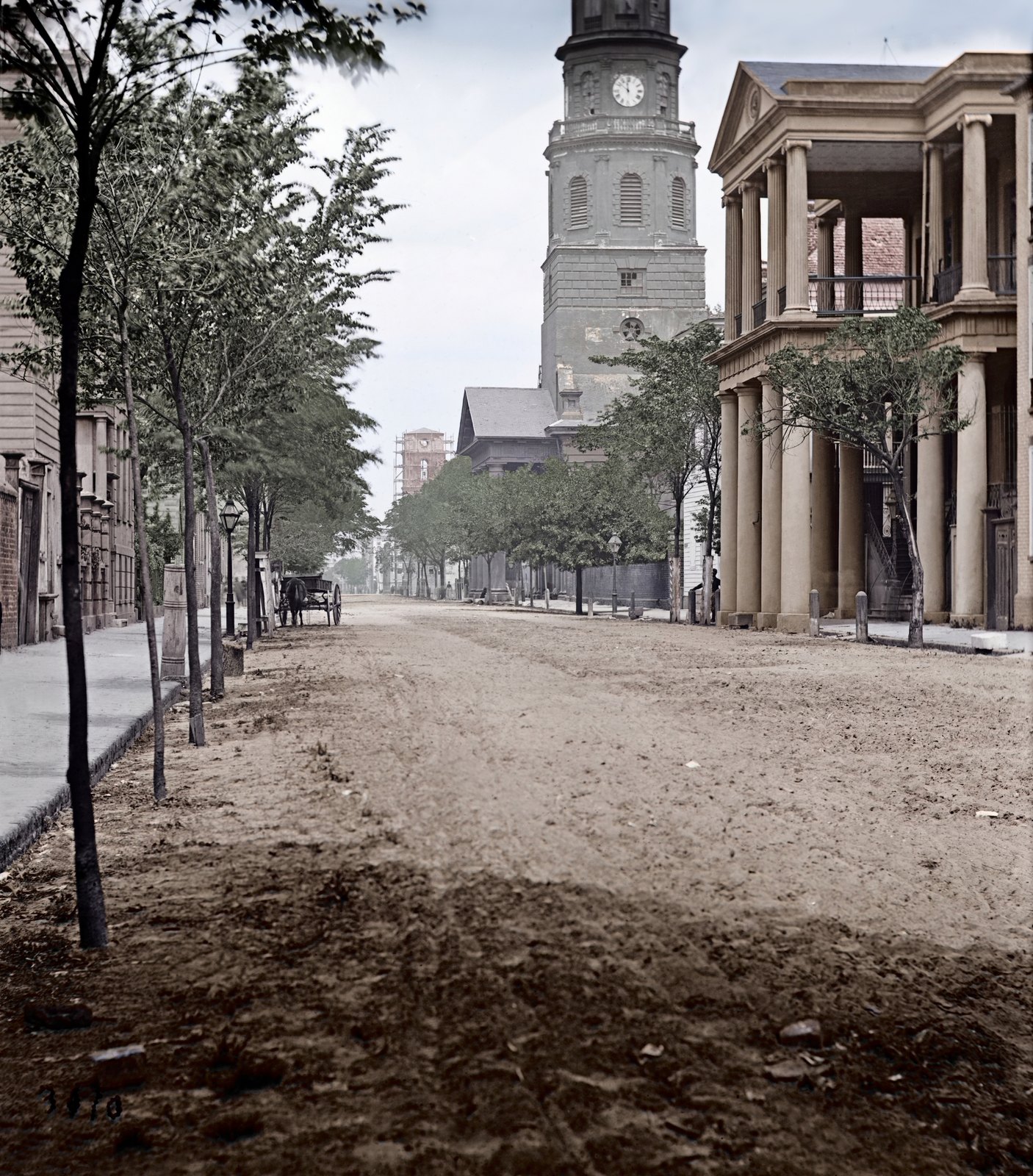
The Holy City · Book p. 126
The Angel of the Church
Simms wrote that the spire would come down in a crash of doom. It never did.
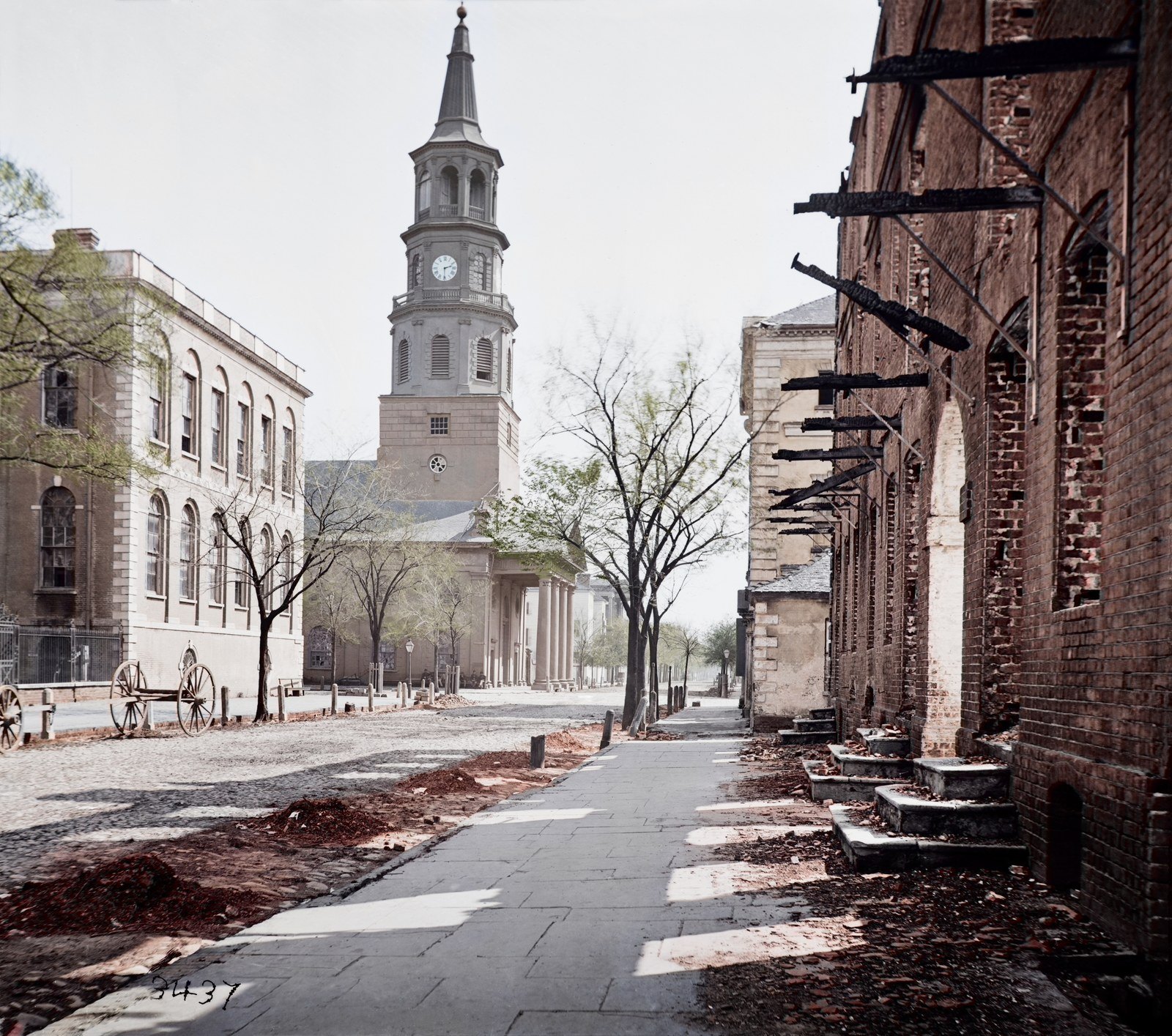
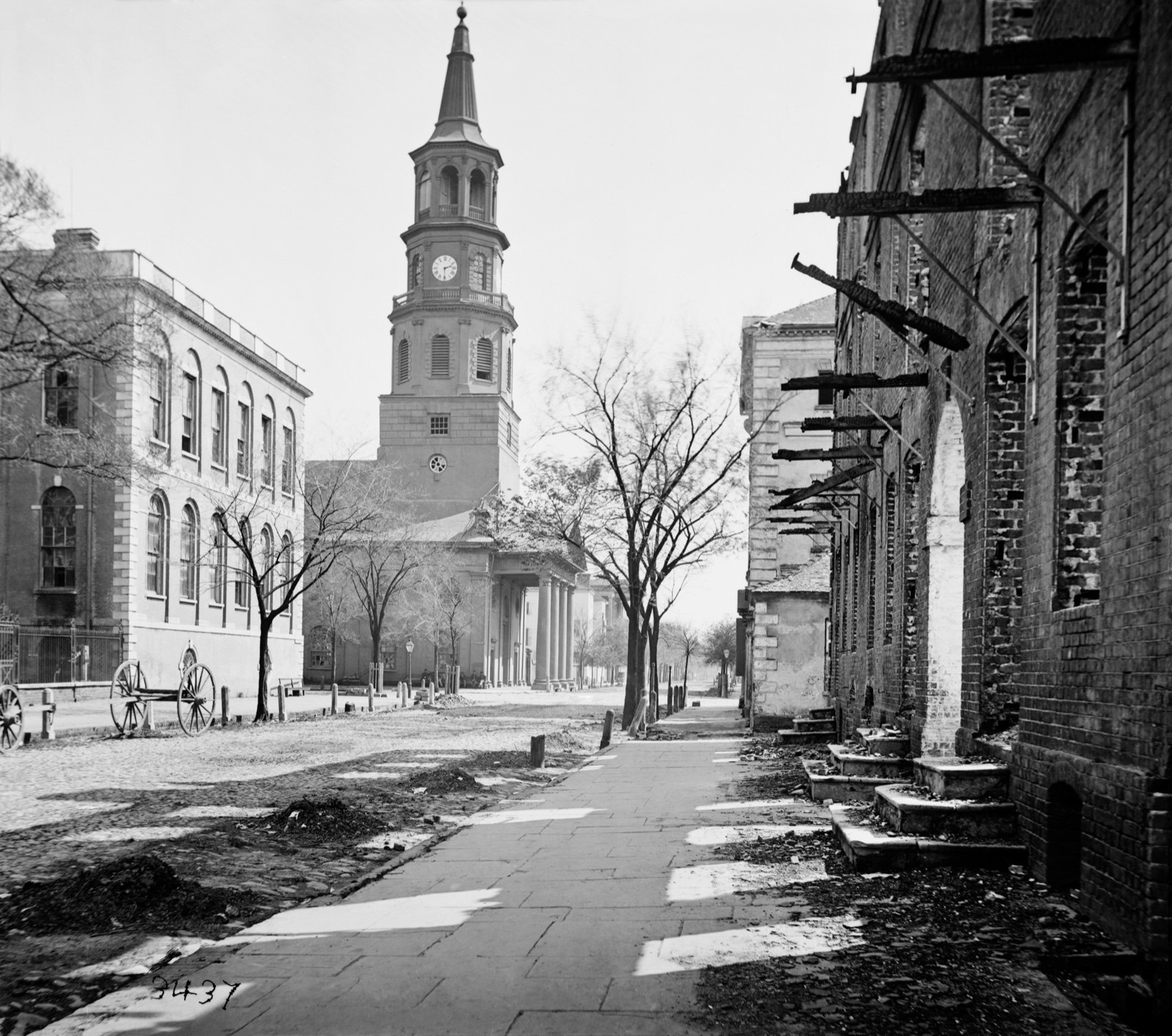
Drag to compareLibrary of Congress
William Gilmore Simms, Charleston's best-known writer, wrote these lines about St. Michael's while the ground around it was being shelled:
Aye, strike with sacrilegious aim / The temple of the living God; / Hurl iron bolt and seething flame / Through aisles which holiest feet have trod; / Tear up the altar, spoil the tomb, / And raging with demoniac ire, / Send down, in sudden crash of doom, / That grand, old, sky-sustaining spire.
It did not happen. As this photograph shows — dated by Jack Thomson to April 4, 1865 — St. Michael's came through eighteen months of bombardment without visible damage. The grand old sky-sustaining spire was not sent down in any crash of doom. It is still there.
Augustine Smythe, watching from close by, came to think something more than luck was involved. He wrote to his mother at Summerton on February 7, 1864:
There are six in St. Michaels yard & two on the pavement outside, one of which came thro' the wall [outer fencing]. God seems to be specially protecting that church. No less than some 20 shells have fallen within 100 yards of it & yet it has not [been] grazed.
A few months later Smythe was posted into that same steeple with a telescope, which gave him a personal stake in the question. On June 9, 1864 he reported to his mother that the Federal gunners had finally hit the church — ineffectively.
The plainest reading is the least mystical one. St. Michael's steeple was the tallest thing in Charleston and the most conspicuous aiming point in the city, and the Federal batteries were firing from four miles away at a target they could see but could not range precisely. Twenty shells within a hundred yards is what near-misses look like at that distance.
Also at St. Michael's Church