Charleston Photographers · Book p. 10
Samuel Abbot Cooley
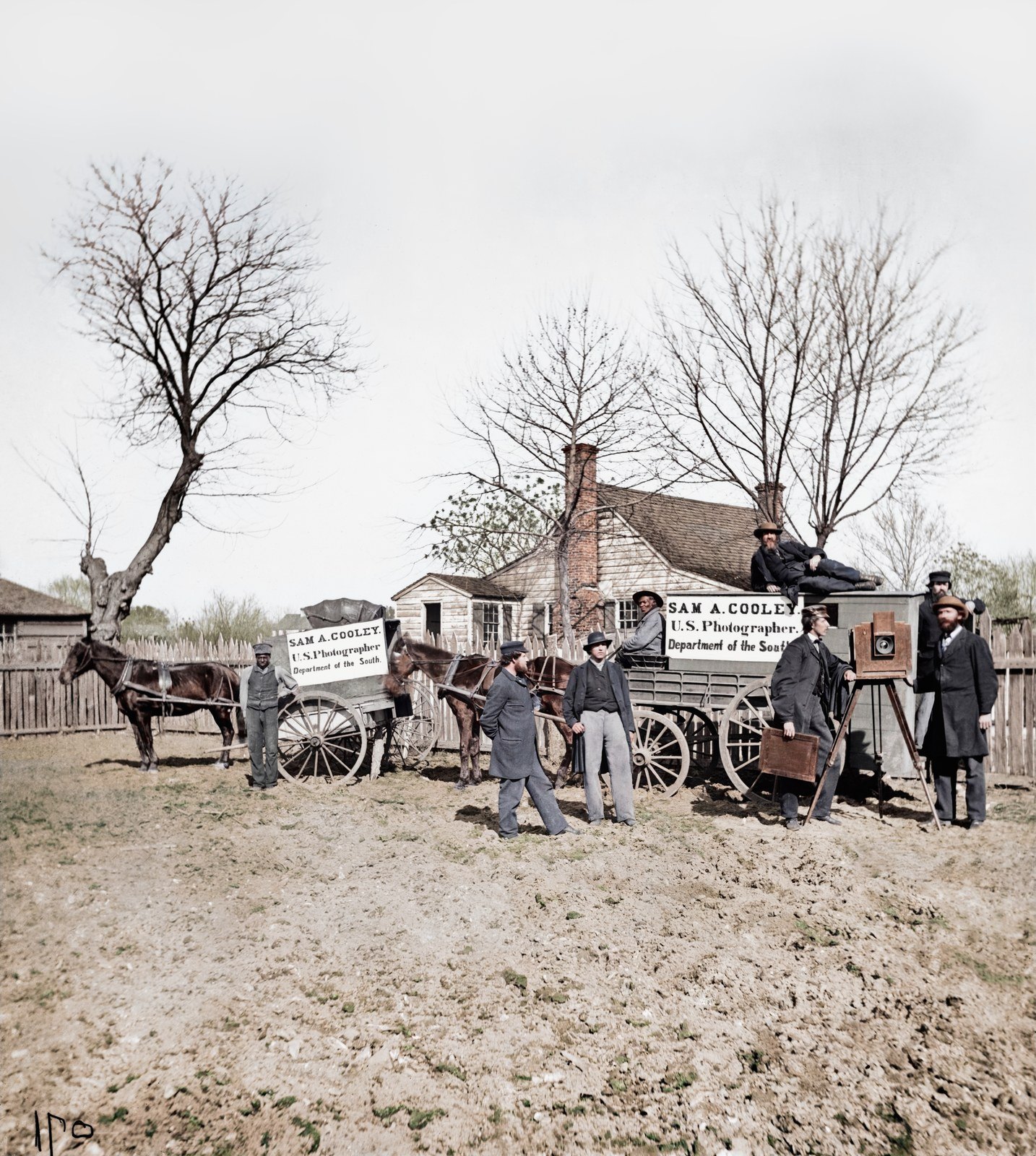
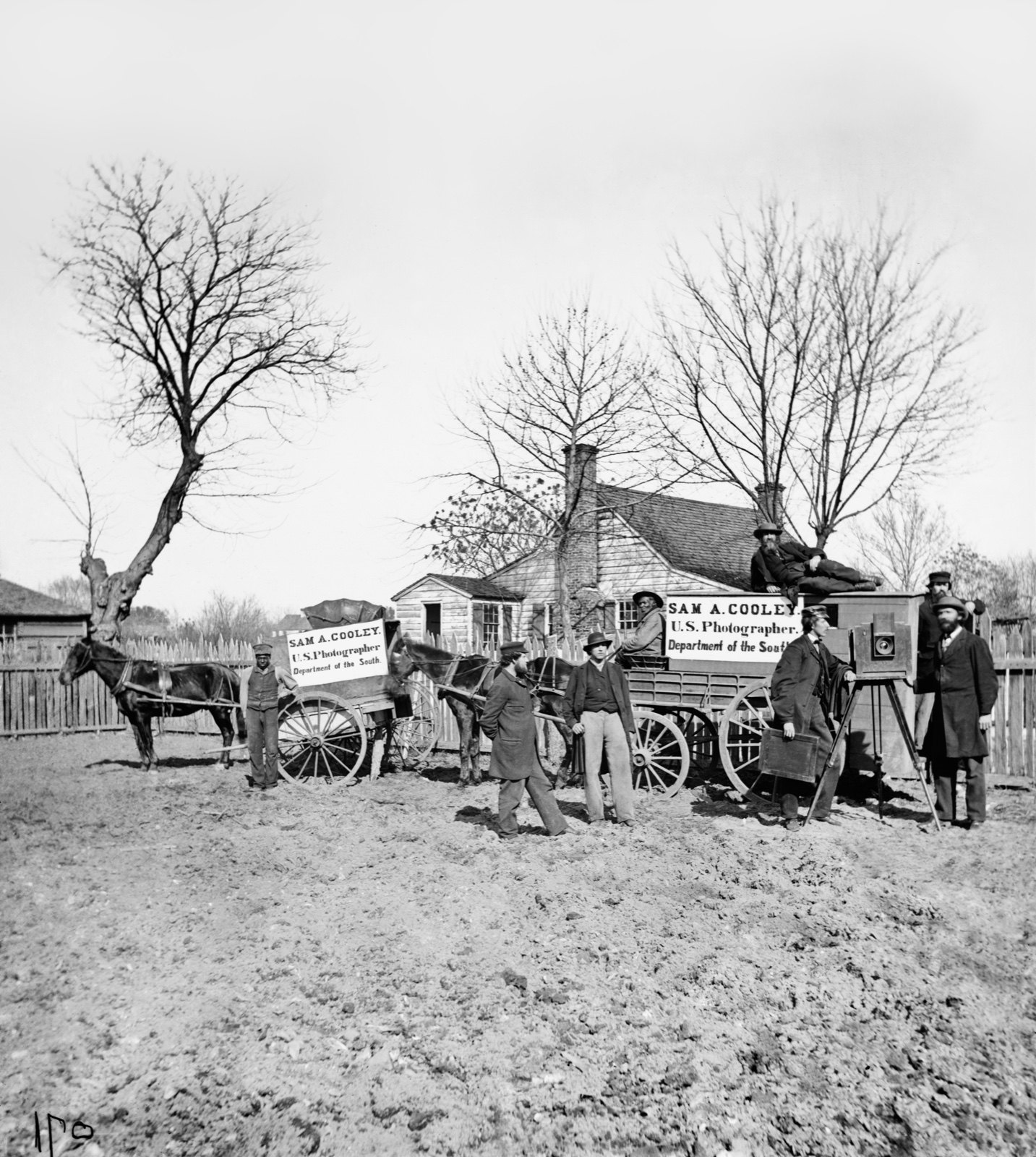
The sutler who became the Department of the South's photographer, standing beside his wagon.
Drag to compareLibrary of Congress
Like George S. Cook and George N. Barnard, Sam Cooley was born in Hartford, Connecticut, and was a photographer there before the war. In this view he stands to the right of the camera.
He did not enlist — possibly for reasons of health. He attached himself instead to the 6th Connecticut Infantry as a sutler, the licensed civilian merchant who followed a regiment selling what the army did not issue, and in that capacity he came down to the South Carolina coast. He was not merely a shopkeeper in uniform's company. After a small action near Pocotaligo on October 22, 1863, Brigadier General John M. Brannan commended “Mr. Cooley, sutler of the Sixth Connecticut Volunteers” for helping to bring wounded men off the field.
Then he did what Alexander Gardner had done with the Army of the Potomac: he gave himself a title. Cooley advertised as “U.S. Photographer, Department of the South” — the Union-held coastal territory run from Hilton Head — and sometimes as “Photographer Tenth Army Corps.” In that semi-official position he photographed army installations along with a great many scenes of Beaufort and the people living there.
It was a business as well as a calling. He brought three assistants down from New York, worked for customers out of a studio at Beaufort, and the back of one of his cartes de visite lists studios at Hilton Head, Folly Island and Jacksonville, Florida.
The wagon in this photograph is the reason any of it was possible. Wet collodion had to be coated, exposed and developed before the plate dried, so a photographer working in the field carried his darkroom with him or made no pictures at all.
(November 3, 1821 – May 15, 1900)