Charleston Personalities · Book p. 42
Quincy Adams Gillmore
The engineer who reduced Fort Pulaski, shelled Charleston for eighteen months, and never took Fort Sumter.
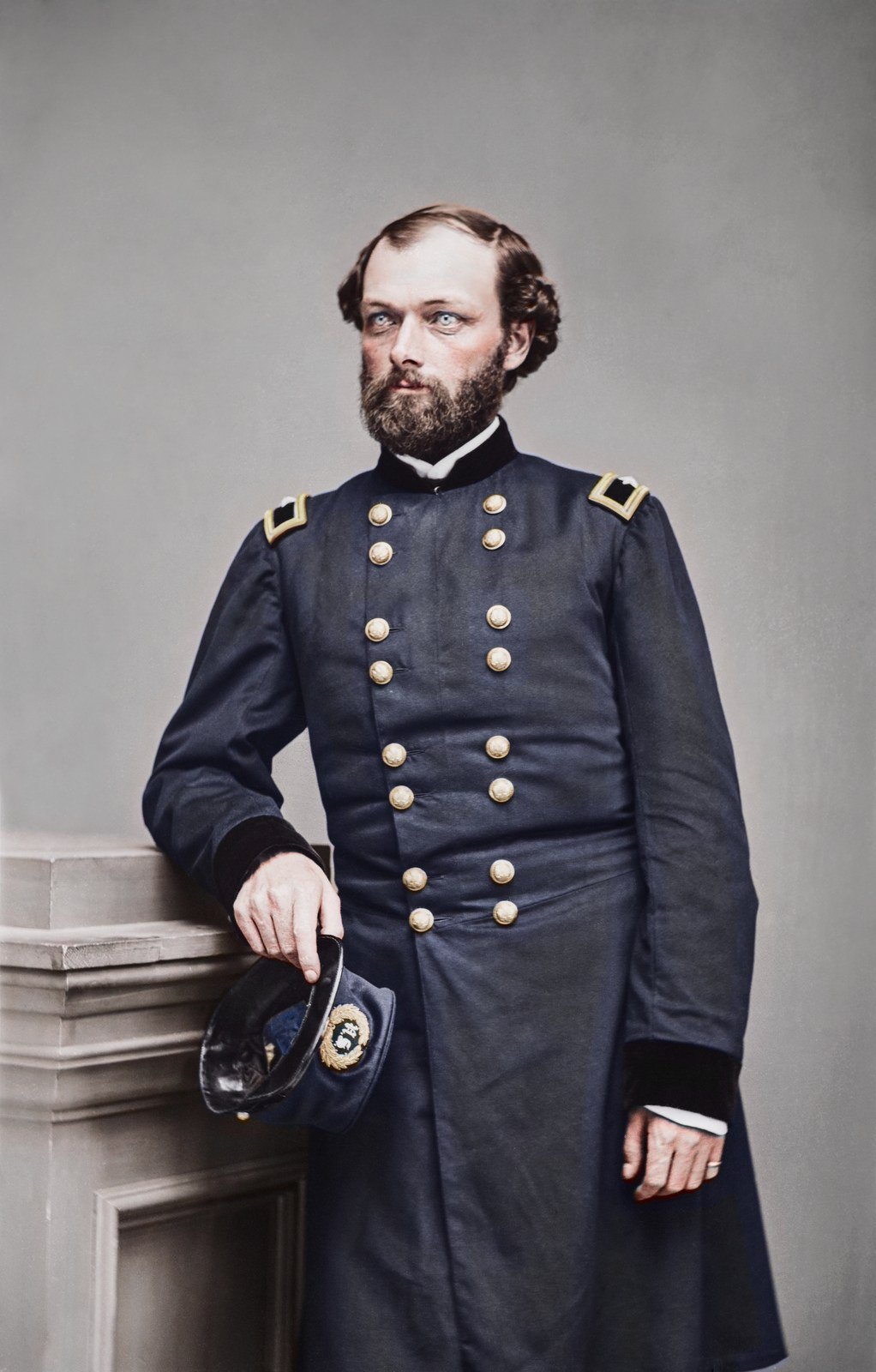
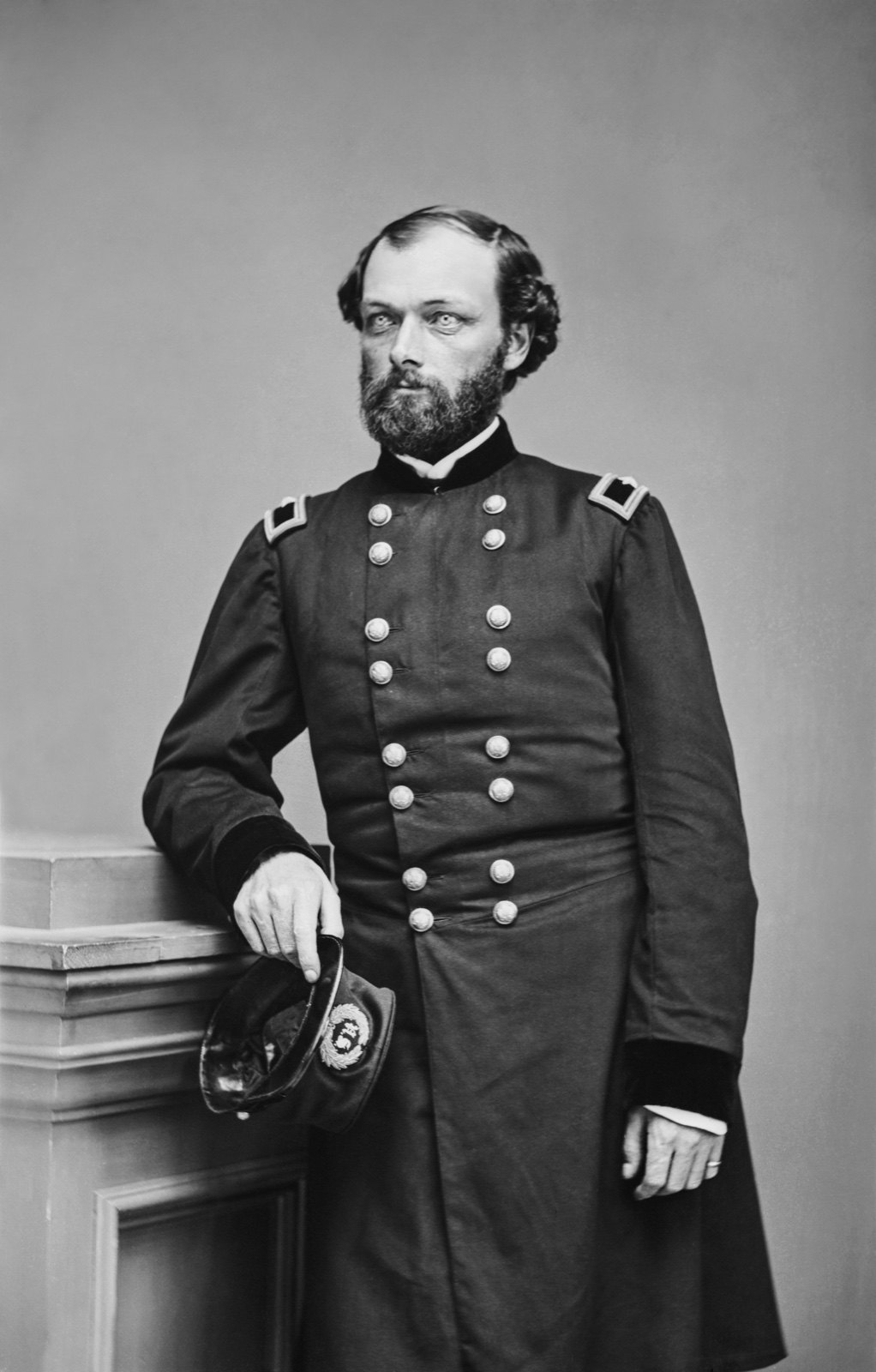
Drag to compareLibrary of Congress
What better way to honor a son than to name him for the incoming president? Quincy Adams Gillmore was born in Ohio a few days before John Quincy Adams was inaugurated as the sixth president of the United States.
He went to West Point and into the engineers, and in early 1862 he did the thing that made his name. Directing Union batteries against Fort Pulaski below Savannah, he used rifled artillery against masonry at a range everyone had assumed was safe, and breached the walls in about thirty hours. It ended the era of the brick coastal fort in a day and a half, and it is the reason Fort Sumter was later packed with sand rather than repaired with brick.
Promoted brigadier shortly after, he rose to major general on July 10, 1863, by which time he commanded the Union forces trying to retake Fort Sumter and Charleston. He did not succeed. He reduced Sumter to rubble and could not capture it; he shelled the city for eighteen months and could not compel it.
What finally emptied Charleston was not Gillmore's artillery but Sherman's infantry marching through the interior of the state, which made the port indefensible. The Confederates walked out on the night of February 17–18, 1865, and on the 18th Gillmore wired Washington:
The city of Charleston and its defenses came into our possession this morning.
It is a carefully worded sentence. The city came into his possession. It was not taken.
(February 25, 1825 – April 11, 1888)