Charleston Photographers · Book p. 13
Osborn & Durbec
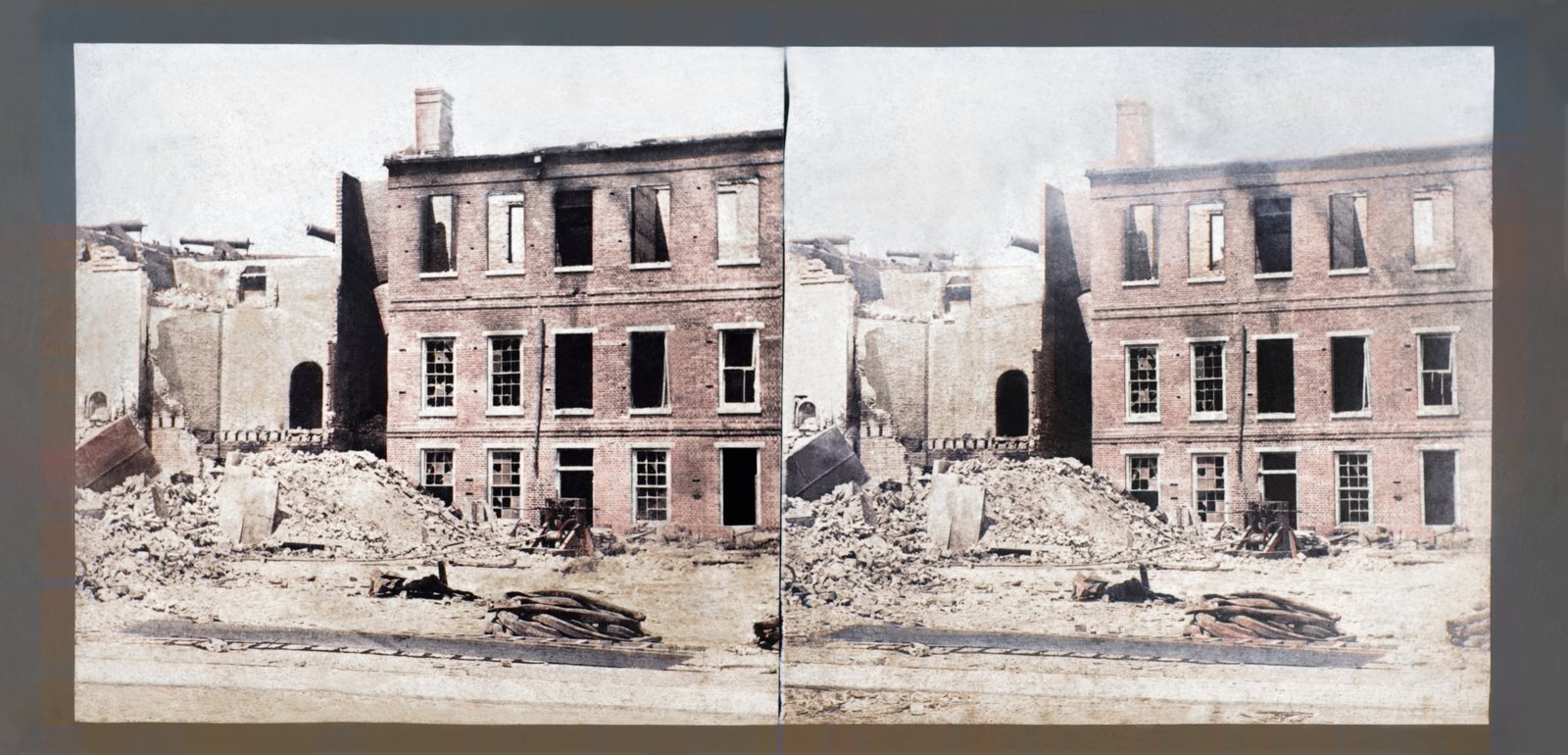
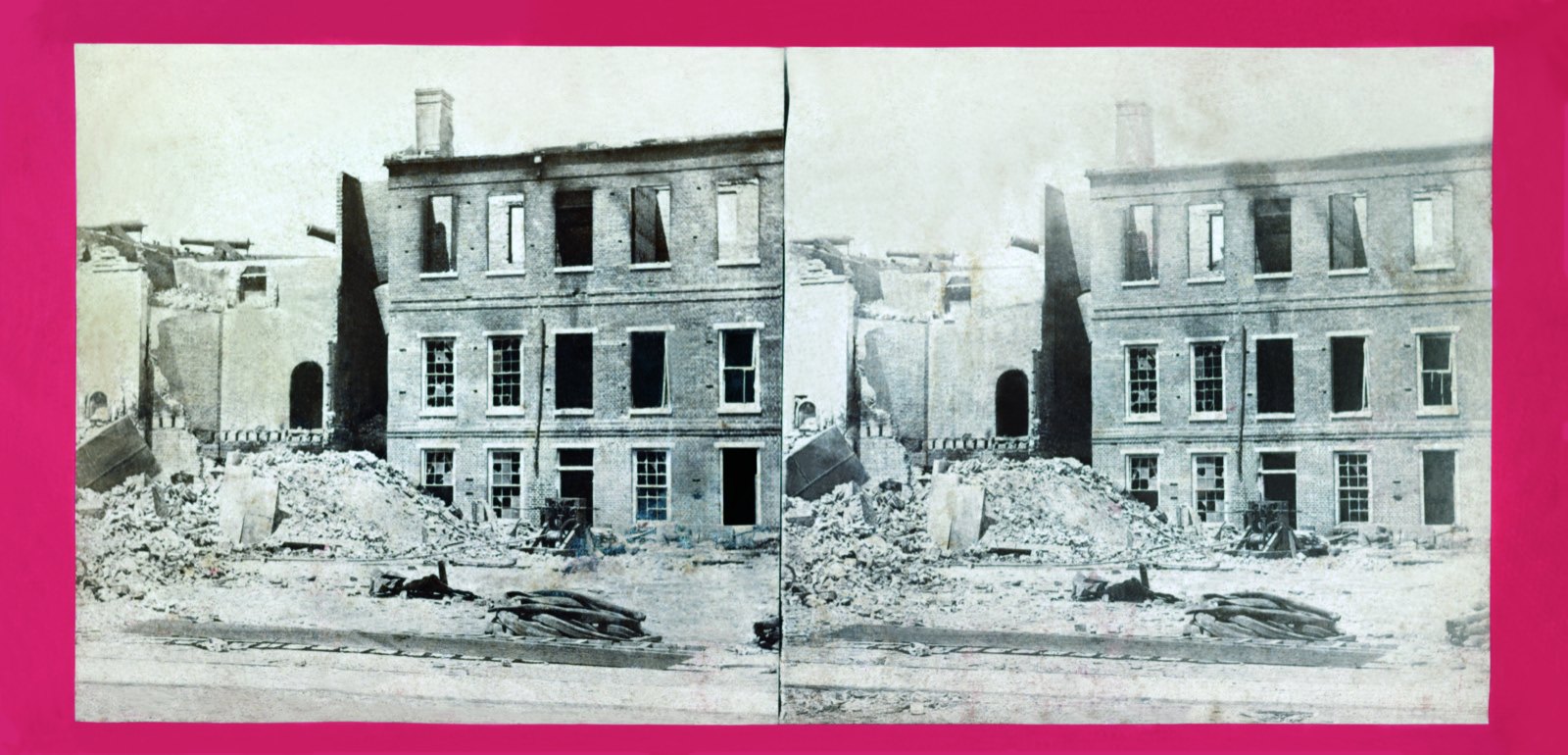
Drag to compareLibrary of Congress
Photographers George Cook made photographic history with his image of monitors in combat; Haas and Peale also photographed the same battle. The partnered firm of Osborn and Durbec gained distinction by photographing African American slaves at worship on Rockville Plantation near Charleston. James M. Osborn was born in New York in 1811. At the age of 38, he opened a photographic studio in New York City. In November 1852, he and his wife moved to Charleston and opened another gallery on King Street. They sold their business, and in 1858, Osborn opened a new studio with Eugene Durbec. Frederick Eugene Durbec was born in Charleston in 1836, the son of a successful businessman. He first worked for the Tyler & Co. gallery, then for Quinby, before teaming up with Osborn. After the fall of Fort Sumter, Osborn went there and took views showing damage from Confederate artillery. Among his two score images is the familiar one showing the Stars and Bars flying proudly atop the Sumter flagstaff. Osborn and Durbec ended their partnership in February 1862. Osborn opened a solo gallery at King and Liberty Street. Durbec, aged twenty-five, joined the Beauregard Light Infantry Volunteers and was elected orderly sergeant. He saw action at Secessionville in June 1862. Chronic rheumatism, though, forced Durbec to resign seven months later. Osborn worked throughout the war from his studio. In February 1868, he left Charleston for New York, where he died later that year. Durbec returned to photographic work for just a few years after the war. He then turned to other business endeavors, including the establishment of several newspapers. He died in Clarkesville, in northeast Georgia, on Oct. 1, 1894.
This is the caption as printed in 100 Significant Civil War Photographs: Charleston in the War. It has not yet been through this site’s research and fact-checking pass.